15
PART 5 – HEATER PIPING
A. GENERAL PIPING INFORMATION
Use two wrenches when tightening water piping at heater. Use one wrench to prevent the heater return or
supply line from turning. Failure to prevent piping connections from turning could cause damage to heater
The heater control module uses temperature sensors to provide both high limit protection and modulating
temperature control. The control module also provides low water protection by sensing the water level in
the tank. Some codes/jurisdictions may require additional external controls.
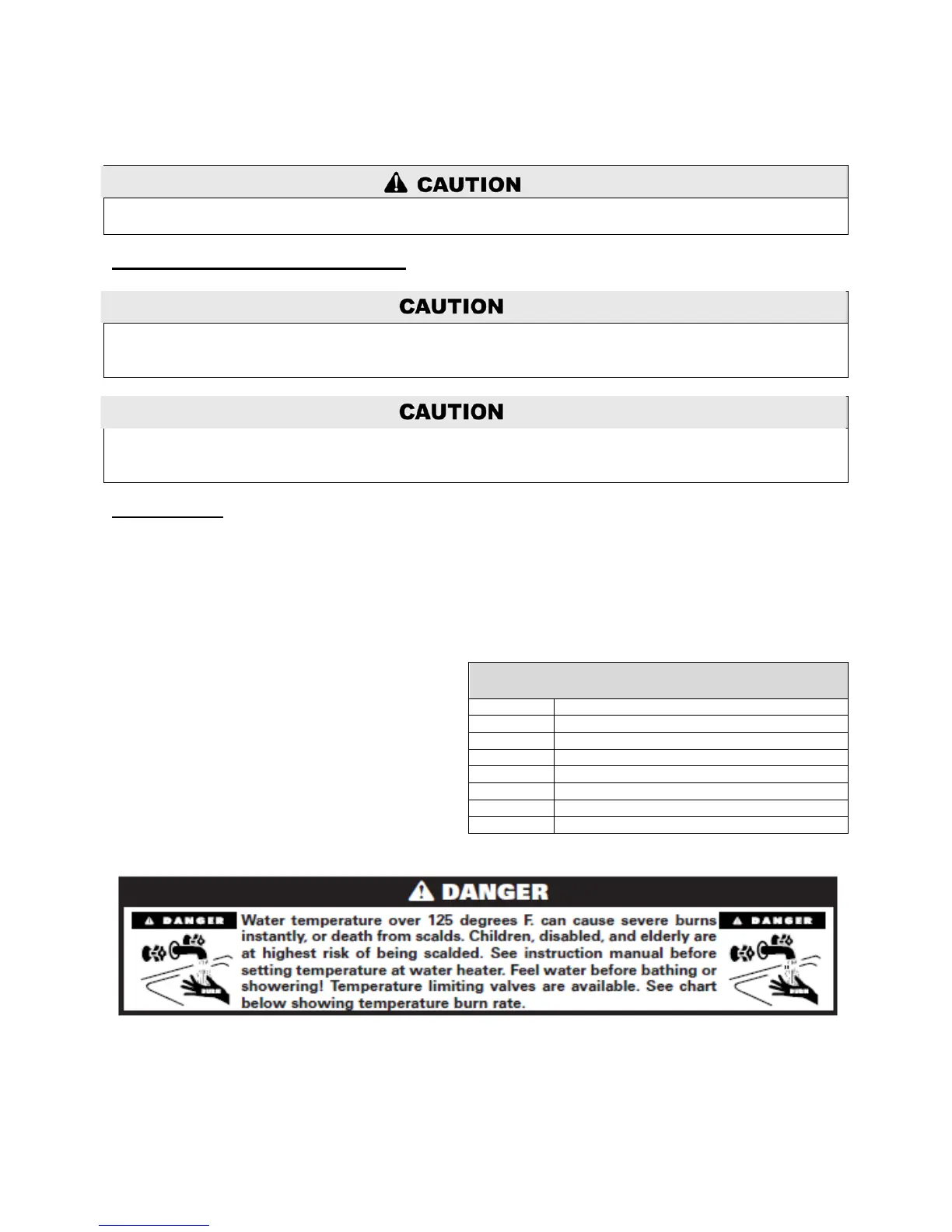
B. SCALDING
This heater can deliver scalding water. Be careful whenever using hot water to avoid scalding injury.
Certain appliances, such as dishwashers and automatic clothes washers may require increased water
temperature. By setting the thermostat on this heater to obtain the increased water temperature required
by these appliances, you may create the potential for scald injury.
To protect against injury, you should install a mixing valve in the water system. This valve will reduce
point of discharge temperature by mixing cold
and hot water in branch supply lines. Such valves
are available from your local plumbing supplier.
Table 2 details the relationship of water
temperature and time with regard to scald injury
and may be used as a guide in determining the
safest water temperature for your applications.
Never use dielectric unions or galvanized steel fittings when connecting to a stainless steel storage tank
or heater. Use only copper or brass fittings. Teflon thread sealant must be used on all connections.
APPROXIMATE TIME / TEMPERATURE
RELATIONSHIPS IN SCALDS







 To Next Page