13
When removing an existing heater, follow the
steps below.
1. Seal any unused openings in the common
venting system.
2. Visually inspect the venting system for
proper size and horizontal pitch to determine if
there is blockage, leakage, corrosion or other
deficiencies that could cause an unsafe
condition.
3. If practical, close all building doors,
windows and doors between the space in
which the appliance remains connected to the
common venting system and other spaces in
the building. Turn on clothes dryers and any
appliances not connected to the common
venting system. Turn on any exhaust fans,
such as range hoods and bathroom exhausts,
at maximum speed. Do not operate a summer
exhaust fan. Close all fireplace dampers.
4. Place in operation the appliance being inspected. Follow the lighting instructions. Adjust the thermostat
so the appliance will operate continuously.
5. Test for spillage at the draft hood relief opening after 5 minutes of main burner operation. Use the
flame of a match or candle or smoke from a cigarette.
6. After it has been determined that each appliance remaining connected to common venting system
properly vents when tested as outlined, return doors, windows, exhaust fans, fireplace dampers and any
other gas burning appliance to their previous condition of use.
7. Any improper operation of the common venting system should be corrected to conform to the National
Fuel Gas Code, ANSI Z223.1. When resizing any portion of the common venting system, the system
should approach the minimum size as determined using the appropriate tables in Appendix G in the
National Fuel Gas Code, ANSI Z 223.1.
H. WATER CHEMISTRY
Chemical imbalance of your water can cause severe damage to your water heater and associated
equipment, and may also affect efficiency. You may have to have your water quality professionally
analyzed to determine whether you need to install a water softener. Failure of a heat exchanger due to
lime scale build-up on the heating surface, low pH or other imbalance IS NOT covered by the
Water Hardness
Water hardness is mainly due to the presence of calcium and magnesium salts dissolved in the water.
The concentration of these salts is expressed in mg/L, ppm or grains per gallon, as a measure of relative
hardness of water. Grains per gallon is the common reference measurement used in the U.S. water
heater industry. Hardness expressed as mg/L or ppm may be divided by 17.1 to convert to grains per
gallon. Water may be classified as very soft, slightly hard, moderately hard, or hard based on its hardness
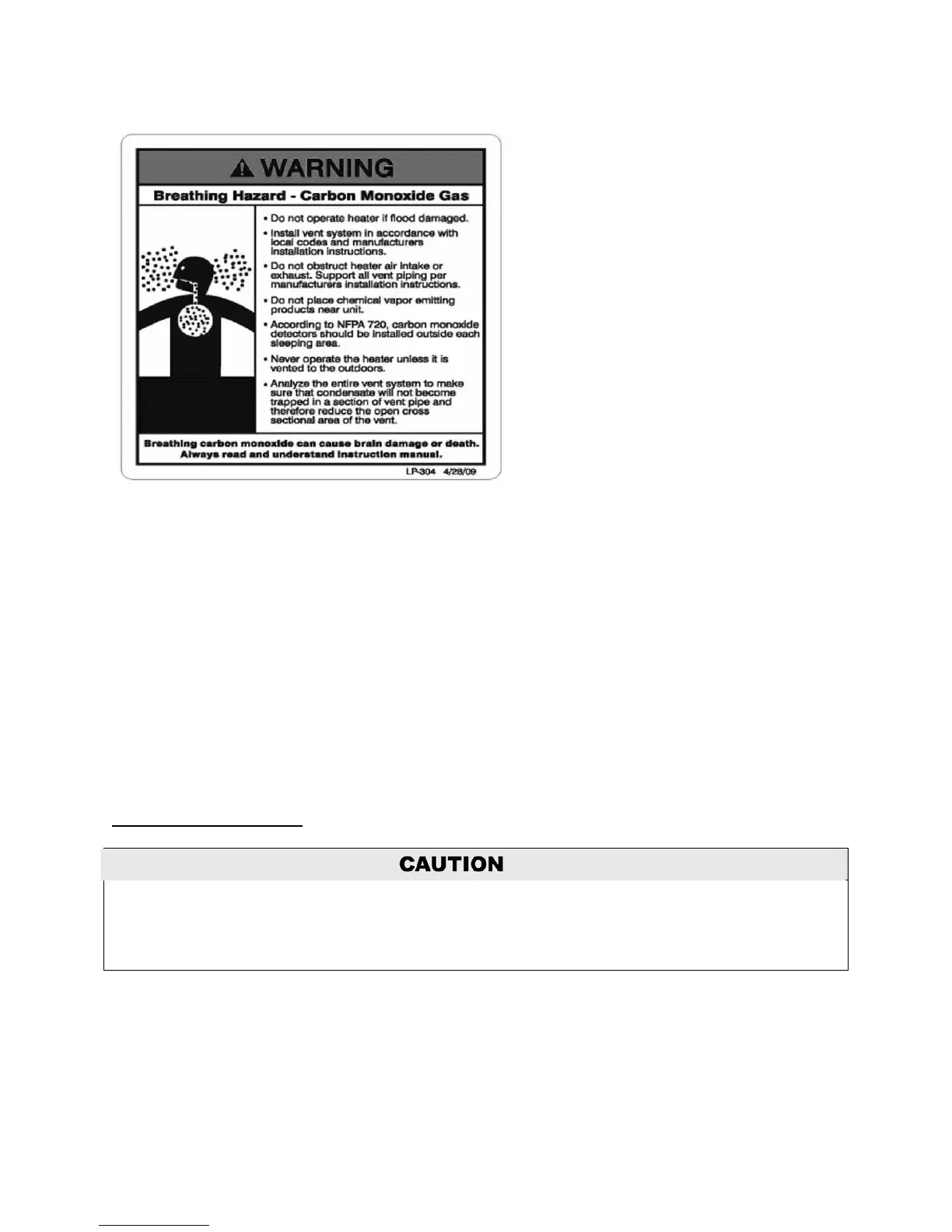
Figure 3 - CO Warning Label





 To Next Page