13
When making a connection to the heat exchanger, use Teflon Tape and joint compound to prevent leaks.
The connections to the heat exchanger are 1” NPT. Do not apply heat directly to the heat exchanger
thread connection when sweating fittings.
Line pressure and temperature gauge shall be installed in the collector supply and return lines to allow for
a simple diagnostic check of proper system operation. On a sunny day, the hot water return line should
be approximately 5 – 12
o
F warmer than the water in the collector supply line. Compare the temperature
readings in the two line thermometers. The ¾” cold water supply line to the storage tank must be
insulated with a minimum 7/8” x ½” pipe insulation to a minimum distance of 5’ behind the storage tank, or
to the wall if closer than 5’.
D. TANK SENSOR PLACEMENT
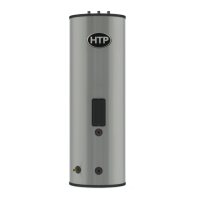
Make sure the sensor is secured on the stud located in the lower section of the water heater. Secure the
sensor by packing Rubatex insulation behind it. This will also help the sensor react to temperature
change.
Non-toxic freeze protection fluid must be used to protect the system from freezing. Use a mixture
appropriate for your climate. Do not use a higher glycol to water concentration than necessary, as this will
adversely impact heat transfer efficiency. See the DowFrost Data Sheet in the back of this manual for
recommended concentrations. A copy of the MSDS sheet must be left with the end user of the solar
system. See “EMERGENCY OVERVIEW” as part of the DowFrost Data Sheet in the back of this manual.
The collector loop must be charged with a mixture of heat transfer fluid and distilled or deionized water.
The use of regular tap water as a mixing agent is prohibited. Regular scheduled maintenance must be
established to monitor and maintain the proper pH level of the heat transfer fluid in the system to protect
the heat exchanger and other components in the system.
E. NECESSARY COMPONENTS FOR SOLAR WATER HEATER INSTALLATION
Listed below are components needed for installation of the solar water heater.
Solar Collector
Absorbs and transfers the sun’s energy into the solar heat exchanger located on the bottom of the solar
water heater.
Solar Air Release Vent
This air vent allows air contained in the solar system to release. The air vent valve must be designed to
work in high temperatures (as high as 350
o
F) with a glycol medium. (This is typical of solar systems.)
Solar Collector Sensor
This sensor is wired to the solar controller and automatically turns on the circulator pump when the
differential set point is reached between the solar water heater and collector.
Tank and Heat Exchanger Temperature and Pressure Gauge
The temperature and pressure gauge on the solar piping will show the user the actual temperature and
pressure supplied and returned to the solar collector.
Check Valve
Helps minimize convective heat loss at night when the system is not operating. If a check valve is not
installed, most of the heater energy stored during the day would be transferred into the panel and lost.
Collector Isolation Valve (Valve #6)
Valve #6 and 11 (for solar collector isolation) isolates the collector loop from the solar water heater.


 To Next Page