25
LP-454 REV. 1.6.15
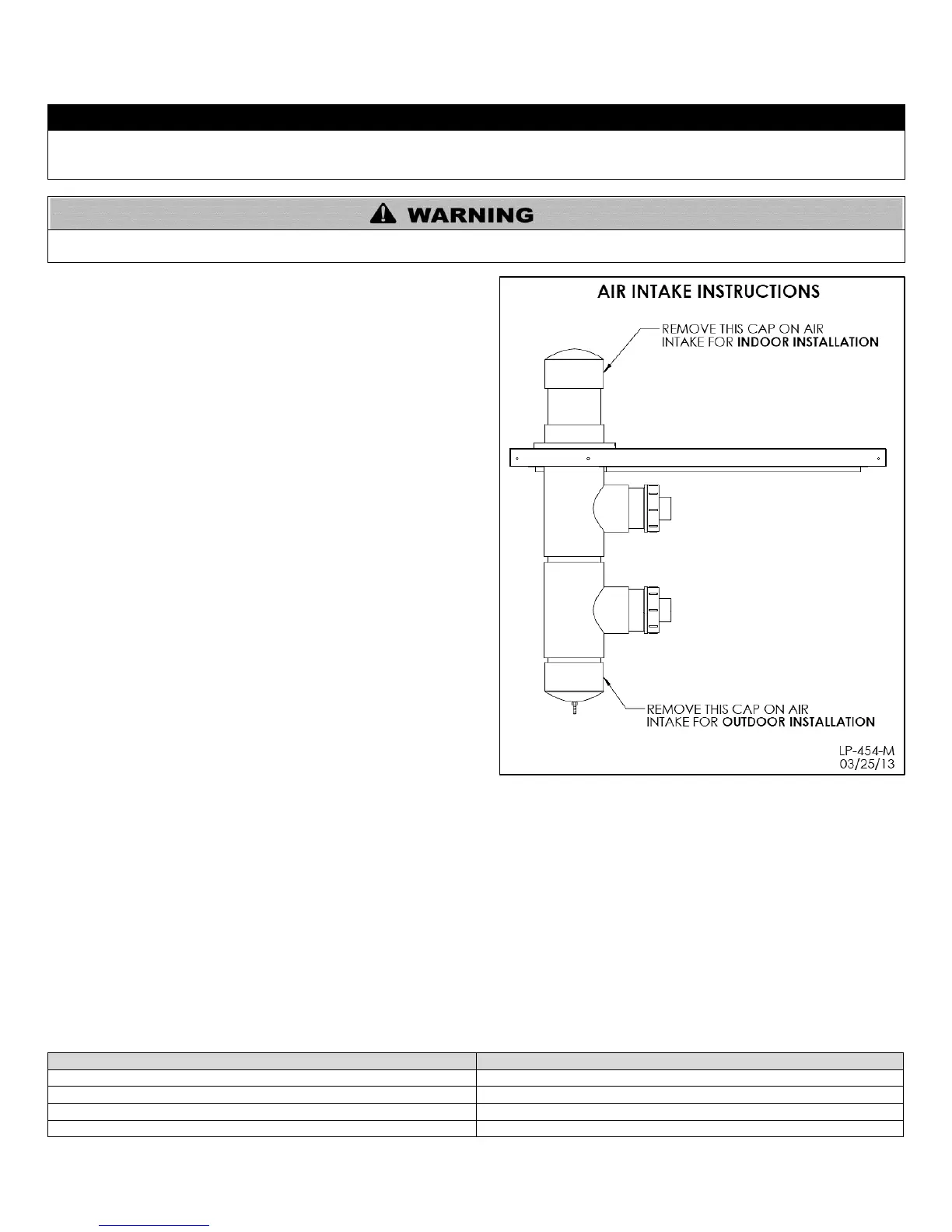
When venting in an Indoor Installation: Remove cap installed outside the water heater cabinet from the air intake and leave the cap
inside the water heater cabinet installed. When venting in an Outdoor Installation: Remove cap from the air intake inside the water
heater and leave the cap outside the water heater installed. See Figure 8 for detail.
Failure to follow the above instructions will result in improper water heater operation, and could result in property damage, serious
personal injury, or death.
1. Use only solid PVC, CPVC, or stainless steel pipe, or a
Polypropylene vent system approved for use with Category IV
appliances.
FOAM CORE PIPING IS NOT APPROVED FOR EXHAUST VENT
APPLICATIONS. Foam core piping may be used on air inlet piping
only.
2. Remove all burrs and debris from joints and fittings.
3. When using PVC or CPVC pipe, all joints must be properly
cleaned, primed, and cemented. Use only cement and primer
approved for use with the pipe material. Cement must conform to
ASTM D2564 for PVC and ASTM F493 for CPVC pipe. NOTE: DO
NOT CEMENT POLYPROPYLENE PIPE.
4. Ensure the vent is located where it will not be exposed to
prevailing winds.
5. In all roof venting applications, exhaust discharge must point away
from the pitch of the roof.
6. To prevent water leakage, install adequate roof flashing where the
pipe enters the roof.
7. Do not locate vent over public walkways, driveways, or parking
lots. Condensate could drip and freeze, resulting in a slip hazard or
damage to vehicles and machinery.
8. Due to potential moisture build-up, sidewall venting may not be
the preferred venting option. To save time and cost, carefully
consider venting installation and location.
9. Horizontal lengths of exhaust vent must slope back towards the
water heater not less than ¼" per foot to allow condensate to drain from the vent pipe.
10. The exhaust vent must terminate where vapors cannot make accidental contact with people or pets, or damage shrubs or plants.
11. In vacant chimney applications, install and seal a rain cap over existing chimney openings.
12. All piping must be fully supported. Use pipe hangers at a minimum of 4 foot intervals to prevent sagging of the pipe where
condensate may form.
13. Do not use the heater to support any piping.
14. It is recommended to install screens in outside vent terminations to prevent debris from entering the exhaust vent and intake pipes.
Table 6 lists optional exhaust/intake terminations available from HTP:
3” PVC CONCENTRIC VENT TERMINATION KIT
3” STAINLESS STEEL VENT TERMINATION KIT
4” STAINLESS STEEL VENT TERMINATION KIT
Table 6
Figure 8 – Air Intake Instructions


 To Next Page