13
LP-454 REV. 1.6.15
Do not attempt to vent this water heater by any means other than those described in this manual. Doing so will void the warranty, and
may result in severe personal injury or death.
E. PREVENT COMBUSTION AIR CONTAMINATION
Install intake piping for the heater as described in the Venting Section. Do not terminate exhaust in locations that can allow
contamination of intake air.
Ensure that the intake air will not contain any of the contaminants below. Contaminated air will damage the heater, resulting in possible
substantial property damage, severe personal injury, or death. For example, do not pipe intake or install water heater outdoors near a
swimming pool. Also, avoid areas subject to exhaust fumes from laundry facilities. These areas always contain contaminants.
AREAS LIKELY TO HAVE CONTAMINANTS
Spray cans containing fluorocarbons
Dry cleaning/laundry areas and establishments
Chlorinated waxes/cleaners
Chlorine-based swimming pool chemicals
Calcium chloride used for thawing
Refrigeration repair shops
Sodium chloride used for water softening
Paint or varnish removers
Plastic manufacturing plants
Hydrochloric or Muriatic acid
Furniture refinishing areas and establishments
New building construction
Antistatic fabric softeners used in clothes dryers
Chlorine-type bleaches, laundry detergents, and cleaning solvents
Adhesives used to fasten building products
Table 1 – Contaminant Table
F. REMOVING A HEATER FROM A COMMON VENT SYSTEM
Do not install the heater into a common vent with any other
appliance. This will cause flue gas spillage or appliance malfunction,
resulting in possible substantial property damage, severe personal
injury, or death.
Failure to follow all instructions can result in flue gas spillage and
carbon monoxide emissions, causing severe personal injury or death.
When removing an existing heater, follow the steps below.
1. Seal any unused openings in the common venting system.
2. Visually inspect the venting system for proper size and horizontal
pitch to determine if there is blockage, leakage, corrosion or other
deficiencies that could cause an unsafe condition.
3. If practical, close all building doors, windows and doors between the
space in which the water heater remains connected to the common
venting system and other spaces in the building. Turn on clothes dryers and any appliances not connected to the common venting
system. Turn on any exhaust fans, such as range hoods and bathroom exhausts, at maximum speed. Do not operate a summer
exhaust fan. Close all fireplace dampers.
4. Place in operation the appliance being inspected. Follow the lighting instructions. Adjust the thermostat so the appliance will operate
continuously.
NOTE: DAMAGE TO THE HEATER CAUSED BY EXPOSURE TO CORROSIVE VAPORS IS NOT COVERED BY WARRANTY.
(Refer to the limited warranty for complete terms and conditions).
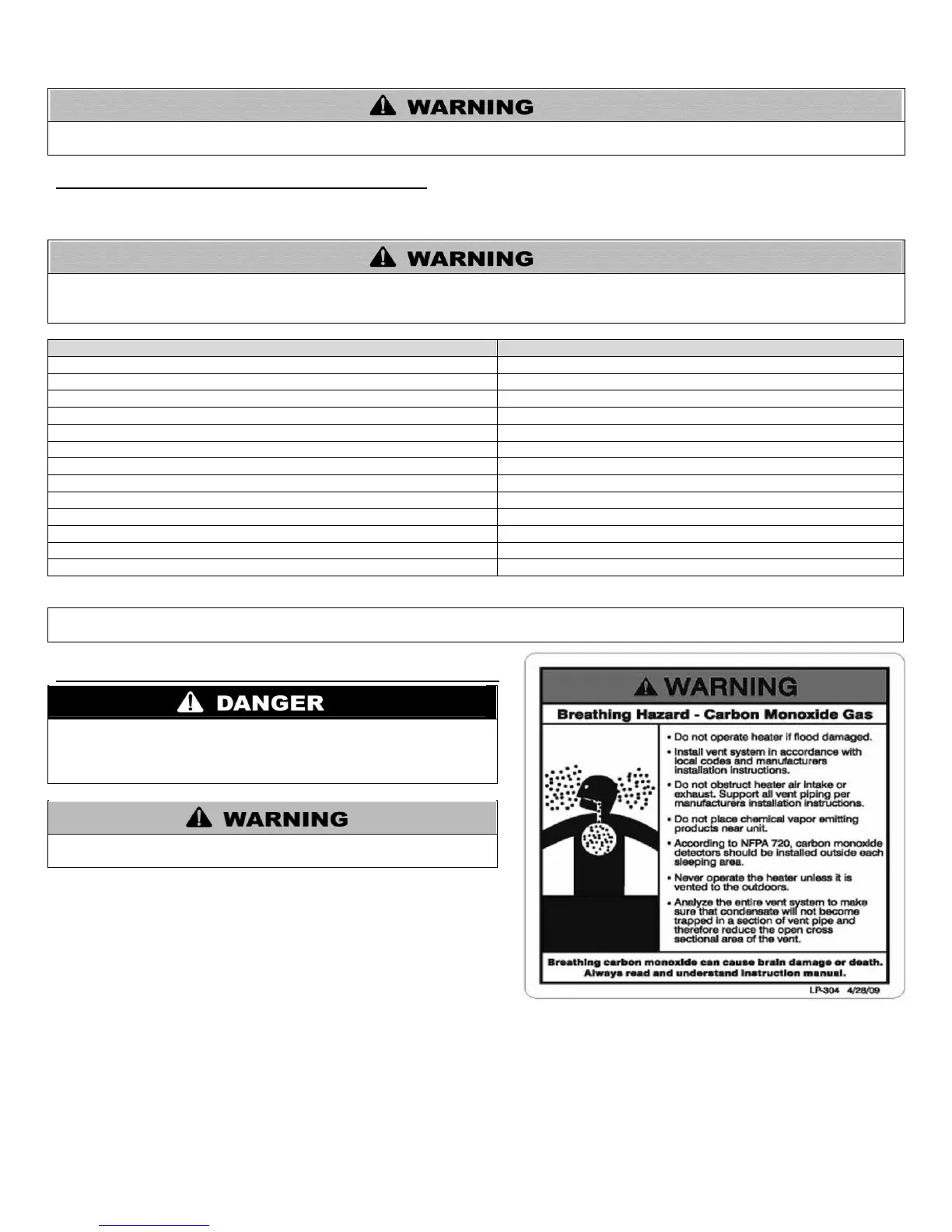
Figure 3 - CO Warning Label


 To Next Page