51
LP-454 REV. 1.6.15
PART 11 - MAINTENANCE
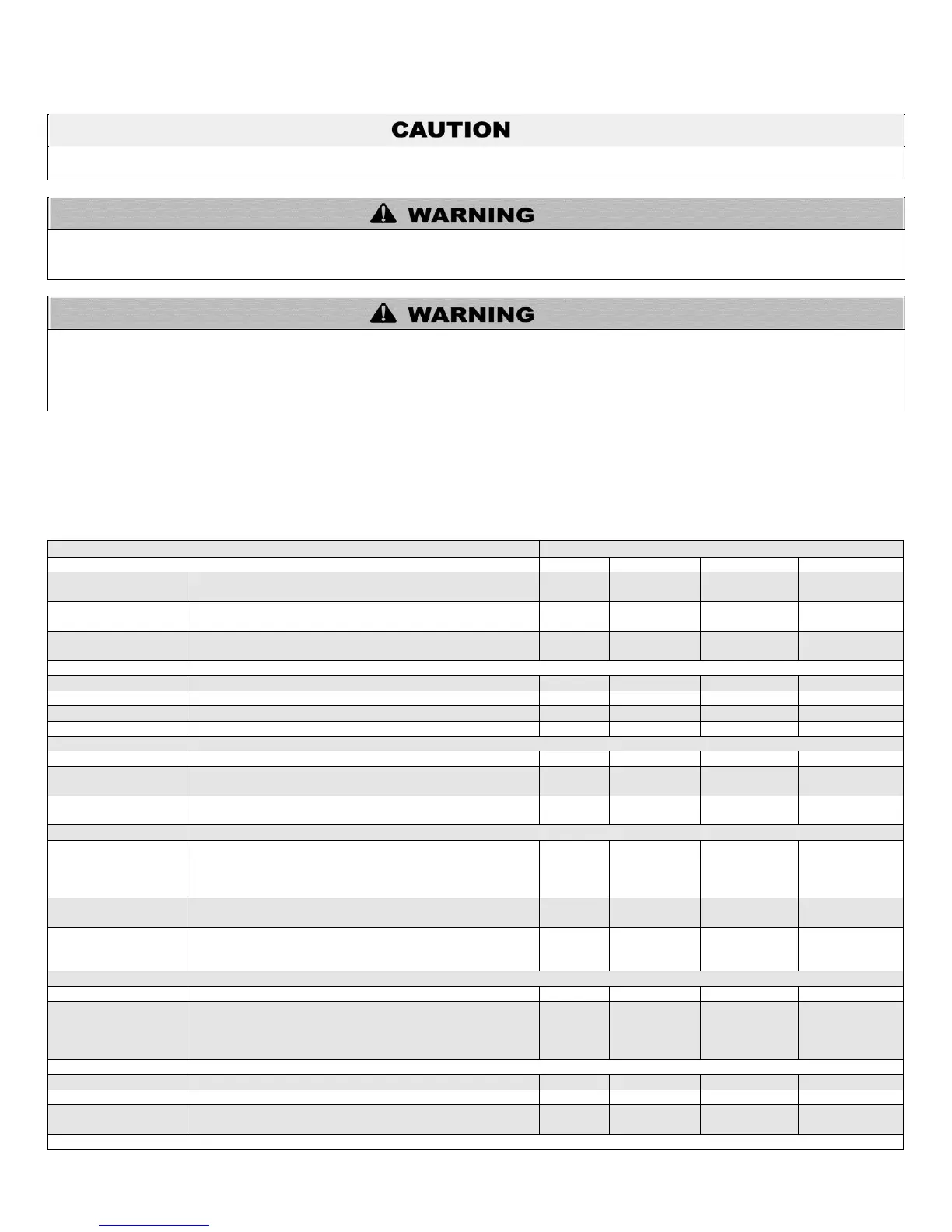
In unusually dirty or dusty conditions, care must be taken to keep water heater cabinet door in place at all times. Failure to do so VOIDS
WARRANTY!
Allowing the water heater to operate with a dirty combustion chamber will hurt operation. Failure to clean the heat exchanger as needed
by the installation location could result in water heater failure, property damage, personal injury, or death. Such product failures ARE
NOT covered under warranty.
Hydrogen gas can build up in a hot water system served by this water heater that has not been used for a long period of time (generally
two weeks or more). When opening a hot water faucet in a system that has been out of use for a time, keep all ignition sources
(electrical appliances, open flame, etc.) away from the faucet. If hydrogen is present, there will be a sound of air escaping as water
begins to flow. Allow the water to run for a few minutes to dissipate built up hydrogen from the system. Failure to follow these
instructions can result in property damage, personal injury, or death.
The water heater requires minimal periodic maintenance under normal conditions. However, in unusually dirty or dusty conditions,
periodic vacuuming of the cover to maintain visibility of the display and indicators is recommended.
Periodic maintenance should be performed once a year by a qualified service technician to assure that all the equipment is operating
safely and efficiently. The owner should make necessary arrangements with a qualified heating contractor for periodic maintenance of
the heater. Installer must also inform the owner that the lack of proper care and maintenance of the heater may result in a hazardous
condition.
Check heater and system piping for any sign of leakage;
make sure they are properly supported.
Check condition of all vent pipes and joints. Ensure the vent
piping terminations are free of obstructions and blockages.
Check Gas piping, test for leaks and signs of aging. Make
sure all pipes are properly supported.
Do a full visual inspection of all system components.
Test all functions of the system (Heat, Safeties)
Verify safe settings on heater or Anti-Scald Valve
Verify programmed temperature settings
Check wire connections. Make sure they are tight.
Verify devices are installed and working properly. Change
batteries if necessary.
Check to see that the circuit breaker is clearly labeled.
Exercise circuit breaker.
Check burner tube and combustion chamber coils. Clean
according to maintenance section of manual. Vacuum
combustion chamber. Replace any gaskets that show signs
of damage.
Clean. Set gap at ¼”. Clean probe with plumbers cloth to
remove oxides.
Check ionization in uA (d7 on status menu in Start-up
Procedures). Record high fire and low fire. Clean probe with
plumbers cloth to remove oxides.
Check condensate neutralizer. Replace if necessary.
Disconnect condensate hose. Clean out dirt. Fill with water
to level of outlet and re-install. (NOTE: Verify the flow of
condensate, making sure that the hose is properly
connected during final inspection.)
Measure incoming gas pressure (3.5” to 14” W.C.)
Measure drop in pressure on light off (no more than 1” W.C.)
Check piping for leaks. Verify that all are properly supported.


 To Next Page