35
LP-454 REV. 1.6.15
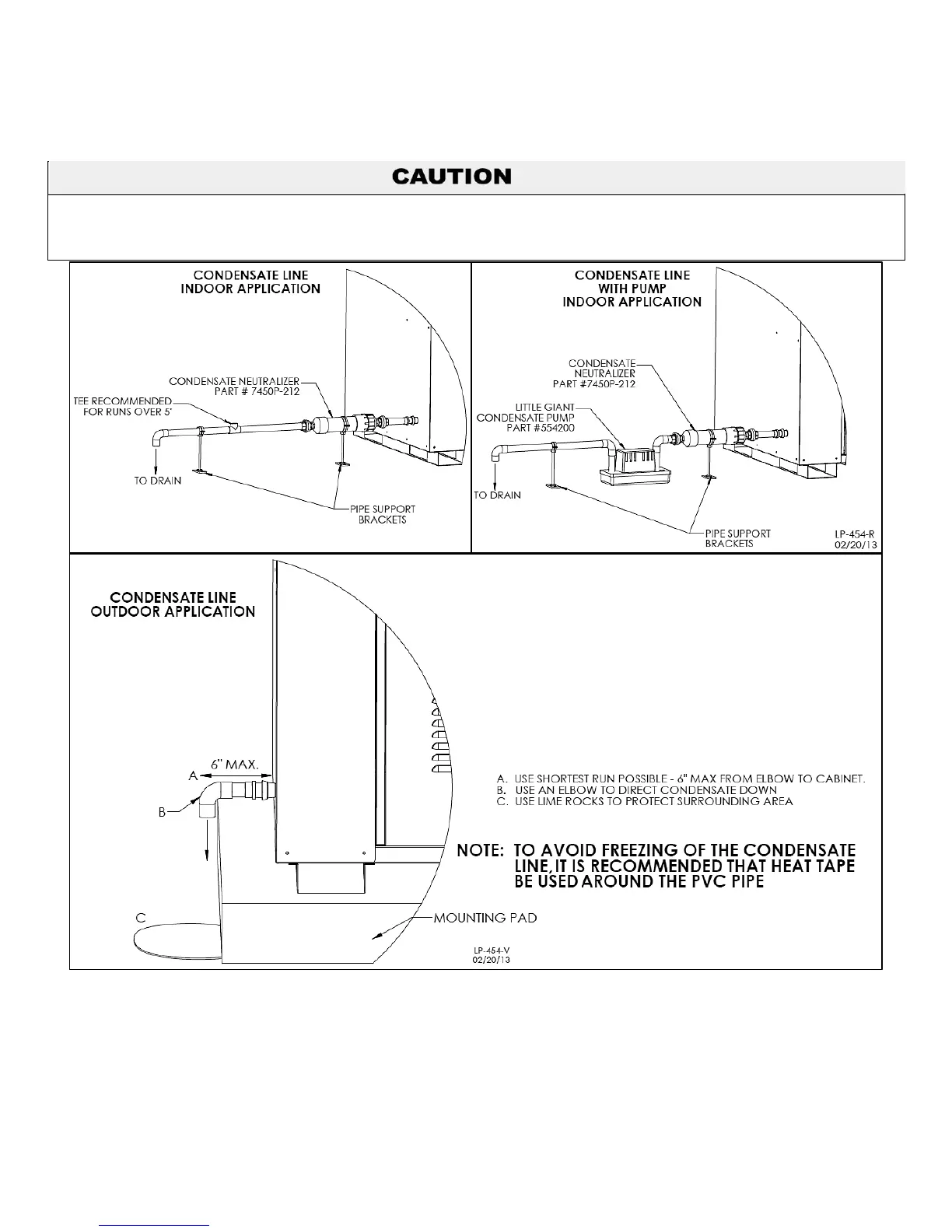
If the heater condensate outlet is lower than the drain, you must use a condensate removal pump (kit p/n 554200 available from HTP).
If required by local authorities, a condensate filter of lime crystals, marble, or phosphate chips will neutralize slightly acidic condensate.
This can be installed in the field and purchased from HTP (p/n 7450P-212).
Figure 19 – Condensate Installation NOTES:
1. Condensate line must be pitched at least ¼” per foot to properly drain. If this cannot be done, or a condensate hose greater than 5 feet in length is
used, increase the condensate line to a minimum of 1” ID and place a tee in the line after the condensate neutralizer to properly reduce vacuum lock in
the drain line.
2. PVC or CPVC pipe should be the only material used for condensate line. Steel, brass, copper, and other metals will be subject to corrosion or
deterioration.
3. A frozen condensate line could result in a blocked vent condition. It is very important to protect the condensate line from freezing temperatures or any
type of blockage. In installations that may encounter sustained freezing conditions, the use of heat tape is recommended to avoid freezing of the
condensate line. It is also recommended to bush up the condensate line size to 1” and terminate condensate discharge as close to the unit as possible.
Longer condensate runs are more prone to freezing. Damages due to frozen or blocked condensate lines ARE NOT covered by warranty.
4. Support of the condensate line may be necessary to avoid blockage of the condensate flow.
The condensate line must remain unobstructed. If allowed to freeze in the line or obstructed in any other manner, condensate can exit
from the water heater tee, resulting in potential water damage to property. When installing a condensate pump, select one approved for
use with condensing heaters and furnaces. The condensate pump should have an overflow switch to prevent property damage from
spillage. Condensate from the heater will be slightly acidic (pH from 3.2 to 4.5). Install a neutralizing filter if required by local codes.


 To Next Page