SR05-D1A3-PV manual v1801 7/83
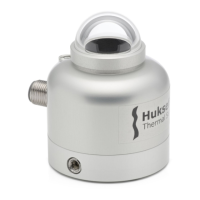
Model SR05-D1A3-PV has a digital output that is identical to the most commonly used
photovoltaic reference cell with Modbus over RS-485 output. This allows for easy
installation in existing PV monitoring systems, without the need to make major
modifications to data logging software, instrument libraries and infrastructure.
Compared to silicon reference cells, pyranometers offer several advantages such as a
perfect (cosine) directional response and a flat spectral response over a wide range.
Pyranometers therefore measure the maximum available resource and are suitable to act
as a reference for all types (for example amorphous, crystalline or thin-film) of
photovoltaic cells both with and without anti-reflection coating. See also our Application
note “pyranometers versus PV reference cells”. Moreover, since the working principle of a
pyranometer is different from a solar cell, the pyranometer offers a truly independent
measurement of the irradiance.
PV system performance monitoring: compliant with IEC 61724-1, Class C
IEC 61724-1: Photovoltaic System Performance Monitoring - Guidelines for Measurement,
Data Exchange and Analysis – suggests to use pyranometers for PV monitoring; SR05
complies with IEC 61724-1 class C system requirements.
Features and benefits of SR05-D1A3-PV
• higher stability than PV reference cells
• independent of PV cell type
• affordable calibration
• register structure and content identical to most common reference cells for easy
exchangeability
• easy implementation and servicing
• easy mounting and levelling
• pricing: affordable second class pyranometers
Figure 0.2 Two SR05-D1A3-PV digital second class pyranometers, of which one
measuring in Plane of Array, replacing PV reference cells


 To Next Page
 Loading...