4
Before Installation
Before you install the repeater at the site, you are
suggested to power on the repeater and check it for
proper operation.
1. Applying Power
Before applying power to the repeater, make sure the
voltage of DC power supply or battery is compliant with
the operating voltage range of the repeater. Then connect
the DC power supply or battery to supply power to the
repeater.
2. Verifying Proper Operation
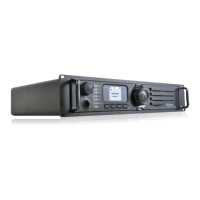
Operation of the repeater can be indicated by the 8
LEDs located on the front panel. After proper operation is
veried, you can congure parameters for the repeater.
3. Conguring Parameters
You may customize repeater parameters such as TX/RX
frequency, TX power and signalling, according to user
needs. After conguration of parameters is complete, you
may perform site installation.
Installation
Caution: Some repeater components can become
extremely hot during operation. Turn off all power
and wait until the repeater is sufficiently cool before
touching the repeater.
Installation Requirements
1. Environmental Conditions at Intended Installation
Site
The repeater may be installed in any location suitable for
electronic communication equipment, provided that the
environmental conditions do not exceed the equipment
specications for temperature, humidity and air quality.
Operating Temperature
-30
℃
to +60
℃
This is the temperature measured in close proximity to
the repeater. For example, if the repeater is mounted in a
cabinet, the temperature within the cabinet is measured.
Humidity
Humidity conditions should not exceed 95% relative
humidity @ 50°C.
Air Quality
F o r e q u i p m e n t o p e r a t i n g i n a n a r e a w h i c h i s
environmentally controlled and with the repeater rack
mounted, the airborne particle level must not exceed
25μg/m3.
And for equipment operating in an area which is not
environmentally controlled and with the repeater cabinet
mounted, the airborne particle level must not exceed
90μg/m3.
●
●
●


 To Next Page
 Loading...