6
2. INSTALLATION
2.1. PLATE DATA
•
•
•
Make sure that the plate data and electrical line
features correspond (V, kW, Hz, phase and available
power).
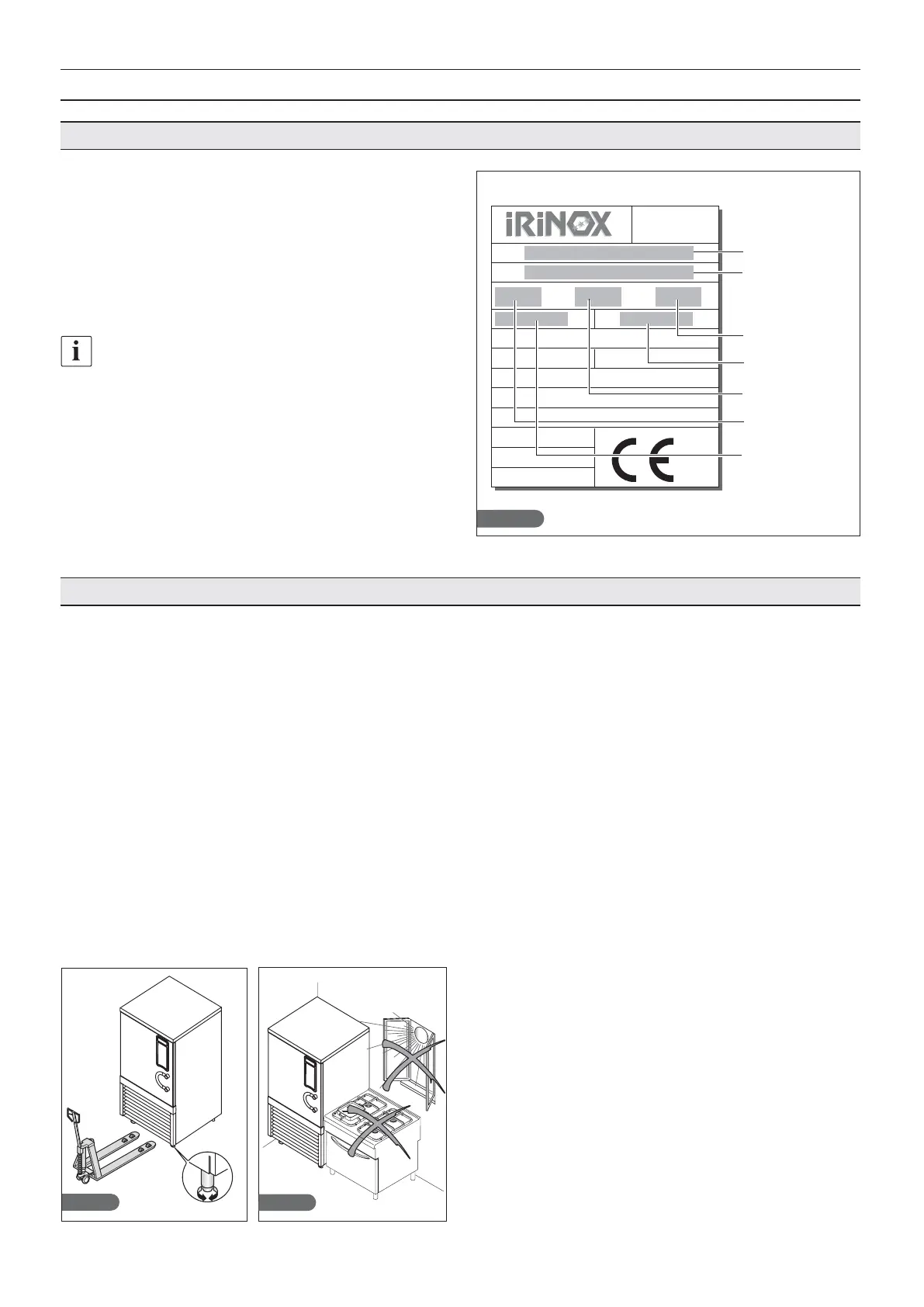
The plate carrying the features of the appliance is
applied on the side (fig.2).
Preparation of machine rooms to dislocate the condensing
units must comply with the fire-prevention Standards in
force in the Country where the machine is installed (contact
the nearest fire station for due indications).
Remember also that the potential intervention of
safety valves or fuse caps in the refrigeration circuit
entails the immediate discharge of all the refrigerant
used in the ambient. Therefore make sure to realise
opportune means of waste disposal and first aide, as
indicated on the safety cards of the refrigerant
(
8see
par. 2.12).
Climatic class:
4 (30°Croomtemperaturewith55%non-condensing
relative humidity) according to Standards CEI EN
60335-1, CEI EN 60335-2-89, ISO 23953-2:2005(E)
Fig. 2
31020
CORBANESE (TV)
ITALY
Mod.
s/n
Compressor HERMETIC
V
A
Refrigerant R404 Charge
Desing pressure (Low)
Desing pressure (High)
Rated Load
Class Volume
PED Code
IP
KPa
KPa
Kw
Ph Hz
Model
Series n.
mm/yy/progres.
Frequency
Power
Phase
Absorption
Voltage
2.2. POSITIONING
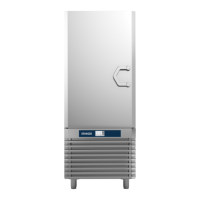
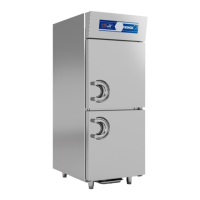
The blast chiller must be installed and inspected in
complete compliance with accident-prevention Law
Standards, with traditional rules and with Standards
now in force.
The installer must check potential fire-prevention
prescriptions (contact the nearest fire station for the
due indications).
Place the blast chiller in the intended spot.
Level the appliance by means of the adjustment feet.
Use appropriate lifts to level heavier machinery (Fig.3).
If the appliances are not levelled, their operation and
condensation outflow can be jeopardised.
To be avoided (Fig.4):
Places exposed to direct sunlight
Closed places with high temperatures and scarce air
exchange (
8see Table 2).
Do not install the machine near to any heat sources.
•
••
•
•
•
•
•
•
•
•
•
Fig. 4
Fig. 3
The remote units are manufactured to be installed in
places protected against adverse weather conditions.
The plants must be positioned on a levelled cement
or steel base and must have the maintenance space
according to the technical files. If installed on the roof
or attic, beams should be provided which divide the
weight. Furthermore the base must be sufficiently
sturdy and capable of bearing the weight of the com-
plete unit resulting from the technical data of the
specific drawing. To avoid further vibrations or noise,
it is recommended to use neoprene anti-vibration
pads underneath the corners of the unit's base.
If the blast chiller/conserver is installed below floor
level or underground, the installer must apply the
clauses foreseen by the standard EN378-
1:2008+A1:2010 ANNEX D to guarantee that no one
can remain locked inside the cell at the end of the
work shift.
The blast chiller/conserver can be installed under-
ground or on a loft as long as there are adequate
emergency exits as foreseen by the standard EN378-
1:2008+A1:2010 ANNEX C.
The installer must verify the need for forced ventila-
tion inside a room where the blast chiller/conserver is
installed as foreseen by the standard EN378-
2:2008+A1:2009 chapter 6.2.14.


 To Next Page