97
Regulator appearance and type may vary by model.
Some models are equipped with a single stage regulator.
The two-stage regulator has the only moving components in the propane system. Its sole
function is to reduce the pressure from the propane containers to a safe and consistent low
operating pressure. The rst stage reduces the container pressure to 10-13 lbs. The second
stage reduces the 10-13 lbs. of pressure further to an operating pressure of 11” W.C. (water
column) or 6.35 oz. of outlet pressure to your appliances.
The second stage is adjustable and will need to be adjusted by your dealer or qualied
propane service technician for optimum performance (this adjustment should always be
made with a properly calibrated manometer).
If the pressure is too high, it aects performance and safety; if the pressure is too low, your
appliances will not operate correctly.
If your recreation vehicle is equipped with the “automatic” two-stage regulator, with both
cylinders full of propane, turn the lever on the regulator towards the cylinder you wish to
use rst. This will now be the “supply” cylinder and the other the “reserve.” Slowly open
both cylinder valves. The indicator on top of the regulator will turn bright green. When the
cylinder becomes empty, the indicator will change to bright orange. Now turn the regulator
lever to the side of the “reserve” cylinder and the green signal should return. You may now
remove the empty cylinder to have it relled without interrupting the ow from the full
bottle. After lling the cylinder, connect the pigtail hose and slowly open the bottle valve.
Propane Use and Safety
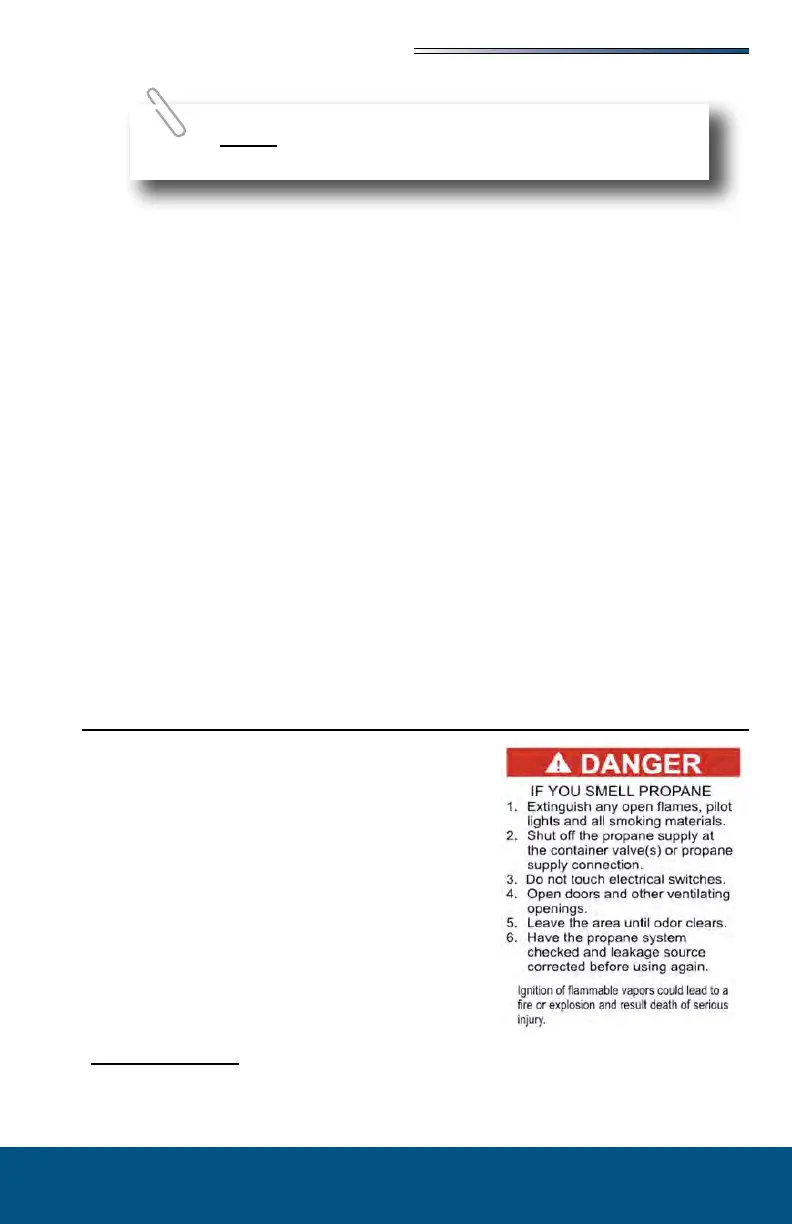
Propane is a colorless and odorless gas that, in the
liqueed state, resembles water. An odorant (usually a
sulfur compound) is added as a warning agent. If you
smell propane within the vehicle, quickly and carefully
perform the procedure listed on the propane system
label. This label has been placed in the vehicle near the
range, for models equipped with a propane systemWhen
propane container is low, occasionally there may be a
concentration of an onion or garlic-like odor, which can
be mistaken for a propane gas leak. After the propane
container has been refueled, the odor will usually
disappear. If not, turn o the valve(s) and have the
propane system inspected by your dealer or qualied
propane service representative
Leaks may be found easily with a soapy water solution. Do not use a solution containing
ammonia or chlorine when locating leaks. These products are corrosive to copper gas lines
and brass ttings, which could result in deterioration of the copper and brass components.







 To Next Page