32
by either exiting the recreational vehicle or calling for
assistance. Young children and household pets may be
the rst aected.
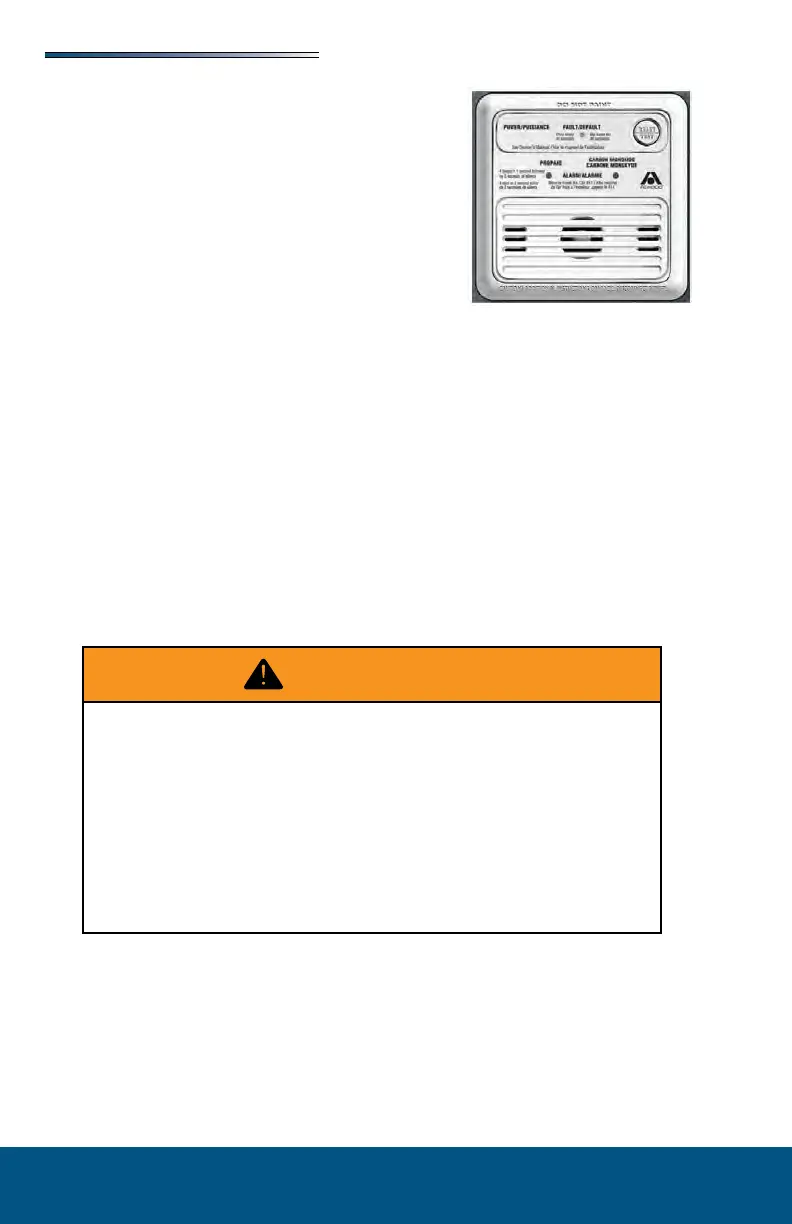
Your combination carbon monoxide/propane alarm is
designed to detect the toxic carbon monoxide fumes that
result from incomplete combustion, such as those emitted
from appliances, furnaces, replaces and auto exhaust.
A carbon monoxide/propane alarm is
for other combustible gas, re or smoke
alarms. This carbon monoxide alarm is designed to detect
carbon monoxide gas from ANY source of combustion.
It is not designed to detect smoke, re or any other gas.
Please note that there are hazards against which carbon
monoxide detection may not be eective, such as natural gas leaks or explosions.
This alarm is designed to sense the presence of carbon monoxide/propane gas, however
there are other combustible fumes or vapors that may be detected by the sensor including
(but not limited to): acetone, alcohol, butane and gasoline.
These chemicals can be found in commonly used items such as deodorants, colognes,
perfumes, adhesives, lacquer, kerosene, glues, wine, liquor, most cleaning agents and the
propellants of aerosol cans.
High temperatures can activate glue and adhesive vapors. If you close up a recreational
vehicle on a hot day, the chemicals used in its construction may be detected for months after
the vehicle was constructed (for more information, refer to Sec. 2, Formaldehyde).
1. Operate the RESET/SILENCE button.
2. Call your emergency services (re department or 911).
3. Immediately move to fresh air (outdoors or by an open door or window).
4. Do not re-enter the premises or move away from the open door or window until the
emergency service responders have arrived, the premises have been aired out, and your
alarm remains in its normal condition.
If your alarm reactivates within a 24 hour period, repeat steps 1-4 and call a qualied
appliance technician to investigate for sources of carbon monoxide from fuel burning
Actuation of this detector indicates the presence of carbon monoxide
which can kill you.
Never turn the 12-volt battery disconnect control to the o position
and disconnect the battery cable to silence an alarm. The alarm will
automatically sense when the level of carbon monoxide in the air reaches
below dangerous levels. You should stay outside the vehicle in fresh
air until the alarm is silenced. When the alarm sounds, do not stand too
close to the alarm. The sound produced by the alarm is loud because it is
designed to wake a person in an emergency. Prolonged exposure to the
alarm at a close distance may be harmful to your hearing.



 To Next Page