59
Tire wear should be checked frequently. Once a wear pattern becomes rmly
established in a tire it is dicult to stop, even if the underlying cause is
corrected.
Failure to follow proper ination guidelines may result in tire failure, which,
under certain circumstances can cause loss of vehicle control or accidents that
may result in property damage, bodily injury and/or death.
Proper ination should be monitored closely. Failure to do so could result in the overheating
of a tire causing a blowout. Ination pressure should be as recommended by the tire
manufacturer or as the federal label for the recreation vehicle indicates.
When you are using your Recreational Vehicle, check ination pressure weekly. Pressure
should be checked when the tires are cold. During travel, tires heat up and pressure increases.
It is recommended that the tire pressure be checked at the beginning of
each trip to obtain the maximum life of the tire. Follow the instructions
listed on the Federal Certication label, to determine the correct tire
pressure. Under-ination may cause tire failures and swaying resulting
in loss of control, injury, death or property damage.
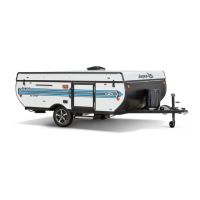
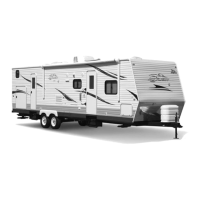
Towable recreation vehicles are equipped with special trailer (ST) tires
that have a maximum speed rating of 65 MPH (104 km/h).
Exceeding the tire speed rating may result
in tire failure, which could lead to an accident causing serious injury or
death.
Cold tire ination pressure is dened as a tire that has not
been used for three or more hours, or has been driven less than one
mile. Tire ination pressure of a hot tire may show an increase of as
much as 6 psi over a cold tire.



 To Next Page