EasyManua.ls Logo

KeepRite K40-CU-IM-13 - User Manual

KeepRite K40-CU-IM-13
36 pages
Print Icon
To Next Page IconTo Next Page
Loading...
K40-CU-IM-13
1068155
Installation and Maintenance
Instructions
for
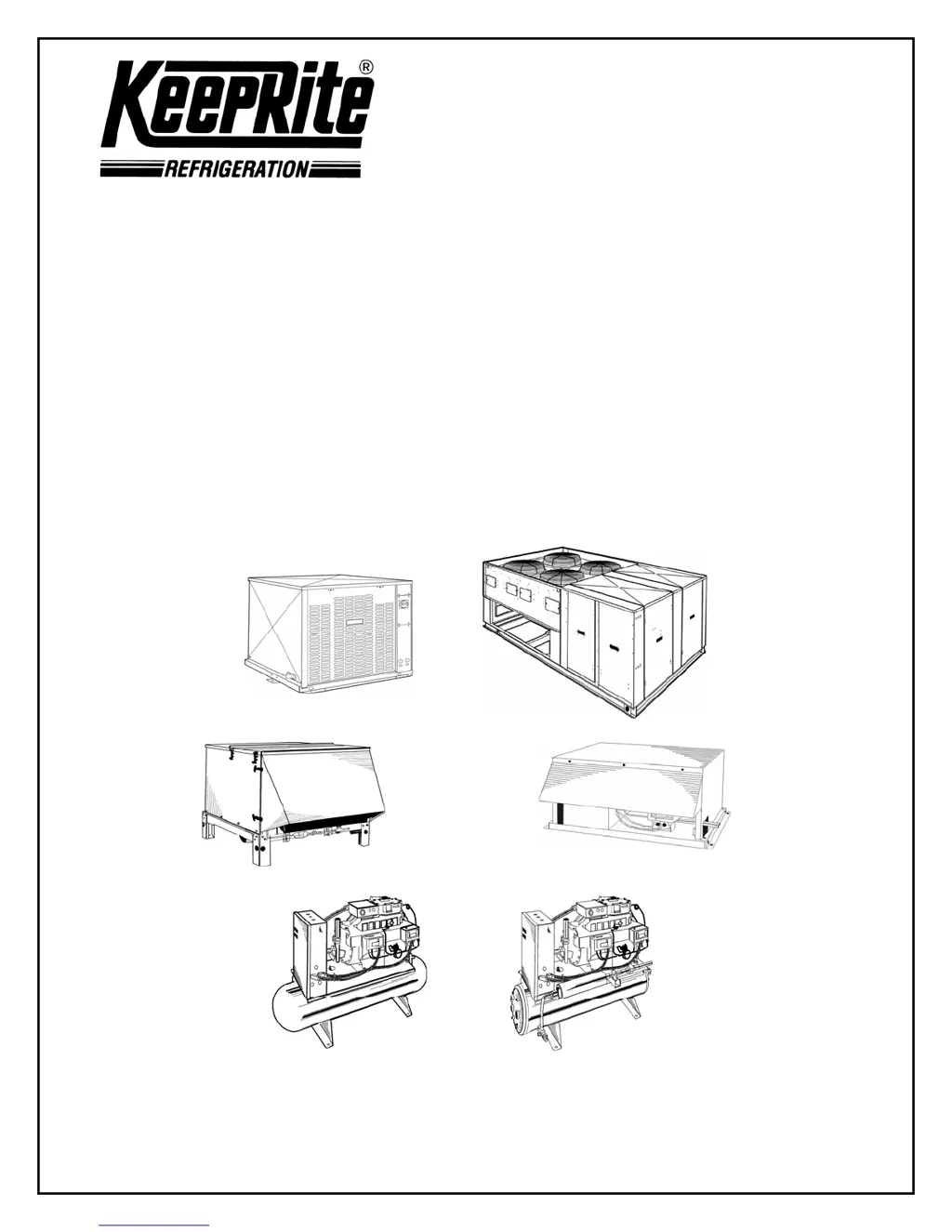
Air-Cooled, Remote and Water-Cooled
Condensing Units
National Refrigeration and Air Conditioning Canada Corp.,
159 Roy Blvd., P.O. Box 2020, Brantford, Ontario, N3T 5Y6
Phone: 800-463-9517, 519-751-0444 Fax: 519-753-1140
Visit our web site at www.keepriterefrigeration.com

Questions and Answers

  • N
    Nicholas WhiteAug 21, 2025
    Why does my KeepRite K40-CU-IM-13 compressor hum but not start?
    • J
      Jordan BauerAug 22, 2025
      If your KeepRite Air Conditioner compressor isn't starting but is humming, it could be due to several reasons. First, ensure the wiring is correct and not loose. Low line voltage can also cause this issue, so measure and correct it if necessary. Other potential causes include a defective start or run capacitor, a defective start relay, damaged motor windings, or internal mechanical damage within the compressor. Inspect and replace any defective components, and check for internal mechanical damage.
  • Q
    qwilsonSep 2, 2025
    Why is the room temperature too high with my KeepRite Air Conditioner?
    • H
      Heidi GomezSep 3, 2025
      If the room temperature is too high when using your KeepRite Air Conditioner, several factors could be responsible. A defective room thermostat or an improper differential/setting can cause this issue, so replace or adjust the thermostat. A malfunctioning liquid line solenoid valve can also be a factor, so inspect and repair or replace it. Insufficient air across the evaporator coil, improper evaporator superheat, or a malfunctioning condensing unit can also lead to this problem. Ensure adequate airflow, check and correct evaporator superheat, and inspect and repair the condensing unit.
  • A
    Anthony BartlettSep 1, 2025
    What causes the start capacitor to burn out in my KeepRite K40-CU-IM-13 Air Conditioner?
    • R
      ray57Sep 1, 2025
      If the start capacitor in your KeepRite Air Conditioner burns out, it could be due to several reasons. Incorrect wiring, short cycling, or low line voltage can all contribute to this issue. Additionally, sticking relay contacts, an incorrect capacitor, or the start winding remaining in the circuit for a prolonged period can cause the capacitor to burn out. Correct the wiring, address any short cycling issues, adjust low line voltage, inspect and fix the relay contacts, and ensure the start winding is not continuously in the circuit.
  • M
    Melissa WilliamsAug 30, 2025
    Why is my KeepRite Air Conditioner compressor so noisy?
    • M
      Mr. Eric SnyderAug 30, 2025
      If your KeepRite Air Conditioner compressor is excessively noisy or vibrating, several factors could be contributing. Check for refrigerant flood back and improve piping support on the suction or discharge lines. Inspect and replace any broken or worn internal compressor parts. Also, verify and adjust the oil level, and check the rotation direction of the compressor (for three-phase models). Ensure the compressor is properly mounted on the unit base.
  • J
    jacqueline53Aug 29, 2025
    Why does the start relay keep burning out in my KeepRite K40-CU-IM-13 Air Conditioner?
    • B
      Brendan TuckerAug 29, 2025
      If the start relay in your KeepRite Air Conditioner burns out, it could be due to several reasons. First, ensure that the wiring is correct. Low or high line voltage can also cause this issue, so measure and adjust the line voltage accordingly. Short cycling, improper mounting of the relay, an incorrect start or run capacitor, or an incorrect relay can also lead to burnout. Address any short cycling issues, properly mount the relay, and replace any incorrect components with the correct ones.
  • J
    Julia SmithAug 27, 2025
    What causes short cycling in a KeepRite K40-CU-IM-13 Air Conditioner compressor?
    • M
      Melissa NewmanAug 27, 2025
      Several factors can cause a KeepRite Air Conditioner compressor to short cycle. The low-pressure control differential might be set too low, so adjust it accordingly. A shortage of refrigerant can also cause this, so add refrigerant as needed. Insufficient airflow at the evaporator(s) can be another cause; increase the airflow. High discharge pressure, leaking internal discharge valves, or an incorrectly sized unit can also lead to short cycling. Reduce discharge pressure, inspect and repair any leaking internal discharge valves, and verify the unit sizing against your requirements.
  • J
    Jesse NorrisAug 27, 2025
    Why is the discharge pressure too high in my KeepRite Air Conditioner?
    • C
      Christy HansonAug 27, 2025
      If your KeepRite Air Conditioner's discharge pressure is too high, it could be due to several reasons. Start by purging any non-condensables from the system. If the system is overcharged with refrigerant, reduce the refrigerant charge. Ensure the discharge service valve is fully open. Check that the condenser fan is running and that the condenser coil is clean (for air-cooled condensers) or that the tubes are clean (for water-cooled condensers). Inspect and adjust or replace the water regulating valve or the flooded head pressure control if you have water-cooled condensers.
  • L
    Lauren CraigAug 25, 2025
    How to troubleshoot a KeepRite K40-CU-IM-13 Air Conditioner compressor that will not run?
    • C
      Charles RodriguezAug 25, 2025
      If your KeepRite Air Conditioner compressor won't run and doesn't even try to start, there are several potential causes to investigate. Start by checking if the main power switch is open and inspect the fuse or circuit breaker. Also, check if thermal overloads have tripped and reset them if necessary. Other possible issues include a defective contactor or coil, a system shutdown by safety devices, an open thermostat or control (indicating no cooling is required), a liquid line solenoid that won't open, or loose wiring. Verify the thermostat settings, inspect the liquid line solenoid, and check and tighten any loose wiring.
  • D
    douglas49Aug 23, 2025
    What to do if KeepRite K40-CU-IM-13 compressor starts, but trips on overload protector?
    • C
      carterheatherAug 23, 2025
      If your KeepRite Air Conditioner compressor starts but then trips on the overload protector, several factors could be at play. Begin by confirming that the wiring is correct and secure, and that the line voltage is within the proper range. A defective start or run capacitor, or a faulty start relay could also be the cause, so replace these if needed. High suction or discharge pressure, tight bearings, or mechanical damage inside the compressor can also trigger this issue. Additionally, check for a defective overload protector, damaged motor windings, an overcharged system, or a refrigerant shortage. Ensure proper ventilation and that the system is operating within its design conditions. If suction or discharge pressure is too high, reduce it.

Summary

General Safety

Important Safety Note

Key safety precautions for qualified mechanics and working conditions, emphasizing care around sharp edges.

Warning: Power Disconnection

Crucial warning about always disconnecting and locking off the main power supply before working on the system.

Equipment Inspection Procedure

Procedure for inspecting equipment upon receipt for visible damage or loss and checking shipping lists.

Handling, Placement and Installation

Location Selection Criteria

Factors to consider when selecting a location, including load capacity, ventilation, and codes.

Rigging and Unit Placement

Guidelines for safely lifting and positioning the unit, using spreader bars, and placing on a level base.

Air-Cooled Unit Clearance Requirements

Minimum clearances for air-cooled condensing units with horizontal airflow.

Vertical Airflow Clearance

Minimum clearances for vertical airflow units, including wall, pit, and louver/fence installations.

Shipping Spacer Removal

Step-by-step instructions for removing shipping spacers from spring-mounted compressors.

Ventilation Requirements

Machine Room Ventilation Air

Guidelines for adequate ventilation air in machine rooms to prevent excessive temperature rise.

Electrical Information and Diagrams

Electrical Wiring Compliance

Adherence to national/local electrical codes for wiring and connections.

Voltage and Phase Balance

Allowable voltage variations and phase imbalance requirements for unit operation.

Defrost Timer Settings

Recommended initial settings for air and electric defrost time clocks.

K-Line Horizontal Air Flow Condensing Unit Diagrams

Wiring diagrams for K-Line horizontal air flow condensing units (208-230/3/60 & 200-220/3/50).

Evaporator Wiring Diagrams

Typical wiring configurations for air defrost and electric defrost evaporators.

KE-Line Single-Phase Horizontal Air Flow Diagrams

Wiring diagrams for KE-Line single-phase horizontal air flow condensing units.

KE-Line Three-Phase Horizontal Air Flow Diagrams

Wiring diagrams for KE-Line three-phase horizontal air flow condensing units.

Vertical Air Flow Condensing Unit Diagrams

Wiring diagrams for vertical air flow condensing units and their evaporators.

Refrigerant Piping

Piping Installation Warnings

Warnings and important notes regarding the installation of refrigerant piping, emphasizing grade copper tubing.

Line Sizing Charts

Tables detailing pressure loss for liquid refrigerant in risers based on size and refrigerant.

Suction Line Velocity and Traps

Guidelines for suction line gas velocity and the use of suction traps for oil return.

Double Riser Construction

Typical construction methods for double riser suction lines to aid oil return.

Water-Cooled Condensers

Water Circuiting and Valve Operation

Explanation of series/parallel water circuits and water regulating valve function.

Water Flow Rate and Pressure Drop

Information on estimating flow rates and pressure drops for water-cooled condensers.

Water Flow Rate Requirements

Tables showing required water flow rates for different TD and temperatures.

Condenser Pressure Drop Data

Tables for typical pressure drops in condensers and compressor coils.

System Accessories

Liquid Sight Glass and Filter Drier

Installation and function of liquid sight glasses and filter driers for moisture and refrigerant detection.

Discharge Muffler and Oil Separator

Use of mufflers for noise reduction and oil separators for oil return to the compressor.

Suction Line Components

Importance of suction line filters, vibration eliminators, and accumulators for compressor protection.

Heat Exchanger and Phase Monitor

Benefits of suction to liquid heat exchangers and phase/voltage monitors for system protection.

Leak Testing

Leak Testing Procedure

Steps for testing system piping for leaks using nitrogen and refrigerant.

Combustible Gas Warning

Warning about HFC-134a combustibility with air at certain concentrations.

Evacuation and Dehydration

Evacuation Procedure

Method for evacuating the system using a high vacuum pump to remove moisture.

Dehydration Process

Detailed steps for achieving proper dehydration and vacuum levels.

Line Insulation

Insulation Requirements

Recommended insulation types and thicknesses for liquid and suction lines to reduce heat gain.

Refrigerant Charging

Charging Procedures

Methods for charging the system with refrigerant, including sight glass observation.

Pressure Control Valve Adjustment

Setting adjustments for flooded condenser pressure-regulating valves.

Refrigerant Operating Charges

Air-Cooled Unit Charges

Tables showing refrigerant operating charges for air-cooled units in warm and cold ambients.

Liquid Line Charge Data

Table detailing refrigerant charge per 10 feet of liquid line size.

Vertical Airflow Condensing Unit Charges

Warm Ambient Charges (Vertical)

Refrigerant operating charges for vertical airflow units in warm ambients.

Cold Ambient Charges (Vertical)

Refrigerant operating charges for vertical airflow units in cold ambients.

Compressor Oils

Oil Level Check and Cautions

Procedures and cautions for checking compressor oil levels before and after operation.

Copeland Compressor Oil Compatibility

Compatible refrigeration oils for Copeland semi-hermetic reciprocating compressors.

Bitzer Compressor Oil Compatibility

Compatible refrigeration oils for Bitzer semi-hermetic reciprocating compressors.

Carlyle Compressor Oil Compatibility

Compatible refrigeration oils for Carlyle semi-hermetic reciprocating compressors.

System Start-up Check List

Pre-Start Checks

Essential checks to perform before starting the refrigeration system, including connections and oil levels.

Initial Operation Monitoring

Procedures for monitoring system performance during initial operation, including pressures and oil levels.

Start-up Documentation

Ensuring wiring diagrams, instructions, and warranty certificates are completed and filed.

Pressure Control Settings

Minimum and Cut-in;out Settings

Tables showing pressure control settings for various refrigerants and temperatures.

High Pressure Control Settings

Maximum cut-out pressure settings for air-cooled and water-cooled units.

Low Temperature Room Pull-Down

Pull-Down Procedure

Recommended staged pull-down process for large freezers to avoid structural issues.

Defrost Cycle Management

Adjusting defrost termination and fan delay for proper ice management.

Checking Superheat

Compressor Superheat Measurement

Steps to measure and calculate compressor suction superheat.

Evaporator Superheat Measurement

Steps to measure and calculate evaporator superheat.

System Operational Check List

Performance Monitoring

Checks for discharge/suction pressures, sight glass, and expansion valve operation.

Control System Verification

Verifying voltage, amperage, pressure controls, and defrost settings.

System Troubleshooting

Compressor Operation Issues

Troubleshooting for compressor start, overload, and short cycling problems.

Compressor Starting Issues

Diagnosing humming but not starting, or tripping on overload protector.

Compressor Short Cycling

Causes for the compressor cycling on and off too frequently.

Pressure and Oil Issues

Diagnosing discharge/suction pressure, oil level, and oil loss problems.

Fixture and Evaporator Issues

Troubleshooting room temperature, ice accumulation, and fan operation.

Customer Instructions and Maintenance

Warranty Activation

Instructions for filling out and submitting the Warranty Activation Certificate.

Owner Operation Guidance

Advising the owner on normal operation, electrical characteristics, and site cleanliness.

Maintenance Program

Recommendations for a semi-annual maintenance program by a qualified mechanic.

Service Parts Availability

Guidance on obtaining genuine service parts through sales representatives or distributors.

Finished Goods Warranty

General Warranty Policy

Terms and conditions for product warranty coverage, including duration and transferability.

Warranty Exclusions

List of damages and conditions not covered by the warranty, such as abuse or unauthorized alterations.

Start-up Information Form

Installation Details

Fields for installation location, contractor contact information, and system type.

System and Unit Specifications

Recording of unit model, serial numbers, electrical ratings, and expansion valve details.

System Conditions and Operation

Parameters to record during start-up, including pressures, temperatures, and defrost settings.

Service Parts List

Contact Information for Parts

Addresses and phone numbers for obtaining service parts in Canada and USA.

KeepRite K40-CU-IM-13 Specifications

General IconGeneral
BrandKeepRite
ModelK40-CU-IM-13
CategoryAir Conditioner
LanguageEnglish

Related product manuals