Introduction 1
Keysight E-Series E9300 Operating and Service Guide 21
General information
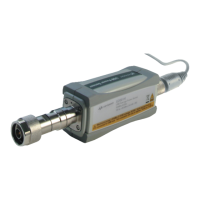
Welcome to the Keysight E-Series E9300 power sensors Operating and Service
Guide. This guide contains information about the initial inspection, operation,
specifications and repair of the Keysight E-Series E9300 power sensors. Use this
guide as a supplement to the Keysight EPM series power meters User’s Guides. It
is 3-hole drilled to allow you to retain it in the power meter’s binder.
All power meter functions are detailed in the Keysight EPM series power meters
User’s Guide and Programming Guide, however, this guide contains information
specific to the operation of Keysight E-Series E9300 power sensor.
Accessories shipped with the instrument
The following items are shipped with every purchase of E-Series E9300 power
sensor:
– Certificate of Calibration
– E-Series E9300 Power Sensors Operating and Service Guide
Verify that any options ordered are included with the shipment by checking the
packing list included with the shipment.
Power meter requirements
The Keysight E-Series E9300 power sensors are NOT compatible with the earlier
Keysight 430-Series, Keysight E1416A, or Keysight 70100A power meters. They
are compatible ONLY with the Keysight EPM series power meters. Also, not all
Keysight EPM series power meters are immediately compatible - your power
meter must use firmware and Digital Signal Processing (DSP) code from a specific
release onwards. see “Checking power meter firmware and DSP revision” on
page 24 tells you how to check your power meter and have it upgraded if
required.
The Keysight E-Series E9300 power sensors in detail
Most power sensors used for measuring average power employ either
thermocouple or diode technologies. Diode based sensors frequently rely on the
application of correction factors to extend their dynamic range beyond their
square law response region, typically –70 dBm to –20 dBm. However, while this



 To Next Page