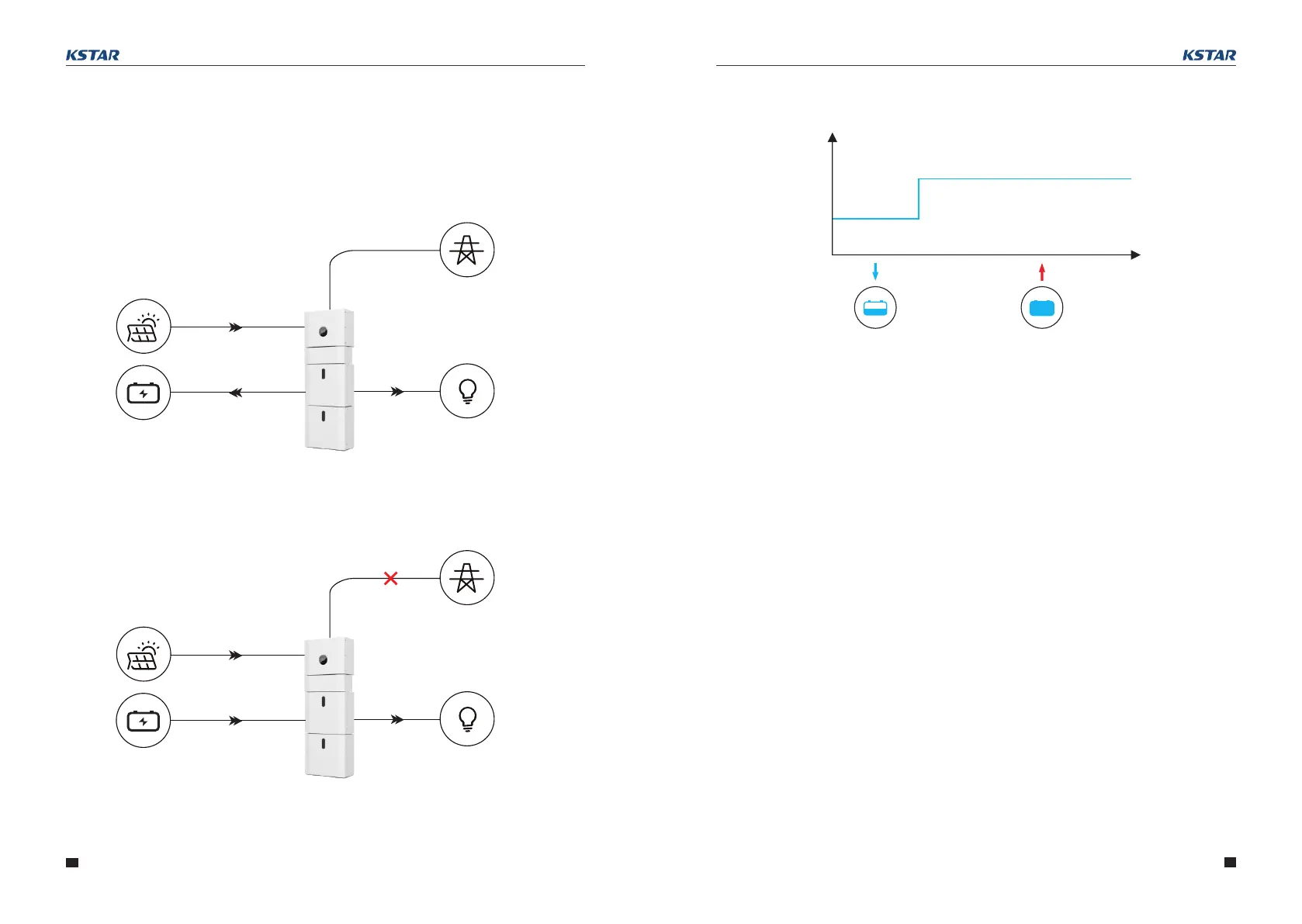
1.2 Operation Modes:
There are three basic modes that end users can choose via inverter screen/APP.
User Manual User Manual
03
www.kstar.com
04
www.kstar.com
• BAT PRIORITY: Under this mode, the battery is only used as a backup power
supply when the grid fails and as long as the grid works, the batteries won’t be used
to power the loads. The battery will get charged with the power generated by the PV
system or from the grid.
• PEAK SHIFT: This mode is designed for time-use mode customer. The customer is
able to set up the charging/discharging time & power via inverter screen or APP.
• SELF CONSUME: The energy generated by the solar panels will be used in the
following order: Feed the home loads; Charge the battery and then, feed into the
grid.When the sun is off, the load will be supported by battery to enhance self
consumption. If the power supply from the batteries is not sufficient, the grid will
support the load demand.
$
TIME
Electricity Price
1.3.2 Operator Requirements
The operators should get a professional qualification, or be trained.
The operators should be familiar with the whole storage system, including
compositions and working principles of the system.
The operators should be familiar with the Product Instruction.
While maintaining, the maintainer is not allowed to operate any equipment until all the
equipment has been turned off and fully discharged.
The warning signs contain important information for the system to operate safely, and
it is strictly prohibited to torn or damage them. Ensure that the warning signs are
always well-functioned and correct placed. The signs must be replaced immediately
when damaged.
1.3.3 Protection of Warning Sign
1.3.1 Manual Keeping
This manual contains important information about operating the system. Before
operating, please read it very carefully.
The system should be operated in strict accordance with the instructions in the
manual,otherwise it can cause damages or loss to equipment, personnel and property.
This manual should be kept carefully for maintenance and reparation.
1.3 Safety Introduction



 To Next Page