EasyManua.ls Logo

KTM 620 - User Manual

KTM 620
41 pages
Print Icon
To Next Page IconTo Next Page
Loading...
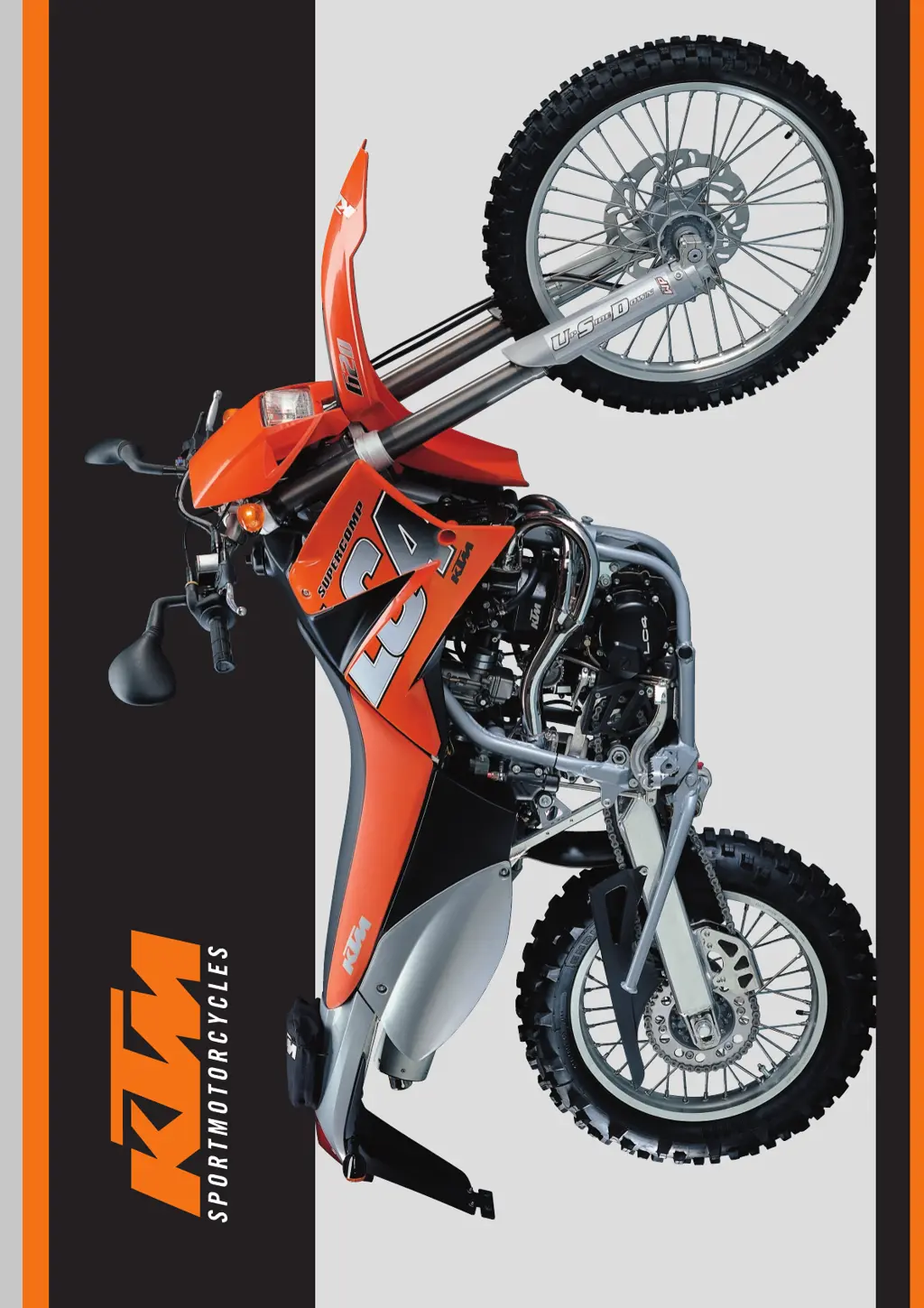
OWNERS HANDBOOK
Art.Nr. 320577 9/99
2000
BEDIENUNGSANLEITUNG
400/620
SC, SUPERMOTO

Questions and Answers

  • D
    ddeanAug 22, 2025
    How to fix a KTM Motorcycle that won't start?
    • E
      emilybrownAug 22, 2025
      If your KTM Motorcycle engine won't start, several factors could be at play. First, ensure that the fuel supply isn't interrupted: switch on the ignition and emergency OFF switch, open the fuel tap, check the tank fuel level, and avoid using the choke. If the engine is flooded, close the fuel tap, loosen the fuel hose at the carburetor, and lead it into a basin to check for fuel leaks. If fuel leaks, clean the carburetor. If not, inspect the tank ventilation and clean the fuel tap.
  • K
    Karen BauerAug 25, 2025
    What to do if KTM 620 Motorcycle engine gets too hot?
    • A
      April DavisAug 25, 2025
      If your KTM Motorcycle engine is overheating, there are several possible causes. First, check the cooling liquid level and refill if necessary, also inspect the cooling system for leaks. Ensure adequate airflow by riding at a faster pace. Clean the radiators with a water jet if they are dirty. If there's foam in the cooling system, replace the coolant with a brand-name antifreeze liquid. Inspect the cooling hoses for bends and either shorten or replace them. Lastly, the thermostat might be defective; remove and check it (it should open at 70°C/158°F), and replace if needed.
  • H
    hoovernicholasAug 26, 2025
    What to do if KTM Motorcycle engine will not reach full power?
    • J
      josephcaseyAug 26, 2025
      If your KTM Motorcycle engine isn't reaching full power, the fuel supply may be partially interrupted, or the carburetor may be dirty. Clean and check both the fuel system and carburetor. Also check the air filter and clean or replace if it is very dirty. Finally, check the exhaust for leaks or blockages, and replace the glass fiber yarn in the exhaust silencer if necessary.
  • S
    Stephanie StuartAug 28, 2025
    Why KTM 620 Motorcycle has high oil consumption?
    • M
      Monica TaylorAug 28, 2025
      High oil consumption in your KTM Motorcycle may be due to a buckling gearing ventilation hose; replace it with a non-buckling hose. Check the engine oil level when the engine is warm and correct it if necessary. Also, the motor oil might be too thin; use a thicker engine oil.
  • B
    Brooke GoodwinAug 30, 2025
    Why is my KTM Motorcycle engine getting too hot?
    • D
      davidjacksonAug 30, 2025
      If your KTM Motorcycle engine is getting too hot, it might be due to several reasons. Check if there is enough cooling liquid and refill if necessary, while also checking the cooling system for leaks. Ensure there's enough air stream by driving briskly. Clean the radiators with a water jet if they are dirty. If there's foam formation in the cooling system, replace the cooling liquid with an anti-freeze liquid. Inspect the cooling hose for bends and shorten or replace it if needed. Finally, check the thermostat to see if it’s defective and replace it if necessary.
  • K
    kentschultzSep 1, 2025
    How to troubleshoot KTM 620 Motorcycle engine that will not idle?
    • E
      Eric BrooksSep 1, 2025
      If your KTM Motorcycle engine isn't idling properly, the issue might stem from a few common causes. Water or blockages in the carburetor jets can disrupt the idle. To resolve this, dismount and thoroughly clean the carburetor. Also, ensure the carburetor is correctly fitted to the intake flange. Lastly, a blocked idling jet can prevent proper idling; in this case, dismount the carburetor and clean the jets.
  • B
    Brooke WilliamsSep 3, 2025
    What causes KTM 620 Motorcycle engine to stop or sputter in carburetor?
    • K
      Kari MontgomerySep 3, 2025
      If your KTM Motorcycle engine stops or sputters in the carburetor, it may be due to insufficient fuel. To address this, clean and check the fuel system and carburetor. Also, ensure that the engine isn't taking in air uncontrollably by checking if the intake flange and carburetor are firmly set.
  • M
    michael44Sep 5, 2025
    Why does my KTM Motorcycle have high oil consumption?
    • S
      Scott McbrideSep 5, 2025
      If your KTM Motorcycle is experiencing high oil consumption, it could be due to a few reasons. Check the gearing ventilation hose for buckling and replace it with a non-buckling ventilation hose if necessary. Also, check the engine oil level when the engine is warm and correct it if it's too high. Finally, if the motor oil is too thin, use a thicker engine oil.
  • C
    colleen73Sep 7, 2025
    What causes all lamps to blow out on a KTM 620 Motorcycle?
    • W
      william04Sep 7, 2025
      If all the switched-on lamps in your KTM Motorcycle have blown out, it is possible that the capacitor or voltage regulator is faulty. Remove the right side cover and control the connections. Have a professional check the capacitor and voltage regulator.
  • J
    Jeffrey DouglasSep 9, 2025
    What to do if KTM 620 Motorcycle engine stops or splutters in carburettor?
    • M
      Margaret BridgesSep 9, 2025
      If your KTM Motorcycle engine stops or sputters in the carburetor, it could be due to insufficient fuel. Clean and check the fuel system and carburetor. Also, the engine might be taking in air uncontrollably; check the intake flange and carburetor to ensure they are firmly set.

Summary

Important Safety and Operating Guidelines

Introduction to Your KTM Motorcycle

Serial Number Identification

Operation Instruments and Controls

Clutch and Brake Levers

Details on clutch lever, hand brake lever, and hand decompression lever operation.

Indicator Lamps and Speedometer

Explanation of indicator lights and digital/analog speedometer functions.

Handlebar Switches

Operation of combination switches, flasher switches, and horn.

Fuel System Controls

How to operate the filler cap, fuel tap, and understand fuel indicators.

Engine Starting Controls

Operation of choke, hot-start, kickstarter, and foot brake pedal.

Handlebar and Suspension Adjustments

Adjusting handlebar lock and suspension damping settings.

Driving Instructions and Safety Checks

Pre-Ride Checks

Essential checks before each ride including oil, fuel, chain, tires, brakes, and cables.

Initial Operation and Break-in

Guidance for first rides, break-in procedures, and speed limits.

Starting and Riding Procedures

Step-by-step guides for starting the engine and basic riding techniques.

Braking and Parking

Proper braking techniques and procedures for stopping and parking the motorcycle.

Periodic Maintenance Schedule

Maintenance Work on Chassis and Engine

Seat and Tool Kit Access

Instructions for removing the seat and locating the tool kit.

Front Fork and Steering Head Maintenance

Procedures for servicing the front fork, including breather plugs and steering head bearings.

Handlebar and Speedometer Maintenance

Adjusting handlebar position and maintaining the speedometer and rear shock absorber.

Chain Maintenance and Adjustment

How to check, adjust, maintain, and assess chain wear.

Brake System Maintenance

Comprehensive guide to disc brake system, fluid levels, and pad replacement.

Wheel and Tire Checks

Procedures for removing/installing wheels and checking tire pressure.

Hub and Spoke Integrity Checks

Inspecting spoke tension and rear hub shock absorption rubbers.

Cooling System Service

Information on the cooling system and checking coolant levels.

Air Filter, Exhaust, and Carburetor Draining

Cleaning the air filter, servicing the exhaust, and draining the carburetor float chamber.

Carburetor Adjustments

Adjusting carburetor settings like idling, hot start, and float levels.

Control Cable Adjustments

How to adjust throttle, choke, clutch, and decompression cables.

Engine Oil and Filter Service

Procedures for checking, changing engine oil, and replacing filters.

Troubleshooting Guide

Motorcycle Cleaning Procedures

Winter Storage and Conservation

Storage and Re-initialization

Technical Specifications - Engine

Engine Specifications Details

Detailed engine specifications including displacement, bore, fuel, and valve timing.

Basic Carburetor Settings

Standard settings for carburetor jets, needles, and throttle valve.

Technical Specifications - Chassis

Chassis Specifications

Details on frame, fork, brakes, tires, and dimensions.

Standard Suspension Adjustments

Recommended settings for fork and shock absorber compression and rebound.

Chassis Tightening Torques

Torque specifications for chassis assembly and components.

KTM 620 Specifications

General IconGeneral
Displacement609 cc
Compression ratio11.5:1
Fuel systemCarburetor
Transmission5-speed
Front brakesSingle disc
Rear brakesSingle disc
Engine typeSingle-cylinder, four-stroke
Cooling systemLiquid-cooled
Front suspensionUSD fork
Rear suspensionMonoshock

Related product manuals