3
JIG ASSEMBLY, MOUNTING, & USING THE CLAMPS
Chapter 1Super Jig-12-18-24 User Guide
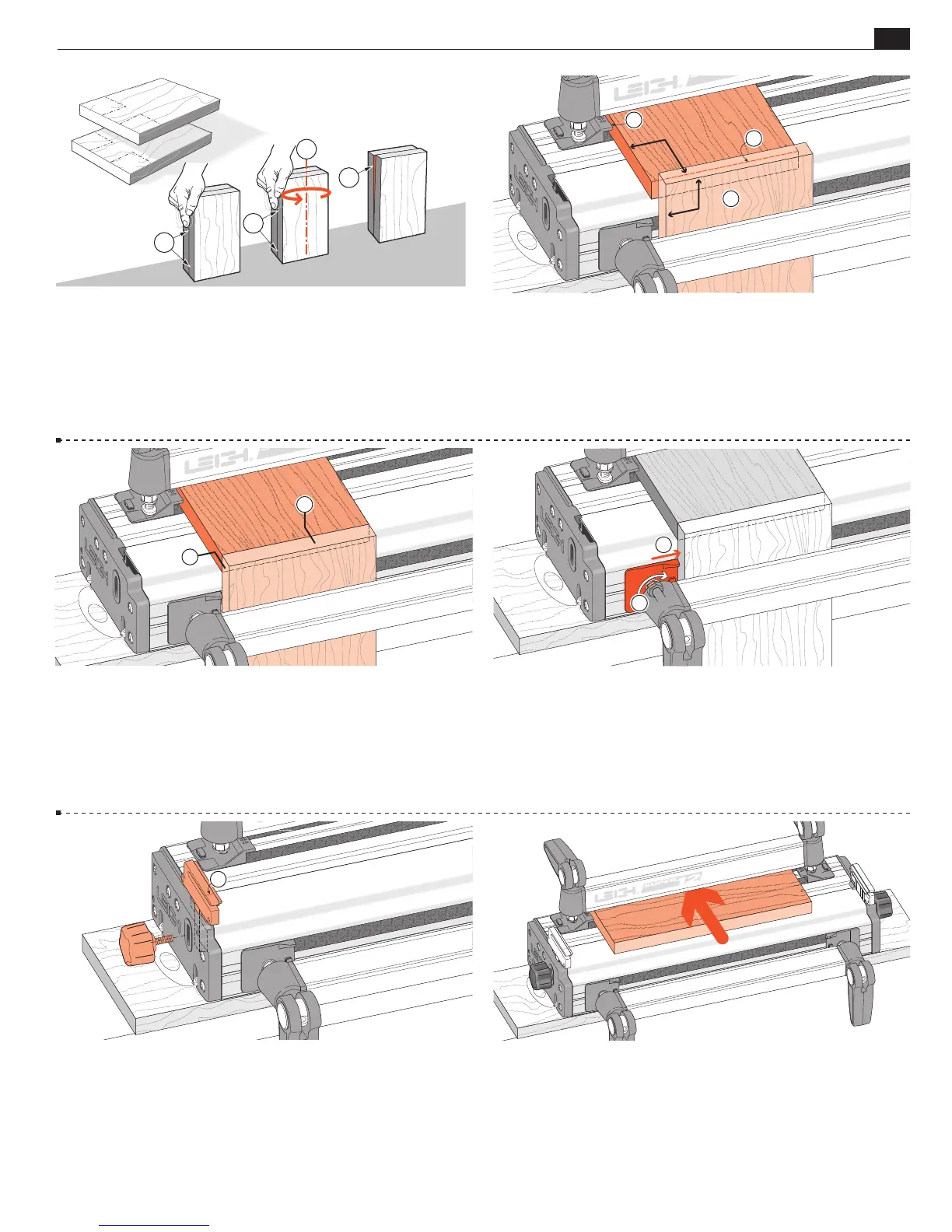
1-7 Now you need two boards about ¾" x 6" x 8" long
[20 x 150 x 200mm]. Both must have perfectly square ends to accu-
rately index the front and rear side stops.
Check for squareness: stand both pieces vertically on a flat
surface. Make sure side edges are flush at bottom and top
.
Turn one piece around on its end
. If side edges are flush top to bot-
tom
, the boards are square. If not,
➃
; cut two that are.
90˚
90˚
90˚
90˚
1
4
2
3
1-8 Align Front Side Stops Clamp one square ended board
in the front, not touching the left side stop and with the top edge above
the top surface of the jig body
. Place the other square board in the rear
clamp, tight against the left rear side stop
, with its front edge touching
flush across the rear of the vertical board
. Tighten the rear clamp.
Note: Do not overtighten the right hand clamps during this step.
3
90˚
90˚
1
2
1-9 Now loosen the front clamp and position the front board so
its top end edge is perfectly flush and level with the top face of the
horizontal board
and, both boards left edges are also perfectly
flush
. Tighten the clamp.
1
2
1-10 Now push the front left side stop inwards and flush against
the vertical board
and firmly tighten the clamp bolt nut.
Repeat operations 1-8 thru 1-10 at the right side of the jig. The
front and rear side stops are now indexed to provide accurate
board alignment in all routing procedures. You may now remove
the boards.
1-11 Insert the right and left support brackets. Attach the knobs,
raise them to full height and tighten the knobs.
Note: For clarity, the set lines on support brackets
are shown in
red in this user guide. The actual bracket lines are black.
1
1-12 Make up a
3
⁄4"x 6"[20 x 150mm] finger support board as
shown. Lengths: 11"[280mm] for Super12, 17"[430mm] for
Super18, and 23"[600mm] for Super24. Use MDF or plywood
for flatness and stability. This board will support the guidefinger
assembly in all front-clamping vertical board modes. Clamp it
in the rear of the jig.


 To Next Page