EasyManua.ls Logo

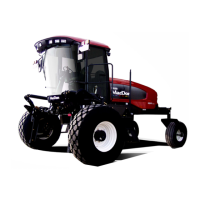
MacDon M150 - User Manual

MacDon M150
234 pages
Print Icon
To Next Page IconTo Next Page
Loading...
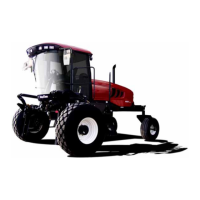
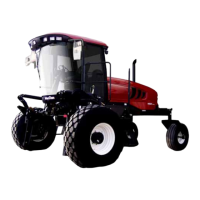
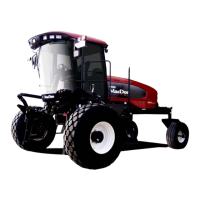
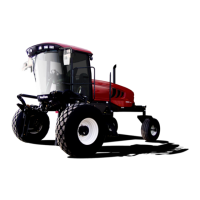
M150 & M200
Self-Propelled Windrowe
r
OPERATOR’S MANUAL
Revision
C
Part #169017 $25

Table of Contents

Other manuals for MacDon M150

Questions and Answers

  • S
    Shannon SextonAug 1, 2025
    Why is my MacDon Farm Equipment engine knocking?
    • S
      Sabrina Ferguson MDAug 1, 2025
      If the engine in your MacDon Farm Equipment is knocking, it could be due to several reasons. Check the oil level and add oil if it's insufficient. Also, ensure you are using the proper fuel. Low or high coolant temperature can also cause knocking, so remove and check the thermostat. For issues related to engine timing, it's recommended to contact a MacDon dealer.
  • D
    davidlunaAug 7, 2025
    What to do if MacDon M150 engine runs irregularly?
    • J
      Jacob TerryAug 7, 2025
      An irregular running or frequently stalling engine in your MacDon Farm Equipment can stem from several issues. Start by changing the filter on the fuel tank vent line and replacing any clogged fuel filter to ensure a steady fuel supply. If there's water or dirt in the fuel system, drain, flush, and refill the system. For air in the system, drain, flush, and fill the system. Low coolant temperature can also be a factor, so remove and inspect the thermostat. For dirty or faulty injectors, it's best to contact a MacDon dealer.
  • W
    Wendy JohnsonAug 13, 2025
    Why is there low oil pressure in my MacDon Farm Equipment?
    • D
      Donna PerkinsAug 13, 2025
      If your MacDon Farm Equipment is showing low oil pressure, start by checking the oil level and adding oil if necessary. Also, ensure that you are using the correct type of oil by draining the crankcase and refilling it with the recommended oil. For worn components, it's recommended to contact a MacDon dealer.
  • J
    John DavisAug 20, 2025
    What causes high oil consumption in MacDon M150 Farm Equipment?
    • C
      Chad TaylorAug 20, 2025
      High oil consumption in your MacDon Farm Equipment can be attributed to a few factors. Start by ensuring you're using the recommended oil. Also, check for any oil leaks around gaskets, seals, and drain plugs. For issues related to worn internal parts, it's recommended to contact a MacDon dealer.
  • C
    Christy RoblesOct 26, 2025
    How to troubleshoot engine hard to start on MacDon Farm Equipment?
    • E
      Evan GonzalezOct 26, 2025
      If your MacDon Farm Equipment engine is hard to start or refuses to start, several factors could be at play. First, ensure the controls are in neutral, and the steering wheel is in the locked position, and the header clutch is disengaged. Check the fuel supply; an empty tank requires refilling and a clogged filter needs replacement. Old fuel should be drained and replaced with fresh fuel. If there's water, dirt, or air in the fuel system, drain, flush, and prime the system. Ensure you're using the correct fuel and recommended oil for your operating conditions. Have the battery tested, checking electrolyte levels and cleaning any loose connections. For issues like a faulty starter, wiring shorts, open circuit breaker, loose fuel pump connection, blown ECM fuse, faulty ECM ignition relay, fa...

Summary

1 INTRODUCTION

2 SAFETY

2.1 SAFETY ALERT SYMBOL

Explains the meaning and use of the safety alert symbol.

2.2 SIGNAL WORDS

Defines DANGER, WARNING, and CAUTION signal words.

2.3 SAFETY SIGNS

Provides instructions for installing safety decals on the machine.

2.4 GENERAL SAFETY

3 DEFINITIONS

4 SPECIFICATIONS

4.1 WINDROWER DIMENSIONS

Provides dimensional data for the windrower in different configurations.

4.2 SPECIFICATIONS

Lists technical specifications for M150 and M200 models (Engine, Electrical, Traction).

5 OPERATOR’S STATION

5.1 OPERATOR CONSOLE

Describes the controls and adjustments for the operator's console.

5.2 OPERATOR PRESENCE

Explains the safety system that deactivates systems when the operator is not seated.

5.3 SEAT ADJUSTMENTS

Details the various adjustments available for the operator's seat.

5.4 TRAINING SEAT

Describes the fold-up training seat and its safety warnings.

5.5 SEAT BELTS

Explains the importance and proper use of seat belts.

5.6 STEERING COLUMN ADJUSTMENT

Provides instructions for adjusting the steering column position.

5.7 LIGHTS

Details cab-forward lighting configurations for field operation.

5.8 WINDSHIELD WIPERS

Explains the controls for the windshield wipers.

5.10 CAB TEMPERATURE

Explains how to isolate the cab heater from the engine coolant.

5.15 ENGINE CONTROLS;GAUGES

Details the location and function of engine controls and gauges on the console.

5.16 WINDROWER CONTROLS

Explains how the GSL controls speed and direction of movement.

5.17 HEADER CONTROLS

Details how to engage and disengage the header drive, with an important caution.

5.18 CAB DISPLAY MODULE (CDM)

Lists engine and windrower functions displayed on the CDM.

6 OPERATION

6.1 OWNER;OPERATOR RESPONSIBILITIES

Outlines the operator's responsibilities for safe and proper use of the windrower.

6.2 SYMBOL DEFINITIONS

Defines symbols used for instruments and controls on the windrower.

6.3 WINDROWER OPERATION

Provides essential safety precautions for operating the windrower.

6.3.2 BREAK-IN PERIOD

Outlines checks and attentive operation required during the initial 150 hours.

6.3.5 ENGINE OPERATION

Details the procedure and safety requirements for starting the engine.

6.3.6 DRIVING THE WINDROWER

Provides safety precautions and operational guidance for driving the windrower.

6.3.8 TRANSPORTING

Guidelines for safely driving the windrower on public roads.

6.4 HEADER OPERATION

Introduction to header operation for various MacDon header types.

6.5 D SERIES HEADER OPERATION

Steps for attaching a D Series draper header to the windrower.

6.6 A SERIES HEADER OPERATION

Steps for attaching an A Series header to the windrower.

6.7 R SERIES HEADER OPERATION

Introduction to R Series header operation.

7 MAINTENANCE AND SERVICING

7.1 PREPARATION FOR SERVICING

Safety warnings and preparation steps before performing service.

7.2 RECOMMENDED SAFETY PROCEDURES

Lists recommended safety practices for servicing machinery.

7.3 MAINTENANCE SPECIFICATIONS

Lists recommended fuels, fluids, and lubricants for the windrower.

7.4 ENGINE COMPARTMENT HOOD

Instructions for opening and closing the engine compartment hood in two positions.

7.6 LUBRICATING THE WINDROWER

Step-by-step procedure for greasing the windrower.

7.7 OPERATOR’S STATION

Annual checks for operator presence and engine lock-out systems.

7.8 CUMMINS ENGINE (M150)

General cautions and information specific to the Cummins engine.

7.9 CAT ENGINE (M200)

General cautions and information specific to the CAT engine.

7.10 COOLING BOX

Procedure for servicing the cooling box screen and rotors.

7.11 ELECTRICAL SYSTEM

Safety warnings and general care for the battery.

7.12 HYDRAULIC SYSTEM

Overview of the hydraulic system providing oil for drive and header systems.

7.13 WHEELS AND TIRES

Maintenance for drive wheels including tire inflation and nut torque.

7.14 MAINTENANCE SCHEDULE

Overview of periodic maintenance procedures and service intervals.

8 TROUBLESHOOTING

8.1 ENGINE

Troubleshooting common engine problems and their solutions.

8.2 ELECTRICAL

Troubleshooting common electrical system problems.

8.3 HYDRAULICS

Troubleshooting common hydraulic system problems.

8.4 HEADER DRIVE

Troubleshooting common header drive issues.

8.5 TRACTION DRIVE

Troubleshooting common traction drive and transmission oil issues.

8.6 STEERING AND GROUND SPEED CONTROL

Troubleshooting steering and ground speed control issues.

8.7 CAB AIR

Troubleshooting common cab air system problems.

8.8 OPERATOR’S STATION

Troubleshooting issues related to the operator's station, such as ride quality.

9 OPTIONS; ATTACHMENTS

9.1 REEL DRIVE AND LIFT PLUMBING

Explains reel drive and lift plumbing for draper headers.

9.4 REVERSER VALVE AND PLUMBING

Allows header drive direction reversal for unplugging.

9.11 CENTER-LINK SELF-ALIGNMENT KIT

Allows hydraulic positioning and connection of center-link.

9.17 WARNING BEACONS

Roof mounted rotating warning beacons for visibility.

MacDon M150 Specifications

General IconGeneral
BrandMacDon
ModelM150
CategoryFarm Equipment
LanguageEnglish

Related product manuals