EasyManua.ls Logo

MacDon M100 2009 - User Manual

MacDon M100 2009
178 pages
Print Icon
To Next Page IconTo Next Page
Loading...
Form 169304 1 Model Year - 2009
1 INTRODUCTION
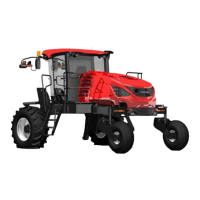
This manual contains information on the MacDon Model M100 Self-Propelled Windrower that is designed to cut
and lay in windrows, a wide variety of grain, hay and specialty crops. Windrowing allows starting the harvest
earlier, protects the crop from wind damage, and gives you more flexibility in scheduling combine time.
The power unit (referred to in this manual as the “tractor”), when coupled with one of the specially designed
auger, or draper headers, provides a package which incorporates many features and improvements in design.
This manual must be used in conjunction with your Header Operator's Manual.
CAREFULLY READ ALL THE MATERIAL PROVIDED BEFORE ATTEMPTING TO UNLOAD, ASSEMBLE, OR
USE THE MACHINE.
Use this manual as your first source of information about the machine. If you follow the instructions given in this
manual, your M100 Windrower will work well for many years. If you require more detailed service information,
check with your dealer.
Use the Table of Contents and the Index to guide you to specific areas. Study the Table of Contents to familiarize
yourself with how the material is organized.
Keep this manual handy for frequent reference and to pass on to new operators or owners. Call your dealer if you
need assistance, information, or additional copies of this manual. A manual storage case is provided in the cab.
NOTE: Right-Hand and Left-Hand designations are determined by the operator’s position, facing the direction of
travel.
RECORD THE SERIAL NUMBERS IN THE SPACES BELOW.
Windrower Tractor_______________________
Serial Number plate is located on the left side of
the main frame, near the rear corner.
M100 Diesel Engine___________________________
Serial Number plate is located on the right side of the
engine block.
.


Table of Contents

Questions and Answers

  • C
    Caleb JonesAug 12, 2025
    Why is my MacDon M100 2009 engine knocking?
    • S
      Sarah BoydAug 12, 2025
      If your MacDon Farm Equipment engine is knocking, it could be due to several reasons. Ensure the oil level is sufficient by adding oil as needed. It's also possible that the engine timing is off, or the coolant temperature is too low or too high. Double-check that you are using the proper fuel. For engine timing issues, it's best to contact your MacDon dealer. If overheating is suspected, remove and check the thermostat.
  • T
    Tiffany EdwardsAug 18, 2025
    What to do if MacDon M100 2009 Farm Equipment engine runs irregularly?
    • T
      Tammy AndersonAug 18, 2025
      If your MacDon Farm Equipment engine runs irregularly or stalls frequently, there might be an unsteady fuel supply. Try changing the filter on the fuel tank vent line. Water or dirt in the fuel system could also be the cause; in this case, replace the clogged fuel filter or drain, flush, and refill the system. Air in the fuel system can also cause this issue, requiring you to drain, flush and fill the system. Low coolant temperature can also lead to irregular engine performance, so remove and check the thermostat. Dirty or faulty injectors might also be the cause.
  • M
    Miss Diane Byrd MDAug 25, 2025
    Why is the oil pressure low on my MacDon Farm Equipment?
    • M
      Margaret MasonAug 25, 2025
      If you're experiencing low oil pressure in your MacDon Farm Equipment, start by checking the oil level and adding oil if it's low. Also, ensure you're using the correct type of oil; if not, drain the crankcase and refill with the proper oil. If the problem persists, it could be due to worn components, in which case you should contact your MacDon dealer.
  • R
    ritterkathleenAug 30, 2025
    What causes high oil consumption in MacDon Farm Equipment?
    • C
      christopher56Aug 30, 2025
      High oil consumption in your MacDon Farm Equipment can stem from a few causes. First, ensure you are using the recommended oil, as using crankcase oil that is too light can lead to increased consumption. Check for any oil leaks around gaskets, seals, and drain plugs. If neither of these resolves the issue, it's possible that internal parts are worn, and you should contact your MacDon dealer.
  • M
    melissa46Nov 5, 2025
    How to troubleshoot engine hard to start on MacDon M100 2009 Farm Equipment?
    • R
      Ricardo RosalesNov 5, 2025
      If your MacDon Farm Equipment engine is hard to start or won't start, several factors could be at play. First, make sure the controls are in neutral and the steering wheel is locked, and the header clutch is disengaged. Check if there's fuel in the engine; if the tank is empty or the filter is clogged, replenish fuel or replace the filter. Old fuel can also be a culprit, so drain the tank and refill with fresh fuel. Water, dirt, or air in the fuel system requires draining, flushing, filling, and priming the system. Ensure you're using the correct fuel and recommended oil for operating conditions. A weak battery or poor connection can also cause starting issues, so test the battery, check electrolyte levels, and clean/tighten connections. Other potential causes include a faulty starter, sho...

Summary

1 INTRODUCTION

2 SAFETY

2.1 SAFETY ALERT SYMBOL

Explains the safety alert symbol used in the manual and on signs.

2.4 GENERAL SAFETY

Provides general farm safety precautions for operating machinery.

4 SPECIFICATIONS

4.1 TRACTOR DIMENSIONS

Lists the physical dimensions of the windrower tractor.

4.2 SPECIFICATIONS

Details engine, electrical, traction drive, and system capacities.

5 OPERATOR’S STATION

5.1 OPERATOR CONSOLE

Describes the controls and amenities within the operator's console.

5.4 SEAT BELTS

Provides instructions and warnings for using seat belts.

5 OPERATOR’S STATION (continued)

5.5 STEERING COLUMN ADJUSTMENT

Explains how to adjust the steering column for operator comfort and access.

5.6 OPERATOR PRESENCE

Describes the safety system that deactivates systems when the operator is not seated.

5 OPERATOR’S STATION (continued)

5.7 LIGHTS

Details the operation of field and transport lighting systems.

5.10 CAB TEMPERATURE

Explains the climate control system for the cab.

5 OPERATOR’S STATION (continued)

5.15 ENGINE CONTROLS;GAUGES

Identifies and describes engine controls and gauges on the console.

5.17 HEADER CONTROLS

Covers controls for header operation on the console and GSL.

5 OPERATOR’S STATION (continued)

5.18 CAB DISPLAY MODULE (CDM)

Introduces the Cab Display Module and its functions.

5.18.4 Cab Display Module (CDM) Warnings;Alarms

Explains warnings and alarms displayed by the CDM.

6 OPERATION

6.1 OWNER;OPERATOR RESPONSIBILITIES

Outlines the responsibilities of the owner and operator.

6.3 WINDROWER TRACTOR OPERATION

Instructions for operating the windrower tractor.

6.3 WINDROWER TRACTOR OPERATION (continued)

6.3.1 Operational Safety

Provides essential safety precautions for operating the windrower tractor.

6.3.5 Engine Operation

Explains how to start and operate the engine.

6.3 WINDROWER TRACTOR OPERATION (continued)

6.3.5.1 Starting

Provides detailed steps for safely starting the engine.

6.3.6 Driving the Windrower

Provides instructions and warnings for driving the windrower.

6.4 HEADER OPERATION - D SERIES

6.4.1 Header Lift Cylinder Stops

Explains how to engage cylinder stops to prevent header fall.

6.4.5 Cutting Height

Details how to raise and lower the header for cutting height.

6.5 D SERIES HEADER OPERATION

6.5.1 Header Attachment - D Series

Provides step-by-step instructions for attaching a D Series header.

6.5.5 Knife Speed

Explains how to set and adjust the knife speed for optimal cutting.

6.6 A SERIES HEADER OPERATION

6.6.1 Header Attachment - A Series

Provides step-by-step instructions for attaching an A Series header.

6.6.2 Header Detachment - A Series

Provides step-by-step instructions for detaching an A Series header.

7 MAINTENANCE;SERVICE

7.1 PREPARATION FOR SERVICING

Outlines safety precautions before performing maintenance.

7.2 RECOMMENDED SAFETY PROCEDURES

Lists essential safety procedures for servicing machinery.

7 MAINTENANCE;SERVICE (continued)

7.3 MAINTENANCE SPECIFICATIONS

Provides specifications for fluids, fuels, and lubricants.

7.6 LUBRICATING THE WINDROWER

Provides instructions for lubricating the windrower.

7 MAINTENANCE;SERVICE (continued)

7.7 OPERATOR’S STATION

Covers maintenance related to the operator's station.

7.7.4 Neutral Set-Up Procedure

Provides a procedure to eliminate neutral movement and improve locking.

7.8 ENGINE

7.8.2 Oil Level

Explains how to check and maintain engine oil level.

7.8.3 Changing Oil and Oil Filter

Details the procedure for changing engine oil and filter.

7.8 ENGINE (continued)

7.8.4 Air Intake System

Covers maintenance of the air intake system.

7.8.5 Fuel System

Covers maintenance of the fuel system.

7.8 ENGINE (continued)

7.8.5.2 Fuel Filters

Explains how to change the primary and secondary fuel filters.

7.8.6 Engine Cooling System

Covers maintenance of the engine cooling system.

7.8 ENGINE (continued)

7.8.6.3 Changing Coolant

Provides steps for draining, flushing, and refilling the cooling system.

7.8.8 Belts

Covers maintenance of belts.

7.9 COOLING BOX

7.9.1 Cooling Box Screen Cleaners

Explains how to clean the cooling box screen and rotors.

7.9.2 Cooling Box Maintenance

Guides on cleaning radiator, oil cooler, and other components.

7.10 ELECTRICAL SYSTEM

7.10.1 Battery

Provides warnings and safety precautions related to the battery.

7.10.1.5 Replacing Battery

Details the procedure for replacing the tractor battery.

7.10 ELECTRICAL SYSTEM (continued)

7.10.2 Headlights

Covers headlight adjustment and bulb replacement.

7.10.8 Circuit Breakers and Fuses

Explains how to access and replace circuit breakers and fuses.

7.11 HYDRAULIC SYSTEM

7.11.1 Oil Level

Explains how to check and maintain hydraulic oil level.

7.11.2 Changing Hydraulic Oil

Details the procedure for changing hydraulic oil.

7.11 HYDRAULIC SYSTEM (continued)

7.11.4 Hydraulic Oil Filters

Explains how to change hydraulic oil filters.

7.11.6 Traction Drive Hydraulics

Covers hydraulic systems for traction drive.

7.12 WHEELS AND TIRES

7.12.1 Drive Wheels

Details maintenance for drive wheels.

7.12.2 Caster Wheels

Details maintenance for caster wheels.

7.13 MAINTENANCE SCHEDULE

7.13.1 Break-In Inspection

Outlines the inspection checklist for the break-in period.

7.13.2 Interval Maintenance

Details service intervals for daily, weekly, and periodic maintenance.

8 TROUBLESHOOTING

8.1 ENGINE

Lists common engine problems, their causes, and solutions.

8.3 HYDRAULICS

Lists common hydraulic system problems and solutions.

8 TROUBLESHOOTING (continued)

8.5 TRACTION DRIVE

Lists common problems and solutions for the traction drive system.

8.7 CAB AIR

Lists common problems and solutions related to the cab air system.

9 OPTIONS

9.1 REEL DRIVE & LIFT PLUMBING

Describes optional reel drive and lift plumbing for draper headers.

9.3 BOOSTER SPRING KIT

Lists availability and installation of booster spring kits.

MacDon M100 2009 Specifications

General IconGeneral
BrandMacDon
ModelM100 2009
CategoryFarm Equipment
LanguageEnglish

Related product manuals