5
9123D-eIFU-0917
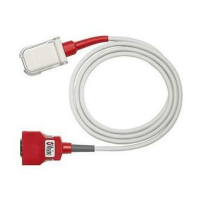
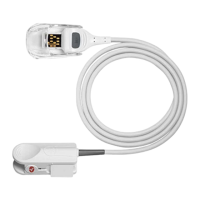
M-LNCS™/LNCS®/LNOP® YI
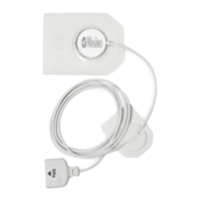
SpO2 Multisite Reusable Sensor and Single Use Attachment Wraps
DIRECTIONS FOR USE
Reusable
LATEX
Not made with natural rubber latex Non-Sterile
INDICATIONS
The M-LNCS™/LNCS®/LNOP® YI Reusable Sensor is indicated for the continuous noninvasive monitoring of functional
oxygen saturation of arterial hemoglobin (SpO2) and pulse rate (measured by an SpO2
sensor) for use with adult,
pediatric, infant, and neonatal patients during both no motion and motion conditions, and for patients who are well or
poorly perfused in hospitals, hospital-type facilities, mobile, and home environments.
CONTRAINDICATIONS
The M-LNCS/LNCS/LNOP YI is contraindicated for patients who exhibit allergic reactions to foam urethane products
and/or adhesive tape.
DESCRIPTION
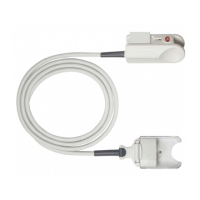
The YI sensor is applied to the sensor site using Masimo attachment wraps. The attachment wraps are for single-patient
use only.
The M-LNCS/LNCS/LNOP YI sensor is for use only with devices containing Masimo SET® oximetry or licensed to use
M-LNCS/LNCS/LNOP sensors. The Masimo Attachment Wraps are for use only with the M-LNCS, LNCS or LNOP YI
Reusable Multisite Sensors. Consult individual device manufacturer for compatibility of particular device and sensor
models. Each device manufacturer is responsible for determining whether its devices are compatible with each sensor
model. The YI series has been veried with Masimo SET Oximetry Technology.
The sensor must be removed and the site inspected at least every four (4) hours or sooner, and, if indicated by circulatory
condition or skin integrity, reapplied to a dierent monitoring site.
WARNING: Masimo sensors and cables are designed for use with devices containing Masimo SET® oximetry or licensed
to use Masimo sensors.
WARNINGS
• All sensors and cables are designed for use with specific monitors. Verify the compatibility of the monitor, cable
and sensor before use, otherwise degraded performance and/or patient injury can result.
• The site must be checked frequently or per clinical protocol to ensure adequate adhesion, circulation, skin
integrity and correct optical alignment.
• Exercise extreme caution with poorly perfused patients; skin erosion and pressure necrosis can be caused when
the sensor is not frequently moved. Assess site as frequently as every (1) hour with poorly perfused patients and
move the sensor if there are signs of tissue ischemia.
• Circulation distal to the sensor site should be checked routinely.
• During low perfusion, the sensor site needs to be assessed frequently for signs of tissue ischemia, which can lead
to pressure necrosis.
• With very low perfusion at the monitored site, the reading may read lower than core arterial oxygen saturation.
• Do not use tape to secure the sensor to the site; this can restrict blood flow and cause inaccurate readings. Use of
additional tape can cause skin damage, and/or pressure necrosis or damage the sensor.
• Sensors applied too tightly or that become tight due to edema will cause inaccurate readings and can cause
pressure necrosis.
• Misapplied sensors or sensors that become partially dislodged may cause incorrect measurements.
• Venous congestion may cause under reading of actual arterial oxygen saturation. Therefore, assure proper venous
outflow from monitored site. Sensor should not be below heart level (e.g. sensor on hand of a patient in a bed with
arm dangling to the floor, Trendelenburg position).
• Venous pulsations may cause erroneous low SpO
2 readings (e.g. tricuspid valve regurgitation, Trendelenburg
position).
• The pulsations from intra-aortic balloon support can be additive to the pulse rate on the oximeter pulse rate
display. Verify patient’s pulse rate against the ECG heart rate.
en


 To Next Page