38
Replacing Tracks
Tracks must be changed when only 10mm of tread remains, or before if they show signs of
excessive cuts or cracks.
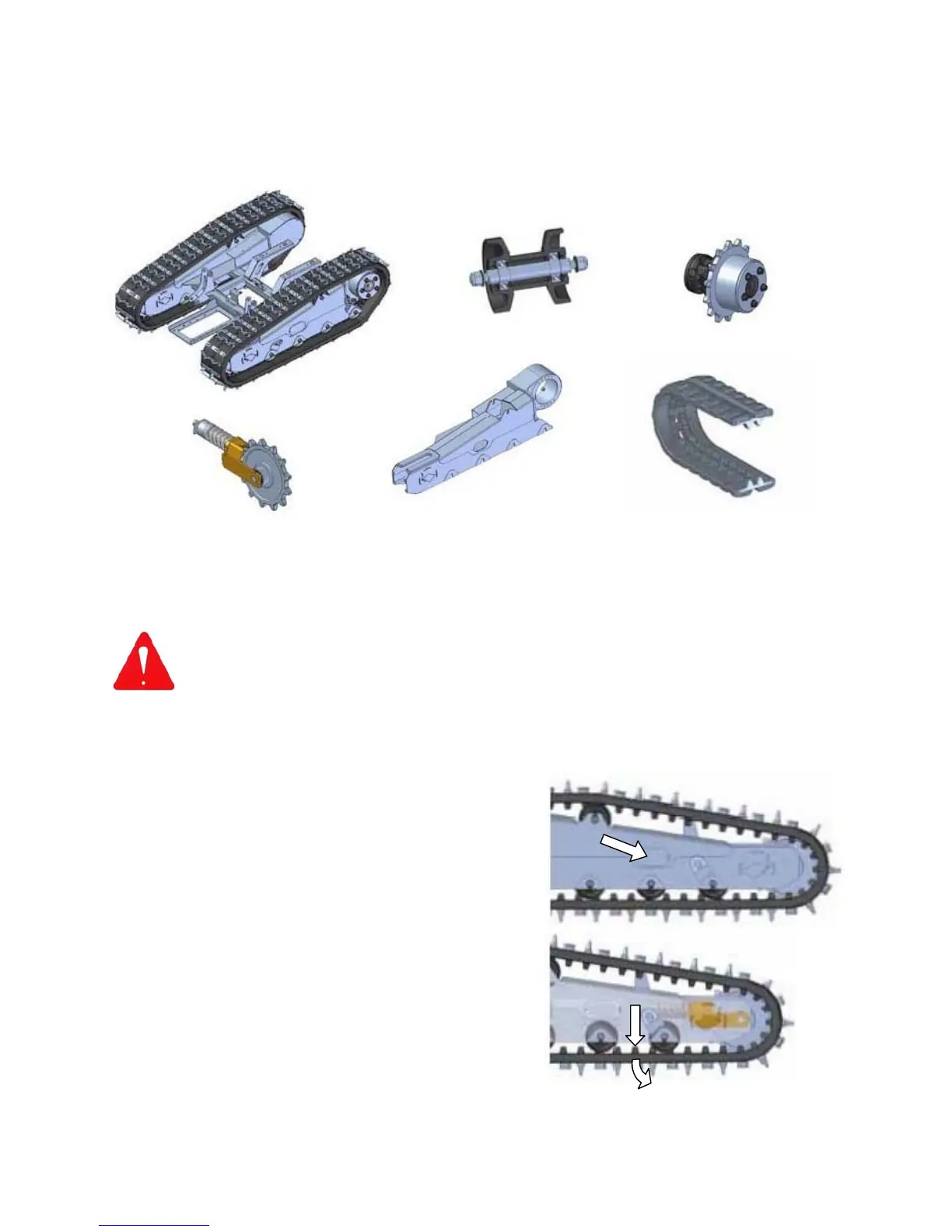
The components shown below are constituent parts of the track system illustrated here for
identification purposes.
The procedure for changing the tracks is as follows;
WARNING: Never attempt to work on any machine that it not safely supported and chocked using
suitable equipment specifically designed for the task and capable of supporting its
weight. Ensure suitable safety gear is worn at all times when performing maintenance
tasks. Beware, there is ‘pinch risk’ when working on these components.
Raise the machine off the ground to a height of approximately 30-40cm; ensure the machine
is stable and suitably supported.
Clean undercarriage components and their surrounding area prior to performing
maintenance on them.
Remove backstay side cover ►
Loosen valve on the tensioner unit to release the
grease pressure.
Once pressure has been fully released the valve
can be removed.
Compress the idler roller; this can be done by using
your foot to press the track back.
Draw the track down and outwards at its mid point
on the lower run to pull it off its seating, levering
between the track and the idler roller until it is free
enough to be removed. Take care to keep clear of
the track as it falls to the ground.
Installing the new track is basically a reversal of the above – tension the track by pumping
grease into the tensioner unit to a pressure of 130 Bar. (Max. 150 Bar).
Lower Roller Unit
Sprocket Assembly
Tracked Undercarriage
Backstay
Idler Roller Rubber Track


 To Next Page