2. For close systems, use the following equation:
NPSHA = P
a
+ P
s
+ (v
2
/2g) - P
vp
where P
a
is the atmospheric pressure
P
s
is the pressure at the pump inlet
v is the velocity of water at the pump inlet
g is the accelaration due to graviti (32.17 ft/sec
2
or 9.81 m/sec
2
)
P
vp
is the vapour pressure of water at the operating temperature
[Note: The term v
2
/2g is the velocity head of water at the pump inlet]
For both equations 1 and 2, it is recommended that an additional of 2 m (6.56 ft) to be
deducted from the NPSHA as a safety factor to cater for the actual pipe installation.
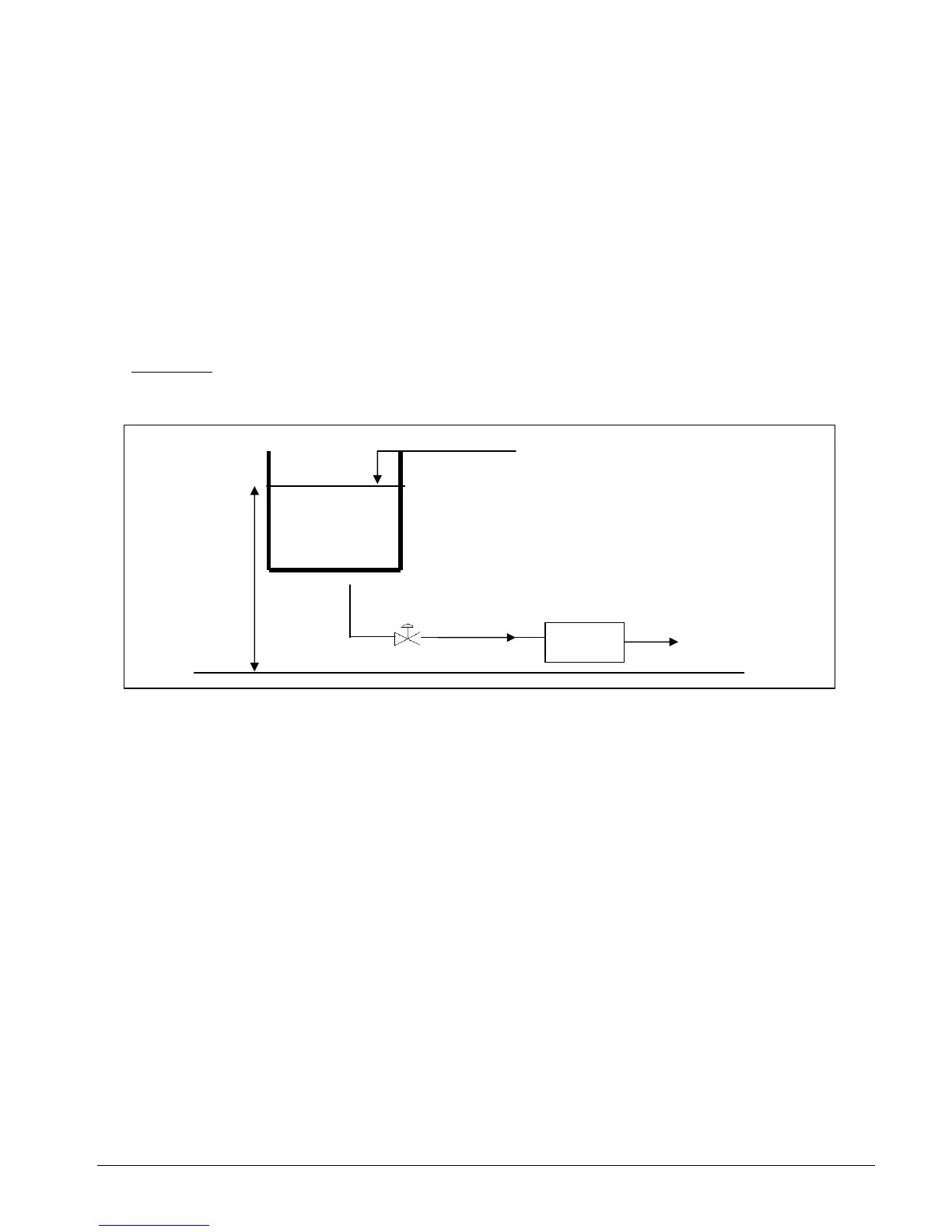
Example 1:
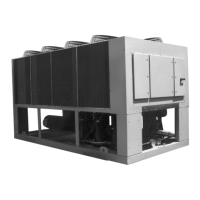
A mini chiller (C1) is installed with a storage tank in the following configuration:
Return water
Storage tank (7°C)
H = 6ft.
Supply water
C1
The chiller operate at the following parameters: Flowrate = 8 USGPM (1.82 m
3
/hr);
the total suction line friction losses = 2 ft; the internal friction loss from the chiller
inlet pipe to the pump inlet = 1.6 ft.
The water tank is elevated at a height of 6 ft.
The chiller has a water pump of model CH2-30.
At 7°C, the water vapour pressure is 0.34 ft wg.
The atmospheric pressure at the site of installation is 34.0 ft wg.
By using equation 1, we calculate:
NPSHA = 34 + 6 - 0.34 - (2+1.6) = 36 ft.
By taking a safety factor of 6.56 ft, we get NPSHA = 29.44 ft.
Section 5 Page 83


 To Next Page