IMPORTANT: READ AND UNDERSTAND THIS MANUAL PRIOR TO
ASSEMBLING, STARTING UP OR CONDUCTING MAINTENANCE ON THIS
HEATER. USING THE HEATER INCORRECTLY CAN CAUSE SERIOUS
INJURY. KEEP THIS MANUAL FOR FURTHER REFERENCE.
1. DESCRIPTION
This series of heaters is particularly suited to heating
medium to large-sized rooms or areas. The series
is divided into direct heaters and indirect heaters.
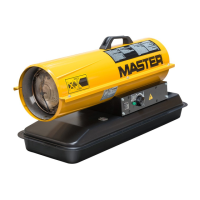
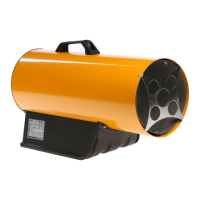
Direct heaters (PIC. 1-2) mix hot air with combustion
fumes. For this reason they are particularly suited
for outdoor environments or areas with high air
renewal where there is a need to heat up, defrost
or dry.
Thanks to a heat exchanger, indirect heaters (PIC.
3-4) separate combustion gases from the hot
air released into the environment. This way it is
possible to introduce a ow of clean hot air in the
area that needs to be heated up and direct exhaust
fumes outside.
These heaters have been designed in line with the
most recent safety, operating and duration criteria.
The safety devices ensure the machine always
operates correctly.
2. SAFETY INFORMATION
WARNINGS
IMPORTANT: This appliance is not suit-
able for use by persons (including children)
with reduced physical, sensory and mental
capacities or with lack of experience or knowl-
edge unless supervised by a person respon-
sible for their safety. Children must be super-
vised to make sure they do not play with the
appliance.
DANGER: Suffocation by carbon
monoxide can be fatal.
IMPORTANT: The installation of this heater
for use with No.1, No.2, Diesel or Kerosene and
shall conform with local codes.
IMPORTANT: THE INSTALLATION OF
THE UNIT SHALL BE IN ACCORDANCE WITH
THE REGULATIONS OF THE AUTHORITIES
HAVING JURIS DICTION.
The rst symptoms of suffocation by carbon
monoxide are similar to those of u with
headache, light-headedness and/or nausea.
These symptoms could be caused by the faulty
functioning of the heater. IF THESE SYMPTOMS
OCCUR, GO OUTDOORS IMMEDIATELY and
have the heater repaired by a technical service
centre.
►►2.1. REFUELLING:
►2.1.1. Personnel appointed to carry out refuel
-
ling must be qualied and fully familiar with
this manual and current regulations on how
to refuel heaters safely.
►2.1.2. Only use the type of fuel specied on
the heater’s identication plate.
►2.1.3. Before refuelling, turn off the heater and
wait for it to cool down.
►2.1.4. The fuel storage deposit tanks must be
located in a separate facility or building.
►2.1.5. All fuel tanks must be kept at a mini-
mum distance from the heater, in accordance
with current safety regulations.
►2.1.6. Fuel must be stored in areas where the
oor surface does not allow underneath drip
-
ping, or any other leakage which may ignite
the fuel.
en
it
de
es
fr
nl
pt
da
no
sv
pl
ru
cs
hu
sl
tr
hr
lt
lv
et
ro
sk
bg
uk
bs
el
zh
INDEX
1. DESCRIPTION
2. SAFETY INFORMATION
3. UNPACKING
4. ASSEMBLY
5. FUEL
6. OPERATING PRINCIPLES
7. OPERATION
8. CLEANING THE FILTERS
9. STORAGE AND TRANSPORT
10. CONNECTING THE ROOM THERMOSTAT
11. PREVENTIVE MAINTENANCE SCHEDULE
12. TROUBLESHOOTING



 To Next Page