
 Need help?
Do you have a question about the Melitta Caffeo Barista TS and is the answer not in the manual?
Explains warning symbols and their meanings for user safety and guidance.
Defines the intended use and warns against improper operation to prevent damage.
Details risks and essential precautions related to electrical hazards and the power cable.
Outlines dangers from hot fluids and steam, and protective measures to avoid burns.
Provides comprehensive safety guidelines for users, including children and persons with reduced capabilities.
Identifies and labels all external parts and features of the coffee machine.
Details the function and layout of the appliance's control panel buttons and display interface.
Instructions for safely removing the appliance and its packaging materials.
Lists all included accessories and components to verify upon delivery.
Guidelines for selecting a suitable location and setting up the appliance properly.
Steps for safely connecting the coffee machine to the electrical power supply.
Initial setup procedure, including language and water hardness settings.
Instructions for powering the machine on and off, including auto-rinsing.
Explains how to interact with the touch-sensitive control panel buttons and sliders.
Guide to accessing and navigating through the appliance's menu system and options.
How to load coffee beans and utilize the dual bean selection feature for different coffees.
Instructions for preparing beverages using pre-ground coffee via the designated chute.
Steps for filling the water tank, emphasizing the importance of water quality.
How to adjust the height of the coffee dispensing outlet for different cup sizes.
Guidance on connecting and using the milk container or hose for milk-based beverages.
Procedures for emptying and cleaning the drip tray and coffee grounds container.
Step-by-step guide to making Espresso and Café Crème beverages.
Instructions for preparing a Cappuccino, including milk frothing and dispensing.
Instructions for preparing a Latte Macchiato, including milk frothing and dispensing.
How to prepare frothed milk or warm milk separately for beverages.
Steps to dispense hot water for tea or other purposes.
How to select and prepare various coffee specialties from pre-defined recipes.
Adjusting beverage parameters like amount and strength before or during brewing.
How to prematurely stop an ongoing beverage preparation process.
Guide to preparing two cups of coffee at the same time using the '2 cups' function.
Assigning specific coffee recipes to direct keys for quick and easy access.
Modifying default parameters like coffee amount, strength, and temperature.
Creating and customizing user profiles for personalized beverage settings.
Assigning specific beverage preferences like amount and strength to user profiles.
How to brew beverages using saved personal settings assigned to a user profile.
Changing the display language of the appliance's menus and messages.
Adjusting the appliance's internal clock for accurate time display.
Enabling or disabling automatic selection between two types of coffee beans.
Configuring the automatic shutdown timer for energy saving and safety.
Activating energy-saving features like reduced temperature and display dimming.
Restoring the appliance to its original factory configuration and default settings.
Accessing system information such as usage statistics and software version.
Adjusting the grinder coarseness to influence coffee flavor and extraction quality.
Changing the milk hose connection side for improved user convenience.
Routine cleaning procedures for the appliance exterior and removable parts.
Manual or automatic rinsing of the coffee brewing system to maintain hygiene.
Detailed steps for removing, cleaning, and reinserting the brewing unit weekly.
Using a dedicated program to rinse the milk system after preparing milk beverages.
Performing an intensive cleaning cycle for the milk system using a cleaning agent.
Running a cleaning cycle to remove coffee oils and residues from the coffee system.
Removing limescale deposits from the appliance's internal components periodically.
Adjusting the appliance based on local water hardness for optimal descaling frequency.
Installing, changing, and removing the water filter to improve water quality.
Removing residual water to prevent frost damage or for safe transport.
Steps to prepare the appliance for safe transport, including emptying and securing parts.
Guidelines for environmentally friendly disposal of the electrical appliance.
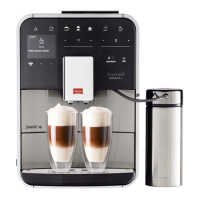
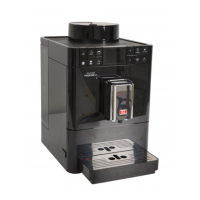
Key specifications including voltage, power, dimensions, capacity, and weight.
Default parameters for various beverage preparations as set by the manufacturer.
 General
| Product type | Espresso machine |
|---|---|
| Built-in grinder | Yes |
| Capacity in cups | - cups |
| Milk adding type | Automatic |
| Number of spouts | 2 |
| Coffee input type | Coffee beans, Ground coffee |
| Coffee maker type | Fully-auto |
| Milk tank capacity | 1 L |
| Appliance placement | Countertop |
| Water tank capacity | 1.8 L |
| Coffee beans capacity | 270 g |
| Maximum operating pressure | 15 bar |
| Reservoir for brewed coffee | Cup |
| Number of temperature settings | 3 |
| Control type | Touch |
| Display type | TFT |
| Product color | Black |
| Housing material | - |
| AC input voltage | 220–240 V |
| AC input frequency | 50 Hz |
 Weight and Dimensions
| Depth | 467 mm |
|---|---|
| Width | 259 mm |
| Height | 372 mm |
| Weight | 10400 g |




 To Next Page