ENGLISH
97
Adding dishwasher detergent
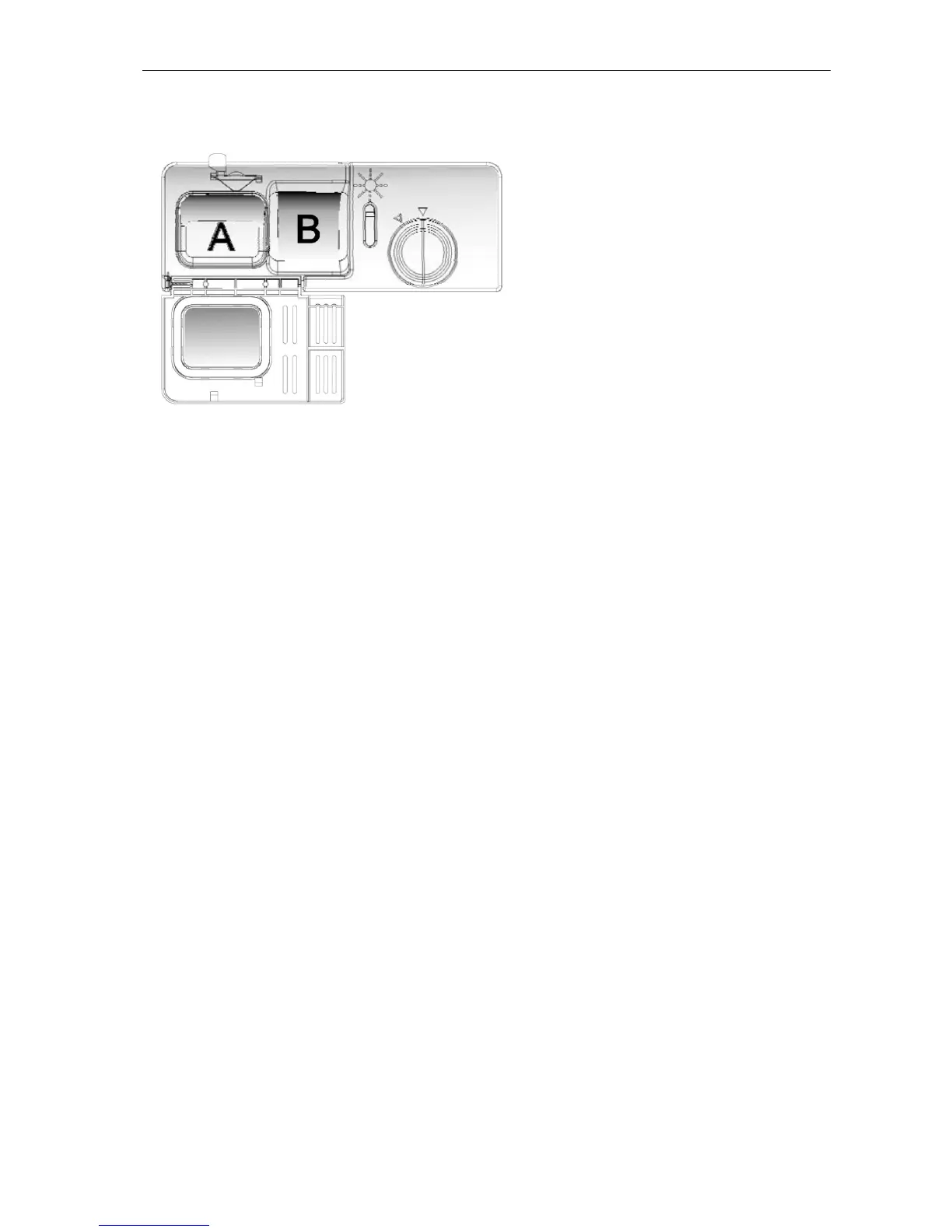
1. Fill the compartment with detergent.
The markings in the compartment
show the dosage levels.
A. Compartment for dishwasher detegent
(main wash).
B. Compartment for dishwasher detegent
(prewash).
2. Follow the instructions of the
manufacturer for dosing and storage of
dishwasher detergent
3. Close the door panel and press until it
locks.
4. Add dishwasher detergent in the
prewash compartment if the dishes are
very dirty. It is then used during the
prewash phase of the wash
programme.
NOTE:
Information on the amount of dishwasher detergent for different wash programmes is given on the
last page.
The dirtiness of the dishes and the hardness of the water determine how much dishwasher
detergent should be used.
Follow the manufacturer's instructions on the pack.
FILLING THE DISHWASHER BASKETS
Recommendations
Only wash kitchen utensils that are suitable for washing in a dishwasher.
Use mild dishwasher detergents. Check information from the manufacturer if necessary.
Choose a programme with a low temperature for sensitive kitchen utensils.
Do not remove glasses and cutlery immediately after a wash programme has finished to avoid
damaging them.
Not suitable for washing in a dishwasher
Cutlery with wooden, bone or pearl handles
Kitchen utensils made of non-heat resistant plastic
Older types of cutlery with glued parts that are not heat-resistant
Cutlery or utensils with pressed handles
Pewter or copper objects
Crystal glass
Steel that can rust
Wooden plates
Objects made of synthetic fibres
Limited resistance to machine washing
Some types of glass can become dull after frequent washing in a dishwasher
Silver and aluminium objects tend to become discoloured in a dishwasher
Glazed patterns can become bleached after frequent washing in a dishwasher


 To Next Page