-24-
Hydraulic Drum Brake Operation
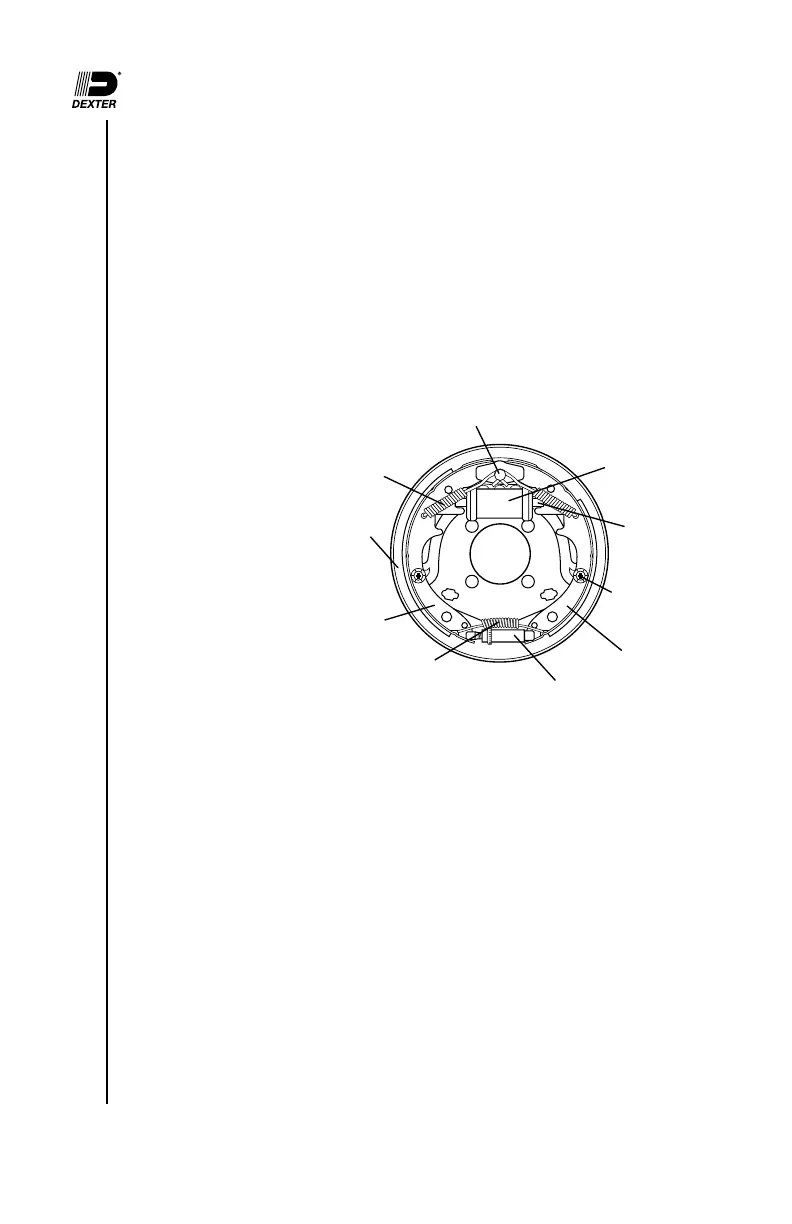
Duo-Servo
The duo-servo brake uses a dual piston wheel cylinder to apply the brakes. This
type of brake is typically used in an electric/hydraulic, vacuum/hydraulic, or air/
hydraulic system. A description of operation of this brake is as follows:
When the brakes are applied, the double-acting wheel cylinder moves the
primary and secondary shoes towards the drum. The frictional force between
the brake drum and lining attempts to turn the primary shoe into the secondary
shoe. The secondary shoe is forced onto the anchor pin and from this point, the
secondary and primary
shoes attempt to “wrap
around”. In essence,
the brake has utilized
frictional force to help
the applying force on
both shoes.
If the brakes are
applied while the
vehicle is backing, the
shoes rotate in the
direction of the drum
rotation. This causes
the secondary shoe
to leave the anchor and causes the primary shoe to move against the anchor.
Action of the brake is the same in reverse as forward.
Uni-Servo
This type of hydraulic brake utilizes a single acting cylinder. Upon actuation, the
primary shoe is pressed against the brake drum, which causes the shoe to move
in the direction of rotation. This movement in turn actuates the secondary shoe
through the adjuster assembly. Braking in reverse is signicantly less effective
than in the forward direction.
Braking Systems - Hydraulic
Retractor
Springs
Backing
Plate
Secondary
Shoe
Adjuster Spring
Primary Shoe
Hold Down
Spring
Hydraulic Wheel
Cylinder


 To Next Page