19
2
1
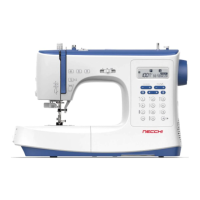
Stretch overlock (light weight fabrics)
When overedging light woven or loosely knit
fabrics, such as silk and silky knitwear, adjust
thedierentialfeedtoanumberbetween0.7
and 1.0. When sewing, apply gentle tension
to the fabric by holding the seam lightly in
front and back of the presser foot. The setting
depends on the fabric being sewn as well as
the desired amount of stretching. Therefore,
testsewwithdierentsettingsbeforesewing
on your project.
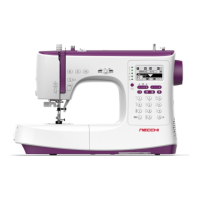
Gathered overlock (stretch, knit fabrics)
When overedging stretch fabric, such as knits
andjersey,adjustthedierentialfeedtoa
number between 1.0 and 2.0.
The setting depends on the fabric being
sewn.Testsewwithdierentsettingsbefore
sewing on your project.
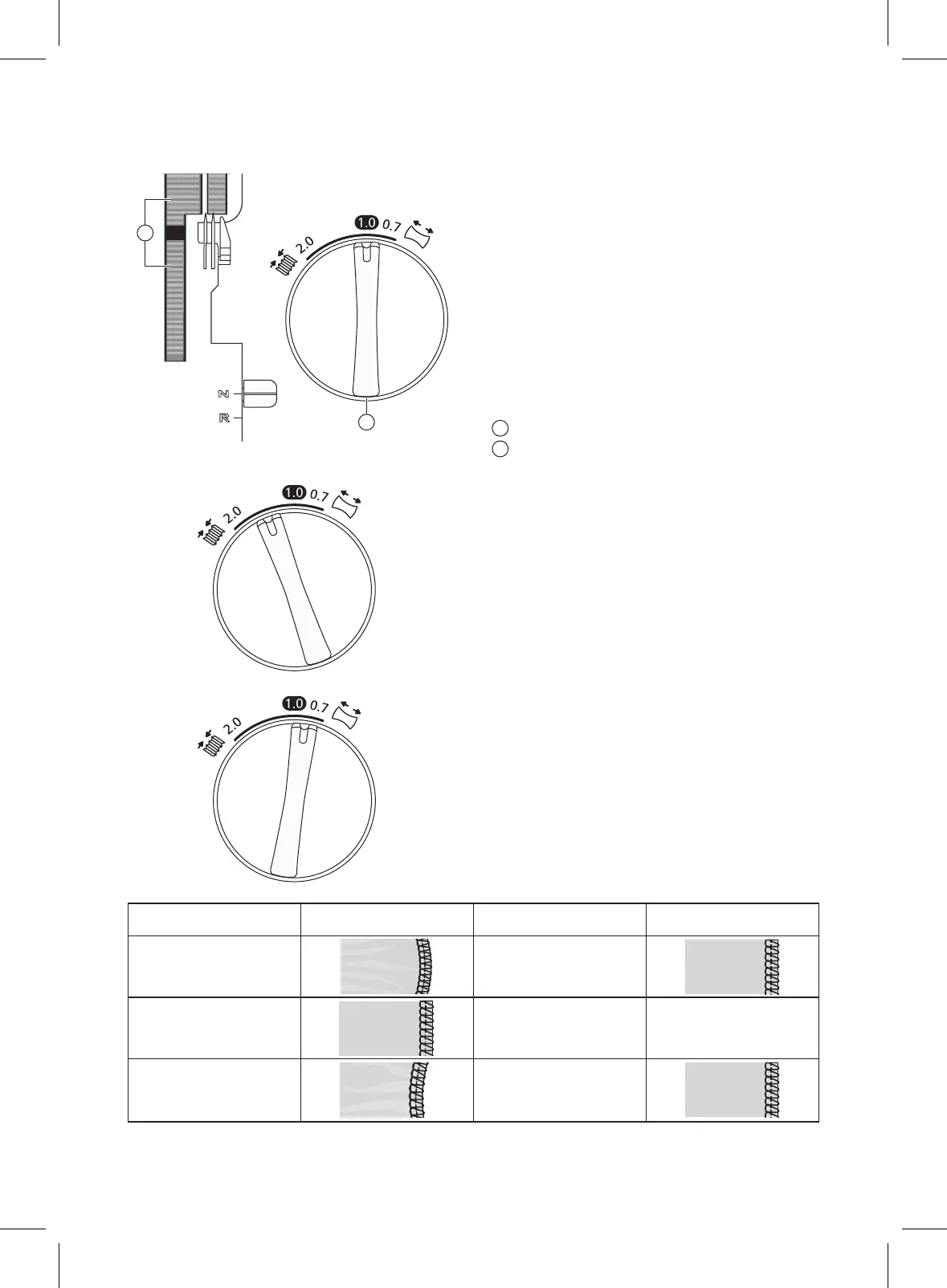
Thedierentialfeedsystemconsistsoftwo
sets of feed teeth arranged one behind the
other. Both feed teeth work independently
of each other to provide good results when
sewing on speciality fabrics. When the
amount of feed by the front feed teeth is
changed in relation to the feed by the rear
feed teeth it will "stretch" or "gather" the
fabric.
Usethedierentialfeedtopreventstretching
or distortion of knit fabrics and puckering of
lightweight fabrics.
Foroverlockstitchingonnormalfabric,set
thedierentialfeedto1.0.
Dierentialfeedsystem
Dierentialfeeddial
Fabric Dierential Feed Adjustment Result
Stretch fabric
(knit,jersey)
1.0–2.0
Non-stretch fabric
(cotton,denim)
1.0
Light-weight fabric
(Silk,silkyknitwear)
0.7–1.0
Dierential feed adjustment


 To Next Page