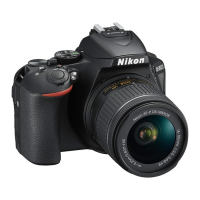
Nikon D5100 Experience
8
will save you some money, especially if you buy 2 or 3 cards at the same time. If you intend to
shoot still photos, a class 6 card will be sufficient, but for shooting video, a higher speed class 10
card is recommended.
Some people advocate the use of several small capacity memory cards (4 GB) so that if you lose
a card or lose all the images on one due to card error, then you don’t lose all your vacation or
event photos at once. However, if you are taking many images of an event or activity, smaller
cards may unexpectedly fill up, causing you to miss the action as you switch cards. So I take the
opposite approach and use larger capacity memory cards (16 GB), then back up the images in
two or three places each night after shooting. If I feel I have taken a potentially incredibly
important shot that I don’t want to lose, however, I may safely store that card for the rest of the
day and start using another. So perhaps the use of a few 8 GB cards is a good compromise.
Be sure to always insert and remove a memory card only when the camera is turned off. When
downloading the images from a card to a computer, use a card reader and simply copy the
images, then remove the card once the card or card reader has been stopped or ejected and you
are sure it is no longer being accessed by the computer. Do not add or delete photos or files to a
card via the computer, and only erase or format a card in the camera itself. This will all help to
prevent card errors or corruption. If a memory card has functioned properly after several uses, it
is likely to continue to work properly for a long time. See the Format section of the Setup Menu
below for more information on using your SD memory cards.
MENUS and CUSTOM SETTINGS
Setting up the D5100
The Menus and Custom Settings of the Nikon dSLR cameras allow you to have greater, more
precise control over how your camera functions. They are an important part of what makes the
D5100 a more powerful and exacting tool than the Nikon D3100, and they allow you to
customize the camera to work for you, to work how you work. Using them you can fine tune
settings and operations including white balance, metering, exposure, and autofocusing. I highly
recommend that you dig into these menus and change the settings to the options that allow you to
use the camera in the manner that works best for you.
Some of the Menu items are only used when shooting, reviewing, or processing images, but
several of them should be set up in advance. Below are brief explanations and recommended
settings for the Menus and Custom Settings of the Nikon D5100. Please note that this guide will
go into further detail about many of these settings and functions later, so don’t get overwhelmed
if you don’t yet understand the settings or terminology used to describe the Menu and Custom
Settings and their options. You might wish to return to them later after you have begun to better
understand your camera and its controls and start to determine how you want to work. If you
don’t yet understand some of the settings or why you might wish to change them, leave those on
the default settings for now.



 To Next Page