CAMERA
SIDE
COMPENSATION
Manual
control:
adjustment made via the camera's
EV
compensation control; affects the entire exposure, both
available light and light from the flash.
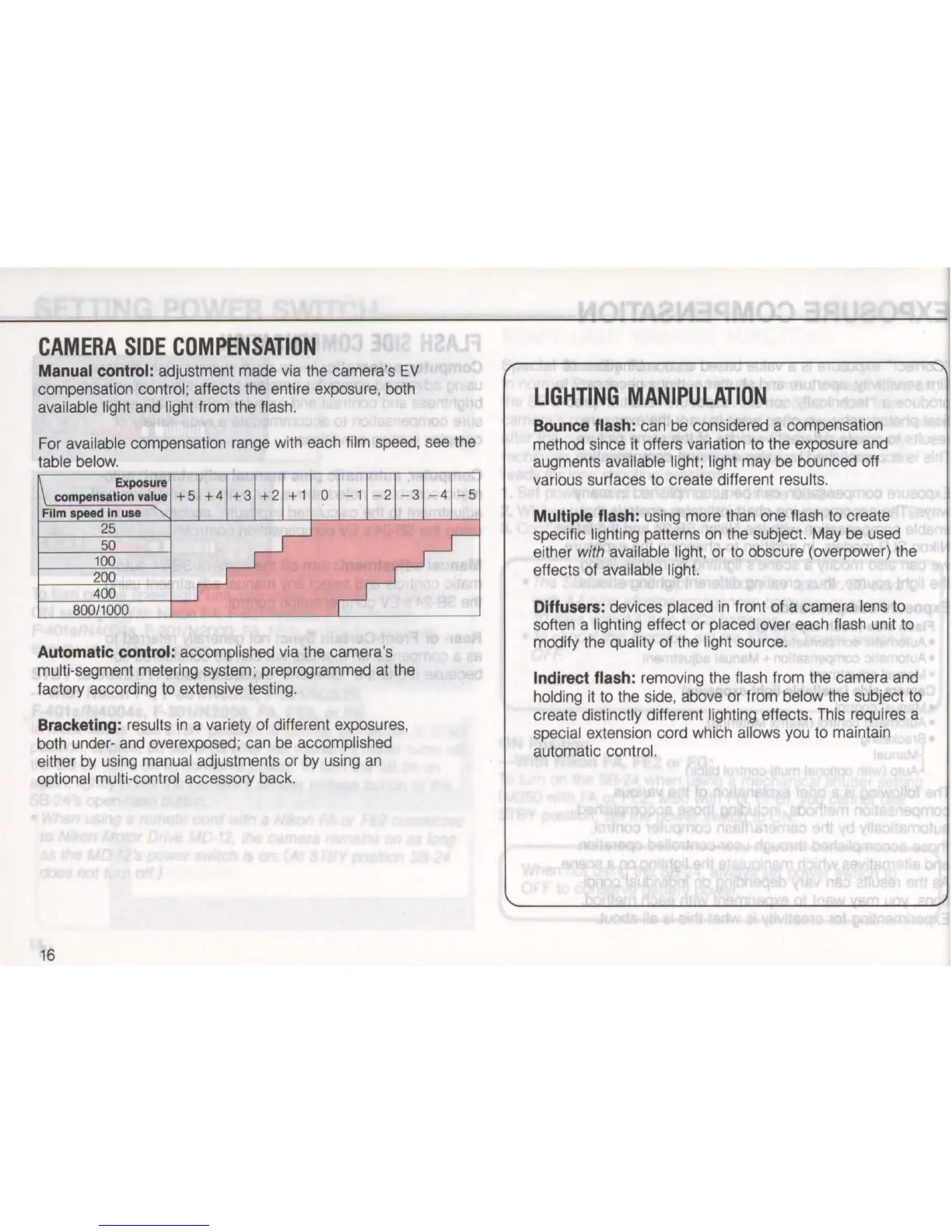
For available compensation range with each film speed, see the
table below.
Automatic
control:
accomplished via the camera's
mUlti-segment metering system; preprogrammed at the
factory according to extensive testing.
Bracketing:
results
in
a variety of different exposures,
both under- and overexposed; can be accomplished
either by using manual adjustments or by using
an
optional multi-control accessory back.
16
LIGHTING
MANIPULATION
Bounce
flash:
can be considered a compensation
method since
it
offers variation to the exposure and
augments available light; light may be bounced off
various surfaces to create different results.
Multiple
flash:
using more than one flash to create
specific lighting patterns
on
the subject. May be used
either
with available light, or to obscure (overpower) the
effects of available light.
Diffusers:
devices placed
in
front of a camera lens to
soften a lighting effect or placed over each flash unit to
modify the quality of the light source.
Indirect
flash:
removing the flash from the camera and
holding
it
to the side, above or from below the subject to
create distinctly different lighting effects. This requires a
special extension cord which allows you to maintain
automatic control.


 To Next Page