19
■
■
■
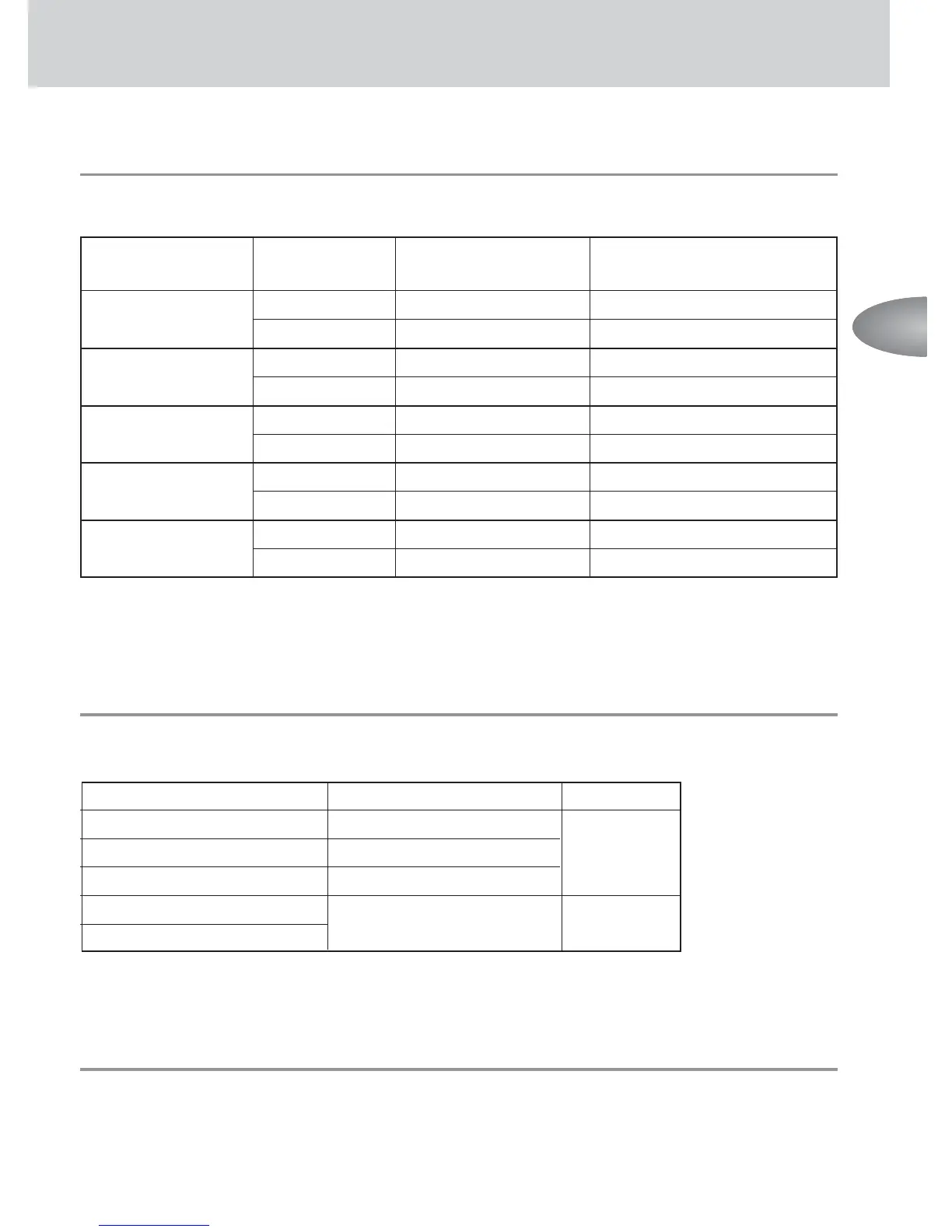
Minimum number of flashes and recycling times
When using four (or five) fresh batteries of the same type and the Speedlight
fires at M1/1 output.
Batteries Number of Min. recycling time Min. number of flashes/
batteries (approx.) recycling time
Alkaline- x4 6.0 sec. 130 / 6-30 sec.
manganese
x5 5.0 sec. 130 / 5-30 sec.
Lithium x4 7.5 sec. 170 / 7.5-30 sec.
x5 7.5 sec. 190 / 7.5-30 sec.
Nickel x4 6.0 sec. 140 / 6-30 sec.
x5 5.0 sec. 140 / 5-30 sec.
NiCd (1000 mAh)
x4 4.0 sec. 90 / 4-30 sec.
(rechargeable)
x5 3.5 sec. 90 / 3.5-30 sec.
Ni-MH (2000 mA)
x4 4.0 sec. 150 / 4-30 sec.
(rechargeable)
x5 2.9 sec. 150 / 2.9-30 sec.
• Minimum recycling time is for operation using fresh batteries.
• This data was measured without using the wide-area AF-assist illuminator, zoom-head
position adjustment, or LCD panel illumination.
• The above data may vary due to variations in battery performance.
■
■
■
Replacing/recharging the batteries
Refer to the following table to determine when to replace or recharge your
batteries, if the ready-light takes a long time to come on.
Type of battery Recycling time Remedy
Alkaline-manganese More than 30 seconds
Lithium More than 10 seconds Replace
Nickel More than 10 seconds
Ni-Cd (rechargeable)
More than 10 seconds Recharge
Ni-MH (rechargeable)
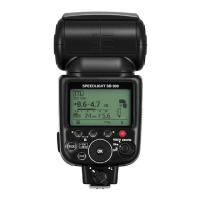
If extremely exhausted batteries are used, a strange sound can be heard caused by the
flash head zooming back and forth even when the SB-800 is turned off. In this case,
replace the SB-800’s batteries even if an external battery source is used.
t External power sources
Using an optional external power source increases the number of flash firings
and provides faster recycling times (p. 113).
Basic operation


 To Next Page