IMPACT ENERGY TRANSMISSION THROUGH
TOOLS
IMPACT STRESS WAVES AT THE END OF THE TOOL
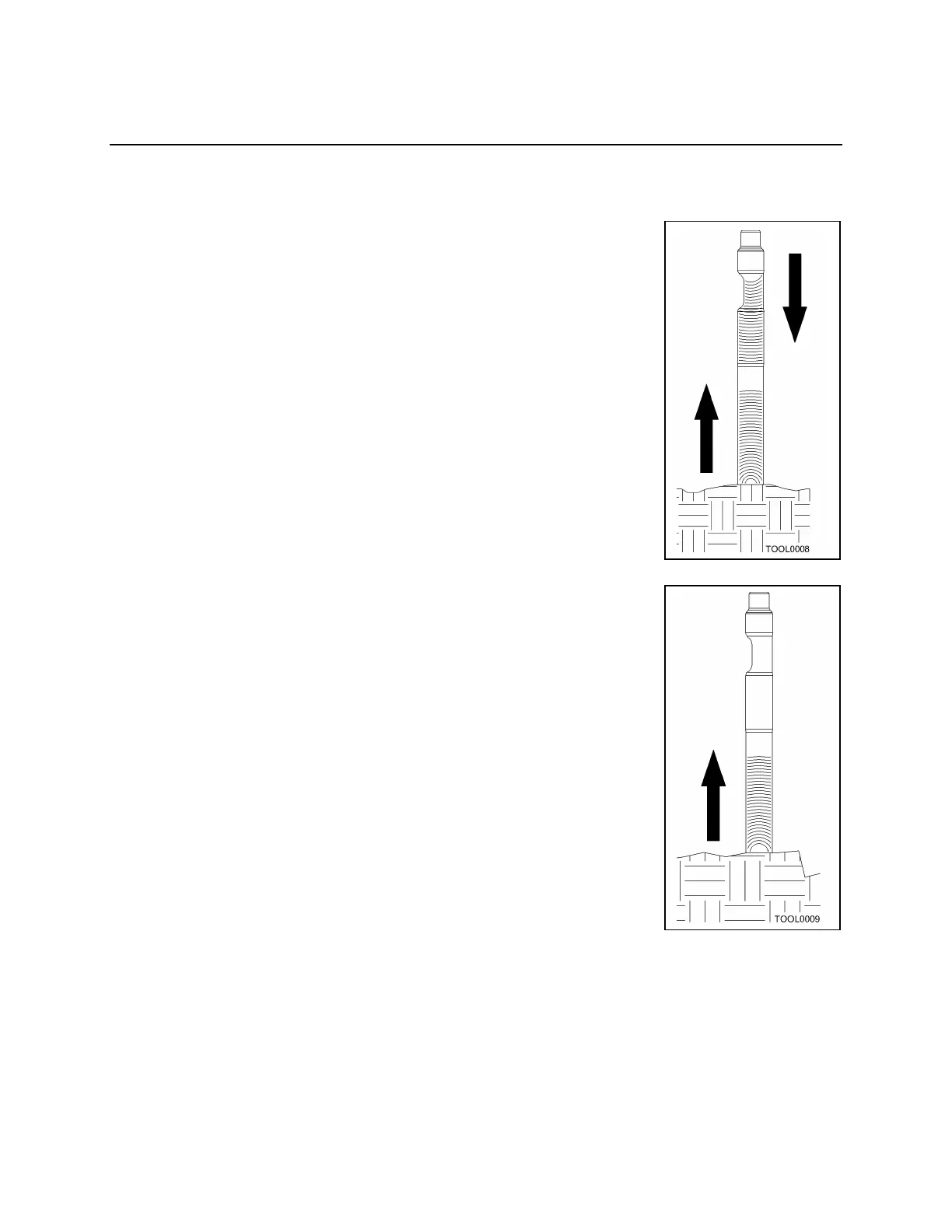
When the tool is in contact with the material to be broken, most
of the compression stress waves are transferred to the material,
and the energy of the compression waves then breaks the
material. However, not all the energy of the compression waves
is transmitted to the material to be broken, part of it is
reconverted into reverse compression, or tensile, waves that
then travel back through the tool.
When the tool is not in contact with the material to be broken, the
energy of the compression wave has nowhere to go and
therefore, returns totally in the chisel as tensile waves. This is
referred to as a “blank hammer blow”.
The compression waves and the tensile waves travel in a
complex manner in the tool during hammer operation. While
these waves are gradually being attenuated by the internal
friction of the tool and by the friction between the tool and the
tool holder bushings, the next impact strikes the tool.
Excessively heavy contact between the tool and tool bushings
causes uneven stress concentrations. This leads to premature
tool failure, as seen in later sections of this manual.



 To Next Page