EasyManua.ls Logo

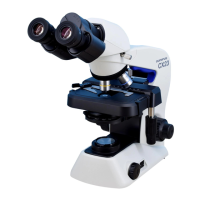
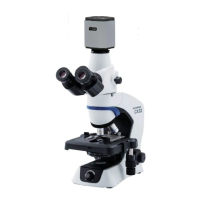
Olympus CX33 - User Manual

Olympus CX33
40 pages
Print Icon
To Next Page IconTo Next Page
Loading...
INSTRUCTIONS
This instruction manual is for the Olympus biological microscope.
To ensure the safety, obtain optimum performance and to familiarize yourself fully with the use
of this microscope, we recommend that you study this manual thoroughly before operating this
microscope, and always keep this manual at hand when operating this product.
Retain this instruction manual in an easily accessible place near the work desk for future
reference.
Biological Microscope
CX33
AX 8881
Optical Microscope and Accessory

Questions and Answers

  • D
    David RoblesAug 18, 2025
    What to do if there are dust or stains visible in the observed field of view of Olympus CX33?
    • M
      mweissAug 18, 2025
      If you notice dust or stains in the observed field of view of your Olympus Microscope, it is likely that the objective, eyepiece, condenser, window lens, or specimen are dirty. Clean these components thoroughly to resolve the issue.
  • E
    efisherAug 20, 2025
    Why is my Olympus CX33 Microscope image blurred and unclear?
    • W
      William Williams MDAug 20, 2025
      A blurred or unclear image on your Olympus Microscope can occur for several reasons: the objective may not be properly engaged in the light path (rotate the revolving nosepiece until it clicks); the objective, eyepiece, condenser, window lens, or specimen could be dirty (clean them thoroughly); immersion oil may be required but not used with an oil immersion objective (use the immersion oil); the immersion oil might contain bubbles (remove the air bubbles); or the incorrect immersion oil is being used (use the immersion oil provided by Olympus).
  • P
    Paul KingAug 23, 2025
    Why is the brightness of the observed field of view uneven on my Olympus CX33 Microscope?
    • H
      Heidi WatkinsAug 23, 2025
      Uneven brightness in the field of view on your Olympus Microscope can be due to a few reasons. The light path selection knob of the tube may not be correctly positioned; be sure to rotate it completely until it stops. Also, the objective might not be fully engaged in the light path; rotate the revolving nosepiece until it clicks. Finally, the objective, eyepiece, condenser, window lens, or specimen could be dirty and need cleaning.
  • J
    Johnny HooverAug 26, 2025
    How to fix one-sided blur on Olympus CX33 Microscope?
    • B
      Bruce GonzalezAug 26, 2025
      If you're experiencing a one-sided blur, making the image look as if it's flowing on your Olympus Microscope, it could be due to the objective not being properly engaged in the light path. Try rotating the revolving nosepiece until it clicks. Another possibility is that the specimen isn't correctly placed on the stage; ensure it's properly positioned and secured with the specimen holder.
  • J
    juan16Aug 28, 2025
    What to do if Olympus CX33 Microscope image glares?
    • A
      Ann CamachoAug 28, 2025
      If the observed image on your Olympus Microscope glares, it is likely that the aperture diaphragm is narrowed down too far. Move the knob position of aperture diaphragm lever to the position of the same magnification as the magnification of the objective in use.
  • D
    Daisy BradshawAug 30, 2025
    Why does the high magnification objective collide with the specimen on Olympus CX33 Microscope?
    • C
      cooperjoshuaAug 30, 2025
      If the high magnification objective collides with the specimen before it comes into focus on your Olympus Microscope, the specimen may be placed upside down. Make sure to place the specimen with the cover glass side facing up.
  • A
    aaron22Sep 1, 2025
    What to do if the stage descends by its own weight on Olympus Microscope?
    • J
      Jordan PenaSep 1, 2025
      If the stage descends by its own weight, or the focus is lost due to slippage of the coarse focusing knob on your Olympus Microscope, it's likely that the tension adjustment ring is loosened too much. Tighten the tension adjustment ring to achieve the proper tension.
  • G
    Gabriella Hernandez DVMSep 4, 2025
    How to adjust the field of view between two eyes on Olympus CX33?
    • I
      iriceSep 4, 2025
      To match the field of view between two eyes on your Olympus Microscope: * Ensure the interpupillary distance is correctly adjusted. * Correct any difference in diopter between your two eyes. * Verify that you are using the same eyepiece for both the right and left sides.
  • D
    Daniel CaseySep 7, 2025
    Why is the tension of the coarse focusing knob too heavy on my Olympus Microscope?
    • S
      Sarah YoungSep 7, 2025
      If the tension of the coarse focusing knob feels too heavy on your Olympus Microscope, the tension adjustment ring may be tightened too firmly. Try loosening the tension adjustment ring to achieve the proper tension.
  • W
    Whitney EvansSep 9, 2025
    What to do if Olympus CX33 Microscope LED illumination does not light?
    • T
      Tara FosterSep 9, 2025
      If the LED illumination on your Olympus Microscope does not light up, the AC adapter or power cord may be disconnected. Ensure the power cord is securely connected to a power outlet.

Summary

Safety Precautions

Prevention of Infection

Precautions for handling potentially infectious specimens and maintaining product hygiene.

Product Installation Safety

Guidelines for safely setting up the microscope on a stable surface.

Objective Light Safety

Warning against direct viewing of objective light, including UV/IR wavelengths.

LED Light Safety

Caution against prolonged direct viewing of LED light to prevent eye damage.

Electric Safety Guidelines

Guidelines for safe use of AC adapter, power cord, and grounding.

Safety Symbols Explanation

Interpretation of symbols used in the manual for safe operation.

Handling Precautions

Maintenance and Storage

Intended Use

Standard Microscope Combination

Nomenclature of Operating Portions

Brightfield;Darkfield Observation Methods

Observation Procedures

Turning ON Illumination

Steps to power on the microscope and adjust LED brightness.

Light Path Selection

How to switch between eyepiece and camera observation paths.

Placing the Specimen

Detailed instructions for correctly positioning specimens on the stage.

Moving the Specimen

Using stage controls (X/Y knobs) to navigate the specimen.

Specimen Position Scale

Reading scales to note and return to specific specimen positions.

Fixing the Stage

Securing the stage to prevent accidental movement.

Tracking Observation Image

Understanding the relationship between specimen and image movement.

Selecting Microscope Objective

Procedure for changing objectives via the revolving nosepiece.

Focusing on Specimen

Using coarse and fine adjustment knobs for sharp focus.

Adjusting Focus Knob Tension

Modifying tension for smoother coarse focus operation.

Using Pre-focusing Lever

Employing the lever to prevent objective-specimen collision.

Adjusting Interpupillary Distance

Setting eyepiece spacing for binocular viewing comfort.

Adjusting Eyepiece Diopter

Compensating for individual eye diopter differences.

Using Eyepiece Micrometer

Instructions for using the micrometer for specimen measurement.

Using Eye Shades

Proper use of eye shades for enhanced viewing comfort.

Adjusting Aperture Diaphragm (AS)

Optimizing contrast and resolution via diaphragm adjustment.

Attaching Darkfield Ring Slit

Steps for installing the slit for darkfield observation.

Acquiring Camera Image

Process for capturing images using a connected camera.

Using 100 X Oil Immersion Objective

Detailed guide for using the high-magnification objective.

Glossary of Optical Performance Terminology

Aperture Diaphragm Explanation

Troubleshooting Guide

Microscope Specifications

List of Optical Performances

Assembly Instructions

Assembly Diagram

Visual guide showing component attachment order.

Assembly Procedures

Step-by-step instructions for assembling the microscope.

Removing Eyepiece

How to detach standard 10X eyepieces.

Attaching Eyepiece Micrometer

Installing a micrometer for measurement.

Attaching Eyepieces

Guide for installing eyepieces.

Attaching Microscope Objective

Procedure for mounting objectives.

Attaching Specimen Holder

Mounting different types of specimen holders.

Attaching Camera Adapter and Camera

Connecting camera equipment.

Attaching Filter Holder and Darkfield Ring

Installing darkfield accessories.

Attaching 45 mm Diameter Filter

Inserting filters into the holder.

Connecting Power Supply

Properly connecting the microscope to power.

Storing Power Accessories

Method for safely storing power cords and adapters.

Attaching Allen Wrench Holder

Mounting the holder for the allen wrench.

Proper Power Supply Cord Selection

Olympus CX33 Specifications

General IconGeneral
BrandOlympus
ModelCX33
CategoryMicroscope
LanguageEnglish

Related product manuals