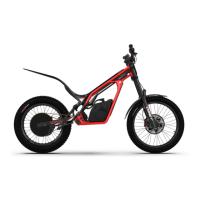
Perform a visual inspection of the bike, checking for any signs of damage.
Perform a full bolt check throughout the bike (refer to Maintenance; Bolt Torques).
Check the throttle rotates smoothly and returns freely.
Check grips and bar ends are in the correct position and do not show any signs of damage.
Check the kill switch functions correctly and check wrist lanyard for any signs of damage.
Check the chain is tensioned and the split link is assembled correctly (refer to Assembly; Rear
Wheel). Clean and lubricate the chain with a lubricant or oil suitable for standard chains.
Inspect the chain, rear sprocket and chain tensioner for signs of excessive wear or damage
(refer to Maintenance; Chain Wear. Replace the chain together with sprockets as required).
Check the front sprocket for excessive wear and is seated correctly on the motor shaft.
Ensure the sprocket cover is clear of debris.
Check both brakes operate correctly, lever positions are set correctly for the rider.
Ensure rear caliper position is set correctly relative to the axle (refer to Assembly; Rear Wheel)
Check front and rear brake pad wear, (minimum 0.5mm friction material thickness).
Ensure brake hoses are both secure and inspect the brakes for signs of oil leaks.
Check the handlebars rotate smoothly to full lock in both directions without any trapped,
snagged or kinking cables or hoses. Check headset for excessive play.
Inspect the wheels & tyres for visible signs of damage. Check spoke tension.
Ensure the tyre pressure is suitable for the rider and terrain.
Check suspension components operate correctly, including any adjustments.
Ensure suspension pressure is suitable for the rider and terrain.
Inspect the battery, battery straps and power cables for any visible signs of damage and power
connectors are clear of any debris (Use a dry wipe/brush to clean, do not use water)
Check footpegs rotate smoothly, return freely and are free from excessive play.
Full pre-ride check (see pg 62).
Check the condition and/or torque of all bolts, fasteners, hoses and cables
hidden behind the bike’s bodywork.
Inspect suspension components for signs of damage or excessive seal wear.
Adjust suspension dials to prevent seizing.
Replace suspension seals. Check shock hardware for excessive play / wear.
Inspect brake pad and rotor wear. (0.5mm minimum of pad friction material and
1.5mm rotor thickness. When replacing rotors, pads should also be replaced).
Replace brake fluid and bleed brakes.
Remove, clean and inspect swingarm axles. Clean and inspect bushes.
Replace swingarm bushes and axles.
Remove, clean, inspect and re-grease front and rear axles and wheel
hardware. Check bearings for signs of excessive wear.
Replace front and rear wheel bearings.
Remove, clean, inspect and re-grease headset cups and bearing races.
Replace headset bearings.
Remove, clean, inspect and re-grease swingarm dropout slider assembly.
Inspect chain tensioner spring, roller and bearings for excessive wear.
Remove and clean the throttle (using electrical contact cleaner only).
Replace footpeg bushes.
Inspect motor seals and bearings. (Authorised OSET technician only)
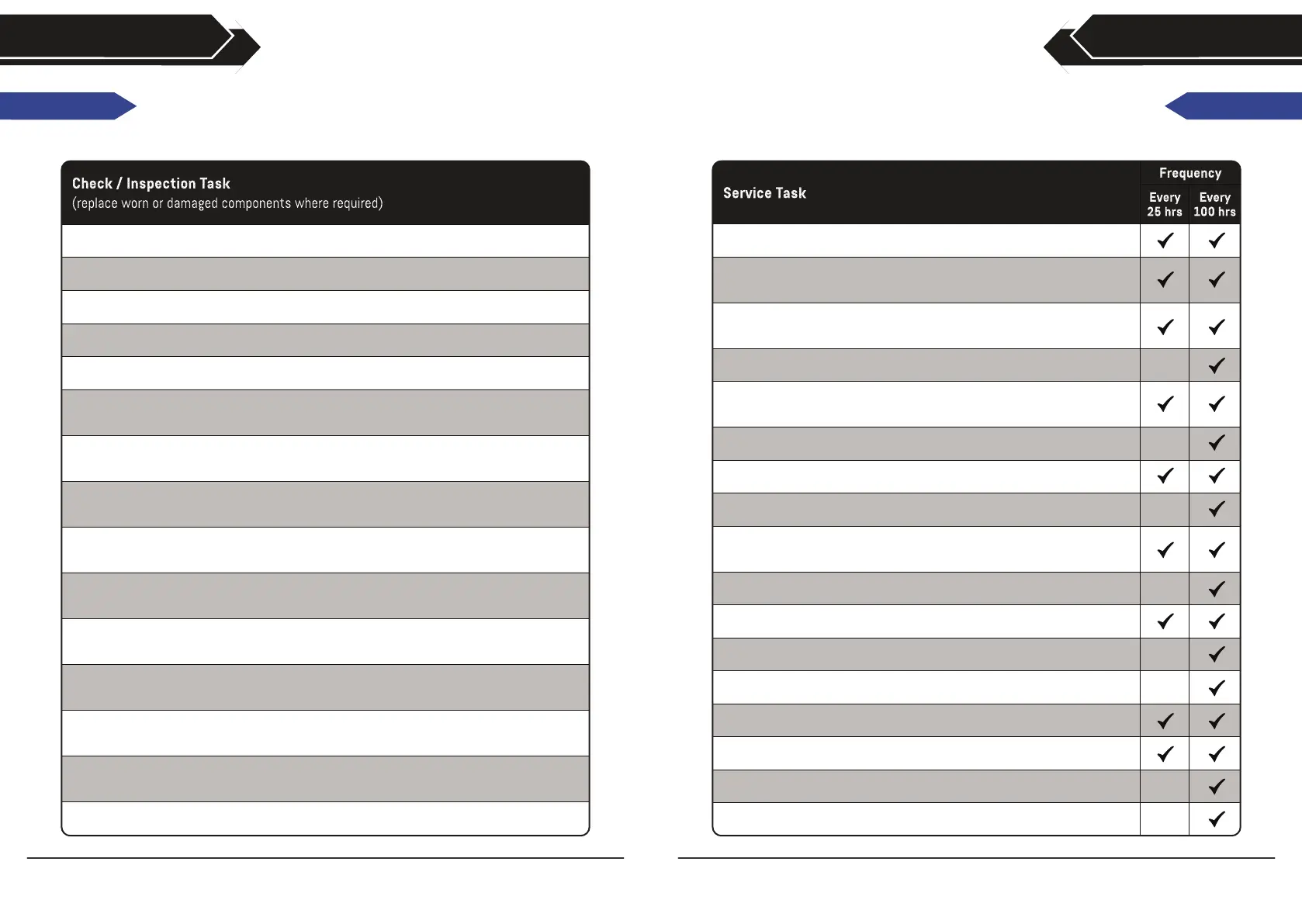
The service intervals below are recommended to keep your OSET in optimal condition.


 To Next Page
 Loading...