CHAPTER SEVEN
OAE test procedure
68
OAE test procedure
If calibration continues to fail, regardless of the position of the probe in the
ear, it is likely that the probe has become blocked. In this case, inspect the
probe coupler tubes and replace if necessary, then run Probe tests (see
chapter 14) to test the probe and Otoport performance.
Following Stimulus Calibration, the OAE recording begins and data is
collected.
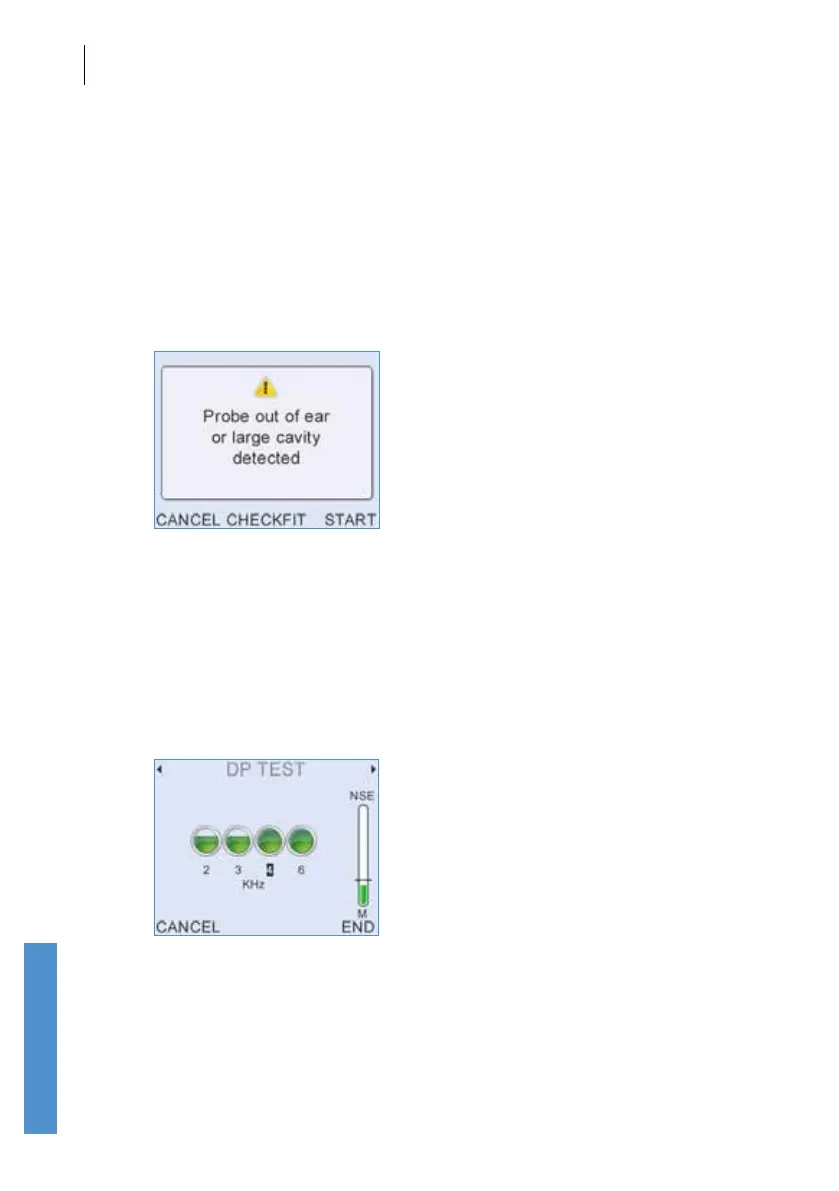
With Neonate mode On, the user is warned if the response from the probe
indicates a large ear canal.
7.3.2 Test screen
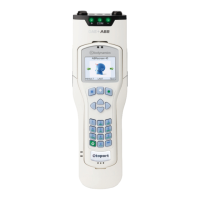
The Otoport looks at the ratio of the OAE signal to the noise; this is known
as the Signal to Noise Ratio or SNR. The Otoport measures the SNR in a
number of dierent frequencies.
The display shows a series of small circles, each representing the SNR
recorded at a particular DP frequency. The numbers below the circles
indicate the F2 frequency in kHz.
The pass criteria are set in the Conguration area (see chapter
11
Conguration). The default pass criteria are an SNR of 6dB, a minimum
signal of >-5dBSPL and at least 1.28s of data collected in at least three
frequency bands.



 To Next Page