Need help?
Do you have a question about the Otodynamics Otoport Flex and is the answer not in the manual?
Details the intended application of the Otoport OAE+ABR device for screening hearing disorders.
Outlines essential precautions for safe and effective operation of the Otoport device.
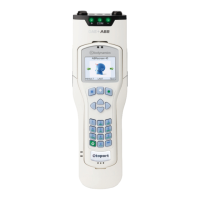
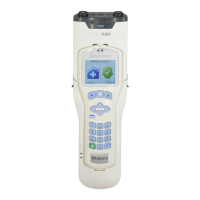
Illustrates and labels the various controls, indicators, and connection ports on the Otoport device.
Details the specific controls, indicators, and connection points for the Otoport OAE+ABR unit.
Guides on how to connect the probes and electrodes to the Otoport module.
Detailed steps for correctly connecting the probe to the Otoport device.
Lists essential pre-test checks for the Otoport and testing environment.
Explains how to select and fit the correct probe tips for OAE recordings.
Details on proper electrode fitting and skin preparation for optimal impedance.
Illustrates the recommended electrode placement for ABR testing.
Addresses common issues encountered during OAE tests and provides solutions.
Covers common problems in ABR testing, such as high impedance and noise.
Instructions for inputting patient information before starting a test.
Details the Checkfit process for assessing probe fit and test conditions.
Describes the process of calibrating stimulus tones for DPOAE tests.
Describes the possible test results for DPOAE and their meanings.
Explains the TEOAE stimulus adjustment process and potential issues.
Describes the possible test results for TEOAE and their interpretation.
Guides on setting up and operating the ABR test on the Otoport.
Explains the impedance check process for ensuring good electrode connection.
Details impedance measurements and their interpretation for ABR testing.
Explains how to interpret electrical noise indicators during ABR testing.
Covers the Checkfit procedure for ABR, including ear cup usage.
Details the various conditions under which an ABR test will stop.
Explains the possible test results for ABR and how to interpret them.
Explains the Quick Save feature and its options (On/Off) for saving tests.
Details on using the Work List to manage multiple patients for efficient testing.
Describes how to perform quality tests on probes and cables.
Details on configuring test modes (Screen/Clinical) and settings.
Configuration of ABR mains frequency and stimulus levels.
Configuration options for DPOAE test modes: DP High, DP Low, DP 12 Freq.
Settings for ABR test modes: ABRscreen and ABRcustom, including stimulus levels.
Configuration of ABR pass criteria (Fsp, TC) and ear cup usage.
Explains how to use Bluetooth for wireless printing and data download.
Details on how to perform the probe test to check its functionality.
Important safety information regarding the use of probe tips.
Troubleshooting steps for Otoport lock-ups and failure to switch on.
Explains instrument and hardware fault messages and their resolutions.
Information on how to obtain service, repair, and contact Otodynamics.
 General
| Portability | Portable |
|---|---|
| Type | Otoacoustic Emissions (OAE) and Audiometry Diagnostic Device |
| Power Supply | Rechargeable battery |
| Connectivity | USB |
| Data Storage | Internal memory |
| OAE | TEOAE, DPOAE |


 To Next Page