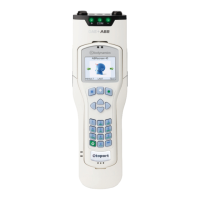
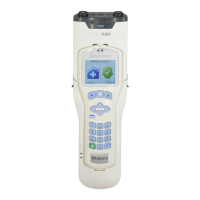
Otoport OAE+ABR
User Manual for Otoport DP+TE model
11
Introduction
1.3 General use precautions
Do not connect the patient to high frequency (HF) surgical equipment
and to an Otoport in ABR mode simultaneously. Failure to observe this
precaution may result in burns at the site of the electrodes and possible
damage to the Otoport.
When one or more ABR electrodes are connected to the patient take care
to avoid any contact between the remaining electrodes and conductive
surfaces, such as other equipment. Failure to observe this precaution my
result in harmful electrical currents owing through the patient.
The Otoport pass criteria are set in the Conguration area (see chapter
15
Conguration). It is the responsibility of the user to ensure that the pass
criteria set meet their requirements.
Measuring OAEs and ABRs requires that the ear is exposed to sound.
Whilst the level of this exposure is harmless under normal test conditions,
it is not recommended that tests be allowed to continue indenitely even if
there is no result.
The Otoport includes ‘stop criteria’ which will automatically terminate the
test when an OAE or ABR pass has been achieved or within ten minutes.
Whilst this limits the sound exposure in a single test, the user is responsible
for limiting the number of separate tests performed on the same ear.
The Otoport has built in signal analysis proven to distinguish true OAEs
and ABRs from artefactal signals. Checks should be performed weekly
and before each test session to conrm the system continues to operate
eectively (see chapter 17 Quality checks).
In exceptional circumstances, either an equipment fault or failure to comply
fully with the instructions in this manual may result in unreliable test results.
Results with total OAE responses greater than 40 dB SPL should be
considered highly suspect and should not be relied on.
The probe’s coupler tubes which carry sound to and from the ear canal
are protected from contamination by the disposable tip. The probe should
never be inserted into the ear without a disposable tip attached. Doing so
risks damage to the ear by the probe body and contamination of the probe
by the ear.
TRAINING
REQUIRED



 To Next Page