26
2005 Doctor Martin Luther King Jr Street
Indianapolis, IN 46202
Rev 07-2021
With the tube nut installed manually
but not tightened, screw the special
fitting onto the top of the tube to its full
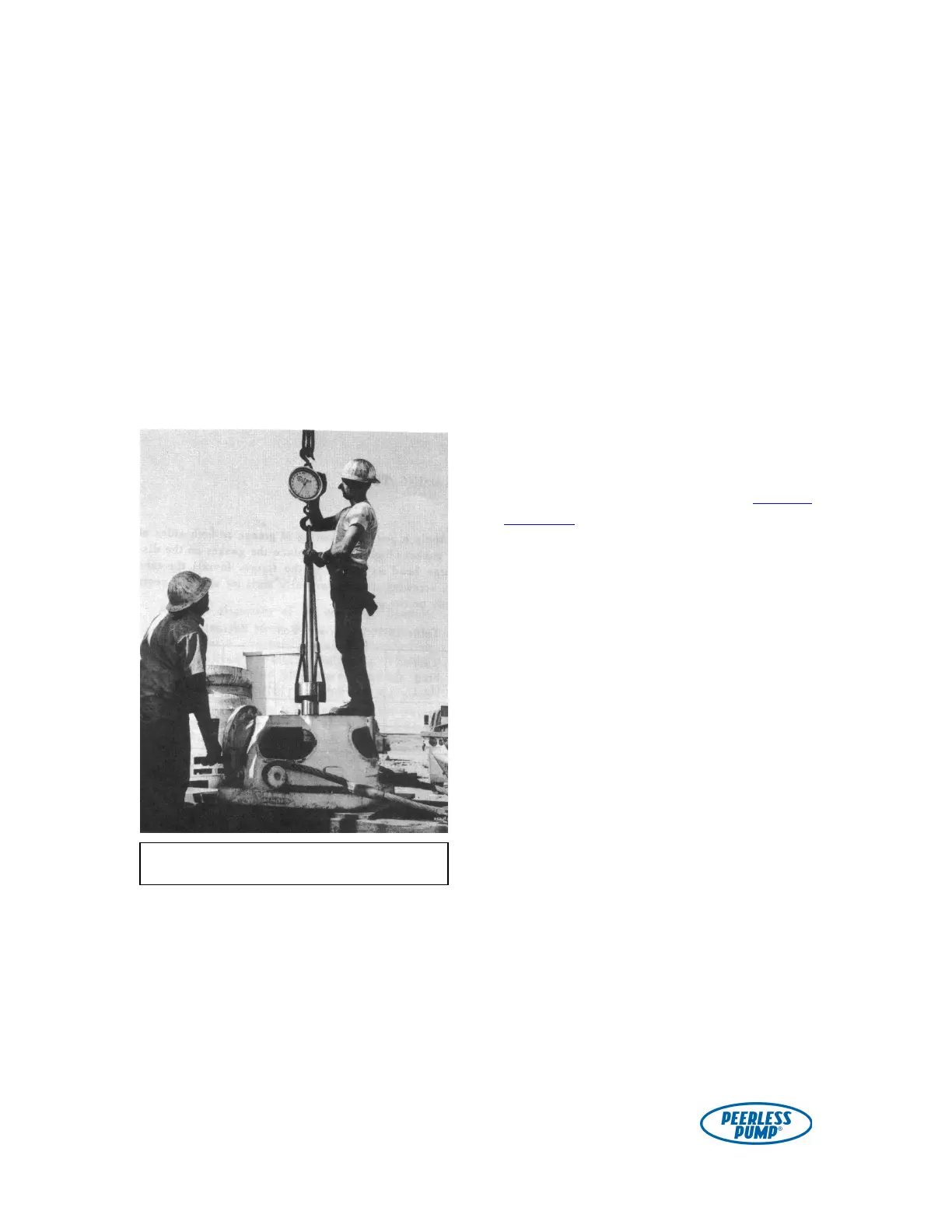
engagement. Attach the dynamometer
scale to the lugs, and connect the upper
end of the scale to the hoist hook (see
Fig. 18). Operate the hoist to apply the
required tension. This will pull the tube
nut up off the gasket. Manually screw
down the tube nut to reseat it. Reduce
the tension to zero. Remove the
dynamometer scale and the special
fitting.
If a dynamometer scale is not
available, the tube can be tensioned by
wrenching the tube nut. This is
permissible only for pumps with
settings under 500 feet. A special
wrench for tightening the tube nut may
be obtained from the dealer. Apply the
special wrench to the tube nut so that the
slots in the wrench engage the lugs at the
top of the tube nut. Using chain tongs
strapped around the special wrench, turn
the tube nut to take all of the slack out of
the tube and induce a reasonable amount
of tension in it. The tube nut is properly
torqued if it forms an effective seal with
the gasket. This can only be determined
when the pump is started (see Starting
the Pump on page 40).
Insert the two packings (see Fig. 17)
into the recess in the tube nut. Screw the
packing follower on the tube threads,
tightening it firmly against the packings.
Use the small end of the special tube nut
wrench and a pipe wrench to turn the
follower.
Place the tube nut cap in position
over the tube nut and fasten it to the
discharge head with the cap screws
provided.
Figure18. Tensioning the tube nut.



 To Next Page