SEBU8191-01 43
Maintenance Section
Battery - Replace
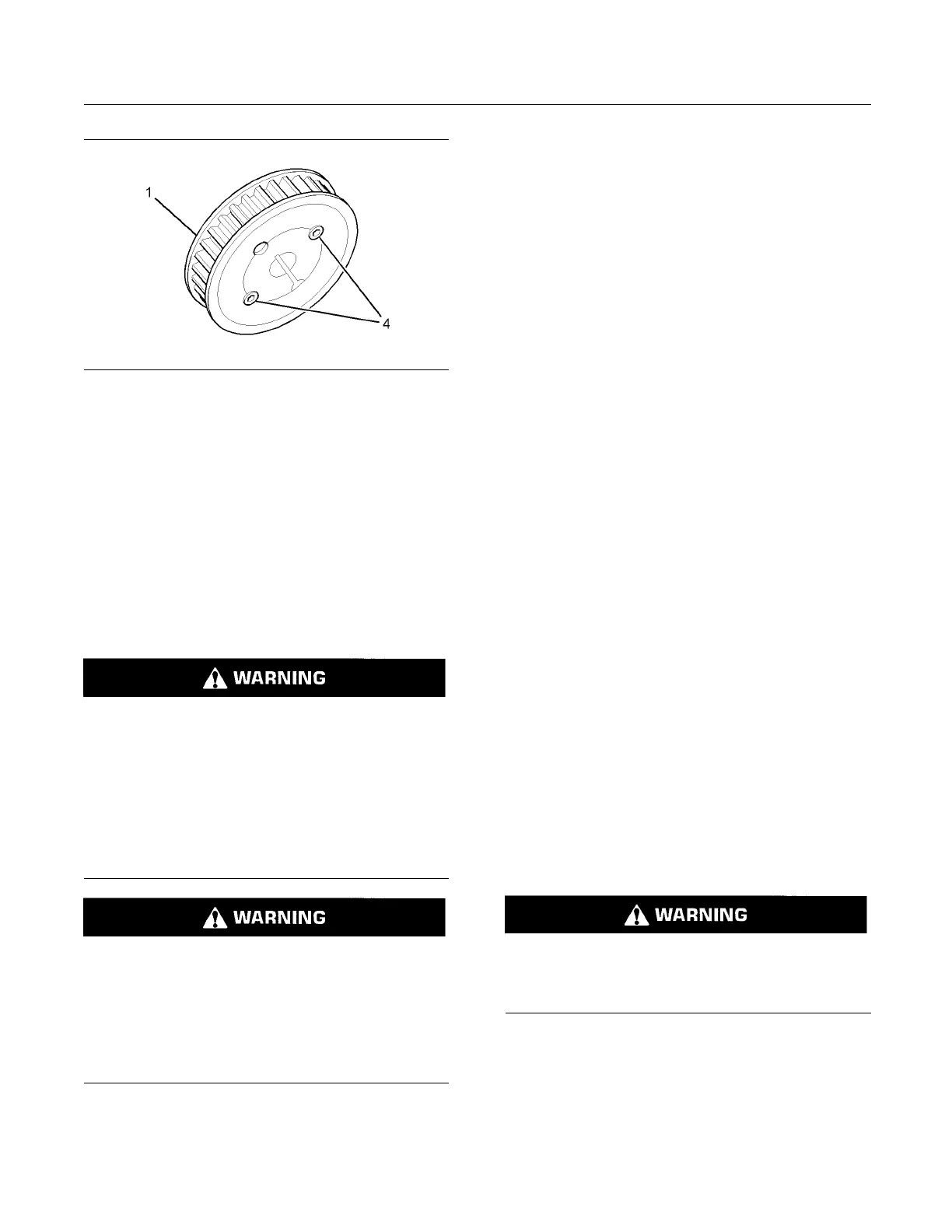
g01233693
Illustration 29
Typical e xample
3. Tighten the grub screws (4) to a torque of 20 N·m
(15 lb ft).
4. Install the guard (3).
5. Restore the electrical supply to the engine.
i023223
15
Battery - Replace
Batteries give off combustible gases which can
explode. A spark can cause the combustible gas-
es to i
gnite. This can result in severe personal in-
jury or death.
Ensu
re proper ventilation for batteries that are in
an enclosure. Follow the proper procedures in or-
der to help prevent electrical arcs and/or sparks
near
batteries. Do not smoke when batteries are
serviced.
The battery cables or the batteries should not be
removed with the battery cover in place. The bat-
tery cover should be removed before any servic-
ing is attempted.
Removing the battery cables or the batteries with
the cover in place may cause a battery explosion
resulting in personal injury.
1. Switch the engine to the OFF position. Remove
all electrical loads.
2. Turn off any bat
tery chargers. Disconnect any
battery chargers.
3. The NEGATIVE “
-” cable connects the NEGATIVE
“-” battery terminal to the NEGATIVE “-” terminal
on the starting motor. Disconnect the cable from
the NEGATIVE
“-” battery terminal.
4. The POSITIVE “+” cable connects the POSITIVE
“+” battery
terminal to the POSITIVE “+” terminal
on the starting motor. Disconnect the cable from
the POSITIVE “+” battery terminal.
Note: Always recycle a battery. Never discard a
battery. Dispose of used batteries to an appropriate
recycling
facility.
5. Remove the used battery.
6. Install the new battery.
Note: Bef
ore the cables are connected, ensure that
theenginestartswitchisOFF.
7. Connect t
he cable from the starting motor to the
POSITIVE “+” battery terminal.
8. Connect
theNEGATIVE“-”cabletotheNEGATIVE
“-” battery terminal.
i02747977
Battery Electrolyte Level -
Check
When the engine is not run for long periods of time or
when the engine is run for short periods, the batteries
may not fully recharge. Ensure a full charge in order
to help prevent the battery from freezing. If batteries
are correctly charged, the ammeter reading should
be very near zero, when the engine is in operation.
All lead-acid batteries contain sulfuric acid which
can burn the skin and clothing. Always wear a face
shield and protective clothing when working on or
near batteries.
1. Remove the filler caps. Maintain the electrolyte
level to the “FULL” mark on the battery.
If the addition of water is necessary, use distilled
water. If distilled water is not available use clean
water that is low in minerals. Do not use artificially
softened water.



 To Next Page