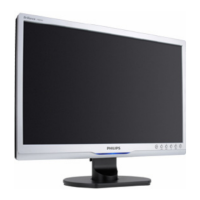
10 190CW9 LCD
Philips Pixel Defect Policy
Philips' Flat Panel Monitors Pixel Defect Policy
Philips strives to deliver the highest quality products. We use
some of the industry's most advanced manufacturing processes
and practice stringent quality control. However, pixel or sub pixel
defects on the TFT LCD panels used in flat panel monitors are
sometimes unavoidable. No manufacturer can guarantee that all
panels will be free from pixel defects, but Philips guarantees that
any monitor with an unacceptable number of defects will be
repaired or replaced under warranty. This notice explains the
different types of pixel def ects and defines acceptable def ect
levels for each type. In order to qualify for repair or replacement
under warranty, the number of pixel defects on a TFT LCD panel
must exceed these acceptable levels. For example, no more than
0.0004% of the sub pixels on a 19" XGA monitor may be
defective. Furthermore, Philips sets even higher quality
standards for certain types or combinations of pixel defects that
are more noticeable than others. This policy is valid worldwide.
Pixels and Sub pixels
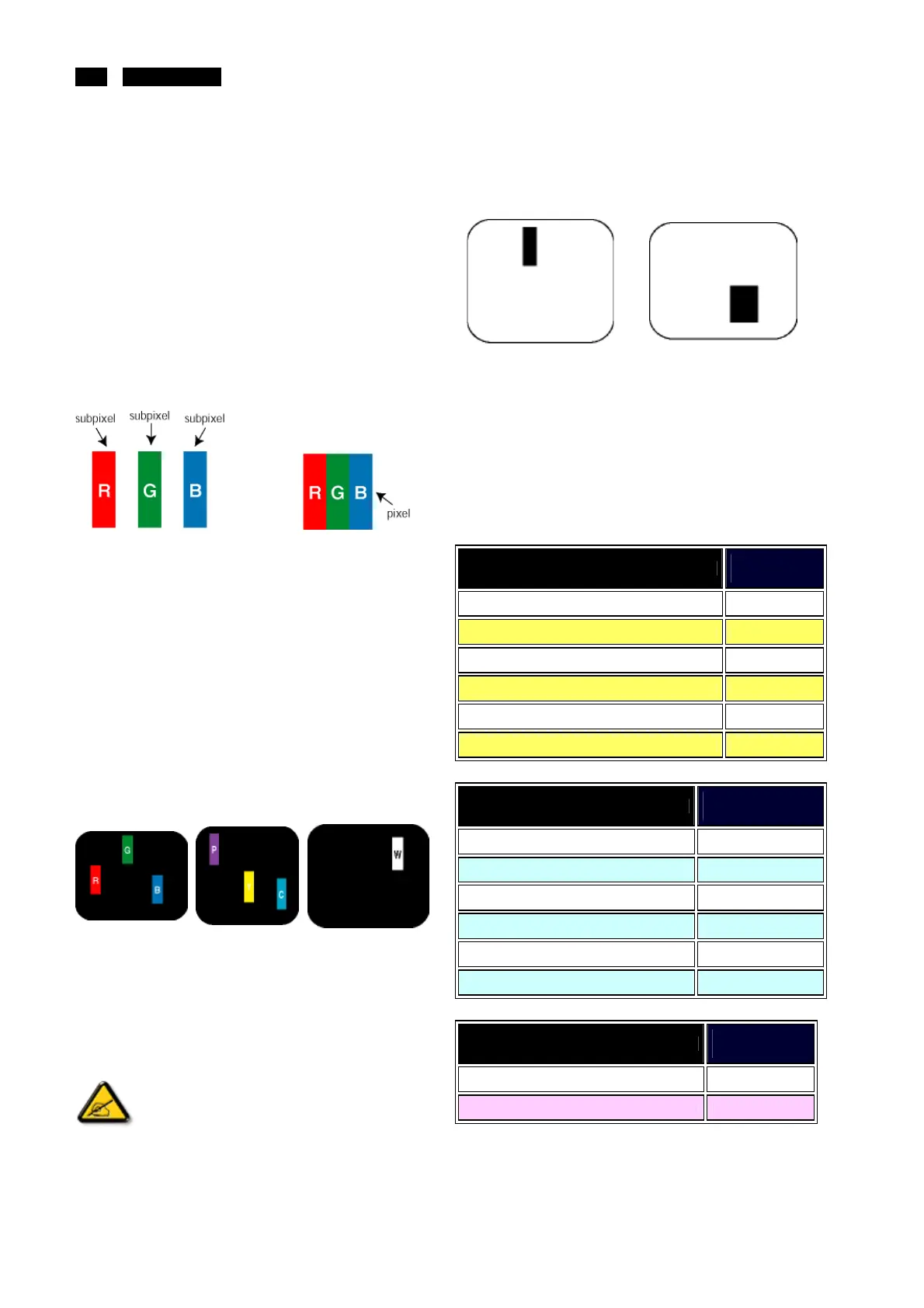
A pixel, or picture element, is composed of three sub pixels in the
primary colors of red, green and blue. Many pixels together form
an image. When all sub pixels of a pixel are lit, the three colored
sub pixels together appear as a single white pixel. When all are
dark, the three colored sub pixels together appear as a single
black pixel. Other combinations of lit and dark sub pixels appear
as single pixels of other colors.
Types of Pixel Defects
Pixel and sub pixel defects appear on the screen in different
ways. There are two categories of pixel defects and several types
of sub pixel defects within each category.
Bright Dot Defects Bright dot defects appear as pixels or sub
pixels that are always lit or 'on'. That is, a bright dot is a sub-pixel
that stands out on the screen when the monitor displays a dark
pattern. There are the types of bright dot defects:
ʳ
ʳ
One lit red, green or
blue sub pixel
ʳ
Two adjacent lit
sub pixels:
-Red+Blue=
Purple
- Red + Green =
Yellow
- Green + Blue =
Cyan (Light Blue)
Three adjacent lit sub
pixels (one white
pixel)
ʳ
ʳ
A red or blue bright dot must be more than 50
percent brighter than neighboring dots while a
green bright dot is 30 percent brighter than
neighboring dots.
ʳ
Black Dot Defects Black dot defects appear as pixels or sub
pixels that are always dark or 'off'. That is, a dark dot is a
sub-pixel that stands out on the screen when the monitor
displays a light pattern. These are the types of black dot defects:
ʳ
One dark sub pixel
ʳ
Two or three adjacent dark sub
pixels
ʳ
Proximity of Pixel Defects
Because pixel and sub pixels defects of the same type that are
near to one another may be more noticeable, Philips also
specifies tolerances for the proximity of pixel defects.
Pixel Defect Tolerances
In order to qualify for repair or replacement due to pixel defects
during the warranty period, a TFT LCD panel in a Philips flat
panel monitor must have pixel or sub pixel defects exceeding the
tolerances listed in the following tables.
BRIGHT DOT DEFECTS
ACCEPTABLE
LEVEL
MODEL
190CW9
1 lit subpixel 3
2 adjacent lit subpixels 1
3 adjacent lit subpixels (one white pixel) 0
Distance between two bright dot defects* >15mm
Total bright dot defects of all types 3
BLACK DOT DEFECTS
ACCEPTABLE
LEVEL
MODEL
190CW9
1 dark subpixel 5
2 adjacent dark subpixels 2
3 adjacent dark subpixels 0
Distance between two black dot defects* >15mm
Total black dot defects of all types 5
TOTAL DOT DEFECTS
ACCEPTABLE
LEVEL
MODEL
190CW9
Total bright or black dot defects of all types 5
Note:
* 1 or 2 adjacent sub pixel defects = 1 dot defect
http://www.wjel.net



 To Next Page