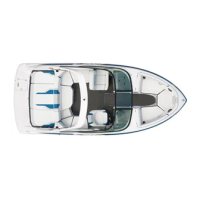
Why does my Regal 2000 ES Boat gauge read erratic?
- HHannah WilliamsSep 12, 2025
If your Regal Boat's gauge reads erratically, the issue is likely a loose ground or hot wire connection. Check all connections and secure any that are loose.
Why does my Regal 2000 ES Boat gauge read erratic?
If your Regal Boat's gauge reads erratically, the issue is likely a loose ground or hot wire connection. Check all connections and secure any that are loose.
Why is the stern drive trim not functioning on my Regal Boat?
If the stern drive trim on your Regal Boat is not functioning, the motor in the trim control unit might be bad and need replacement. Also, check for faulty wiring and repair or replace it. Finally, if there's water in the bellows or power trim fluid, remove the water and check the power trim fluid.
Why is the binnacle control lever stiff on my Regal 2000 ES?
If the binnacle control lever on your Regal Boat is stiff, inoperative, or stalls when shifting, several factors could be the cause. Start by checking the shift system bushings and seals for breakage and replace them if necessary. Inspect the cables for kinks, breaks, or damage, and replace any damaged cables. If the friction brake is too tight, loosen it. Lastly, inspect the control box for jamming and free it up.
Why is my Regal 2000 ES Boat battery not charging while the engine is running?
If the battery in your Regal Boat is not charging while the engine is running, check for a loose or damaged serpentine belt and replace or tighten it as necessary. If the belt is in good condition, the alternator may be faulty, so test it with a voltmeter and replace it if needed. Also, the volt meter may be faulty and need to be replaced.
What to do if my Regal 2000 ES engine cranks but will not start?
If your Regal Boat engine cranks but won't start, several issues could be at fault. Check if the fuel tank vent is obstructed and clear any blockages. Ensure the battery has an adequate charge, and recharge or replace it if necessary. Verify that the fuel level is adequate and refill if low. Check and repair the fuel pump if the fuel pump pressure is inadequate. Drain the water from the fuel system if there is water in the fuel. Inspect and adjust the gap on the spark plugs. Finally, repair or replace the distributor if it's malfunctioning.
Why is my Regal Boat bilge pump not functioning manually?
If the bilge pump on your Regal Boat isn't functioning manually, ensure the battery switch is turned on. Check the bilge pump dashboard fuse and replace it if it's blown, investigating the cause of the overload. Inspect the battery connection for corrosion and clean it if necessary. The bilge pump switch itself may be bad and need replacement. Also, inspect the impeller for damage or blockages. If none of these resolve the issue, the bilge pump motor may be bad and need replacement. Finally, check the bilge pump discharge hose for blockages.
Why is my Regal Boat depth gauge inaccurate?
If the depth gauge on your Regal Boat is inaccurate, start by checking the transducer sight hole for any blockages and clear them. If the sight hole is clear, the gauge itself may be bad and need replacement. Alternatively, the transducer could be faulty and also need replacement.
Why will my Regal 2000 ES Boat stereo not play?
If the stereo on your Regal Boat won't play, check for water in the unit and dry it out. Verify that the antenna connections are secure and properly positioned, and replace the antenna if it's bad. Also, make sure the correct mode is selected for playback.
Why is there no 12 volt power at the battery on my Regal 2000 ES?
If your Regal Boat is not getting 12-volt power at the battery, first make sure the battery switch is turned on. If it is on, the battery may be weak or dead and needs to be recharged or replaced. Also, check to see if the battery cables are disconnected from storage and reconnect them if necessary. Finally, check the voltmeter or its connections for faults and repair them.
Why is the 12 volt equipment not working on my Regal 2000 ES Boat?
If your Regal Boat's 12-volt equipment isn't working, first check the fuse and replace it if it's blown. Investigate why the equipment was drawing too much current or why it had a circuit short. If all 12V equipment fails, the battery may be weak or dead, so recharge or replace it. Inspect for corroded or loose wire connections and repair or replace them. Finally, consider the possibility of an internal equipment short or failure, and investigate and repair or replace the affected equipment.
Provides essential details about your boat, including Hull Identification Number (HIN) and owner information.
Details the owner's responsibilities for boat registration and system checks at delivery.
Defines safety precaution signals (Caution, Warning, Danger) and their importance.
Covers fundamental safe boating practices, awareness of regulations, and weather checks.
Details essential safety equipment, focusing on Personal Flotation Devices (PFDs) and their types.
Explains fire extinguisher classifications (Class B, C, etc.) and minimum requirements for vessels.
Covers requirements for Coast Guard approved visual distress signals, including pyrotechnic and non-pyrotechnic types.
Highlights the hazards of carbon monoxide from exhaust gases and precautions to avoid poisoning.
Discusses the dangers of operating a vessel under the influence of alcohol or drugs.
Introduces the Navigation Rules (Rules of the Road) for avoiding collisions on inland and international waters.
Explains right-of-way rules for various vessel interactions and identifies vessels with restricted maneuverability.
Details the use of navigation lights for visibility and determining other vessels' size, speed, and direction at night.
Explains fundamental engine principles (fuel, compression, ignition, exhaust) and essential systems.
Covers the operation, mechanics, and maintenance of stern drive units, including mounting and alignment.
Describes the various gauges and instruments at the helm station used for monitoring engine condition.
Details the operation of helm controls, including switch panels, steering wheel, and ignition panel.
Provides an overview of outboard engine basics, controls, and maintenance specific to the 21 OBX model.
Explains the operation and safety precautions for the optional automatic fire extinguishing system.
Describes the boat's drainage system, bilge pump operation, and maintenance for preventing sinking.
Covers direct current (DC) electrical systems, battery information, and wire color codes.
Details the stereo system, its features, and important notes regarding electronic device operation.
Provides a pre-departure questionnaire and basic steps for starting and operating the vessel.
Details critical safety procedures and precautions for fueling the boat to prevent fire and explosion.
Explains the correct procedures for starting and stopping the engine safely, including shift guidelines.
Covers the operation and maintenance of the boat's steering system, emphasizing safety and periodic checks.
Provides guidance on selecting and using anchors effectively, including proper attachment and setting techniques.
Outlines procedures for handling common emergencies like fire, first aid, and hypothermia.
Details the function and operation of the automatic fire extinguisher system, including manual discharge.
Explains the standard battery switch operation for managing power to the boat's electrical systems.
Covers bilge pump operation, including automatic and manual modes, and necessary checks for proper function.
Describes the bilge blower's function in engine compartment ventilation and safety precautions for its use.
Explains the operation and installation of the PowerTower, including safety warnings and proper usage.
Provides guidance on cleaning and maintaining the boat's interior and exterior surfaces, including upholstery.
Details routine maintenance for the boat's gelcoat surface, including washing, waxing, and minor repairs.
Presents a maintenance schedule for Volvo engines, outlining checks required per trip, month, and hours.
Explains the causes and prevention of galvanic and stray current corrosion on underwater metal parts.
Lists common engine and stern drive problems and their possible causes for diagnosis.
Identifies potential issues with control systems, gauges, and steering, with possible causes.
Helps diagnose problems related to the 12-volt electrical system, including battery and equipment failures.
Provides a checklist for decommissioning the engine and boat for extended storage, including fluid changes.
Outlines steps for recommissioning the boat and engine before launching after storage.
Covers essential pre-towing checks for the boat, trailer, and tow vehicle, including equipment and safety.
Offers advice on safe driving practices while trailering, including maneuvering and speed considerations.
Details safe procedures for launching the boat at the ramp, including hookups and safety checks.
Provides instructions for safely loading the boat onto the trailer, emphasizing proper positioning and securing.
A brief list of nautical terminology used throughout the manual for better understanding.
An alphabetical index of topics covered in the manual with corresponding page numbers for quick reference.
Presents detailed specifications for the 2000 ES/ESX model, including dimensions and capacities.
Provides detailed specifications for the 21 OBX model, including dimensions and capacities.
Illustrates and lists the deck hardware components for the 2000 ES model.
Diagrams showing the location of key components on the 2000 ES model.
Identifies and labels the upholstery parts located in the bow area of the boat.