30
5.9.2
Installation information
5.9.2.1
Control cable
The central vacuum unit is switched on and
off via a control cable (that is laid parallel to
the pipes). The control cable of the suction
sockets is linked to the central vacuum unit
by means of a parallel connection.
➜ Let the control cable project approx.
20 cm at the mounting site of the suction
socket.
➜ Connect the control cable at the suction
socket. Connect with common lamp-wire
connectors at branches and tape with
insulating tape.
➜ Fasten the control cable with at least
2 cable ties per meter of pipe or with
adhesive tape.
At 24 V the control voltage lies within the low-
voltage range. The control cable can
therefore be laid by a layperson. REHAU
nevertheless recommends that a qualified
person be consulted.
5.9.2.2
Vacuum pipe
■ Laying pipes in adjacent rooms (e.g. cellar,
garage) can be done via mounting on the
surface under the ceiling or on the wall.
Use a surface mounted suction socket for
this.
■ Laying in screed is not permissible, as it
can shorten due to the temperature and
impact sound insulation. This could cause
leaks at the transition point of the vacuum
pipe from the screed to the masonry.
■ Laying in the outer insulation of a building
is not permissible.
➜ Install vacuum pipes DN 50 in wall slots of
at least 80 x 80 mm.
Warning!
Risk of death!
Disregarding the fire-protection
regulations and measures risks death and
severe burns to users/tenants.
➜ Observe fire-protection regulations and
building codes of practice/regulations.
➜ Observe the national regulations for
cut-outs and slots in the masonry.
➜ Take static requirements of the masonry,
especially for horizontal slots, into account
during planning and execution.
➜ Make wall slots in such a way that the
pipeline can be laid without being
tensioned.
➜ Before plastering in, surround pipes and
fittings on all sides with flexible materials
such as corrugated cardboard, mineral or
glass wool or commercial insulation tubes.
➜ Protect pipes and fittings from the effects
of high temperatures with appropriate
measures (insulation) at points where
temperatures over 100 °C are reached
due to external influences.
➜ When laying the pipes and fittings, ensure
that the sleeves point against the direction
of flow.
➜ If installed in a suspended ceiling, check
whether it runs through an inhabited area.
If this is the case, attach additional
insulation.
Laying in concrete
The static condition may not be impaired by
laying in concrete.
➜ Ask a professional for advice before
starting the work.
➜ If cementing in is permissible, secure the
pipe sections in such a way that a change
in position is prevented during cementing.
➜ To prevent penetration of cement slurry,
close the sleeve gaps with tape.
➜ Close pipe openings.
The total weight of the cement may not be
supported by the pipeline. We strongly
advise being very careful when committing
the pipes and fittings to a position, e.g. during
cementing.
➜ Make provisions for the dissipation of the
load in accordance with technical
guidelines, e.g. spacers for reinforced
steels, carrying boxes (folded sheet-metal
edges), consoles etc.
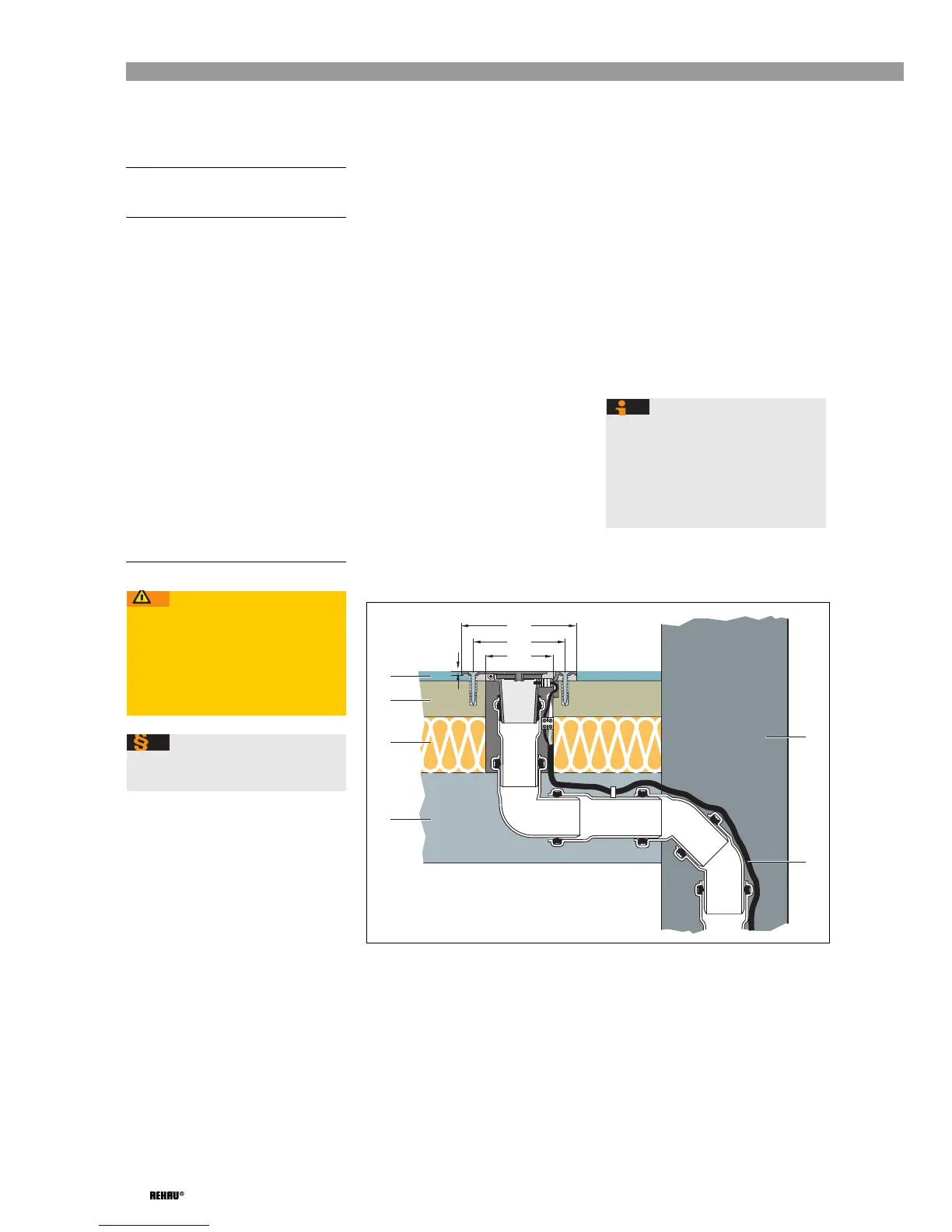
Fig. 5-31: Installation diagram for laying in concrete
1Wall
2 Control cable
3 Unfinished floor
4Insulation
5 Screed
6Carpet
REHAU recommend acoustically
decoupling the line from the main
structure with commercially available,
moisture-protective impact-sound
insulation (S > 4 mm).
➜ Use joints for the transition into the wall
slot.
6
5
4
3
5
123
100
ø70
1
2


 To Next Page