Electrical Connection
The stove is supplied with an approx. 2.5 m long connecting cable with a plug. This cable is to be connected
to a 230 Volt, 50 Hz electrical connection. The average electric power consumption is approx 100 watts during
heating.
During the automatic ignition process (duration 10 minutes) approx. 350 watts. The connection cable must be
laid so that any contact with hot or sharp edged external surfaces on the stove is avoided.
Combustion Air
Each combustion procedure requires oxygen or air. As a rule this combustion air is removed from the living
area for individual stoves. The air taken from the living area must be reintroduced. In modern houses, very
tight fitting windows and doors mean that too little air flows back. This situation becomes problematic due
to additional ventilation in the house (e.g. in the kitchen or WC). Your qualified installing engineer will fit
a suitable air brick/vent to ensure that the stove is supplied with enough free air as required by Building
Regulations. A fresh air kit can be fitted directly to the stove, which will reduce the chance of draughts but still
supply the free air for combustion.
Feed of External Combustion Air (Fresh Air Kit)
Steel, high temperature or aluminium pipes can be used.
Minimum diameter 10 cm/4 inches.
The pipe should not be longer than approx. 4 m to guarantee adequate air feed and not have too many
bends.
Should the line lead into the open air, it must end with a windguard (supplied with the fresh air kit).
Make sure the supply air opening does not “ice over” during extremely cold periods (inspection).
Further it is possible to extract the combustion air directly from outside or from another room that is well
ventilated (e.g. the cellar).
Should one or more of these conditions not be applicable then usually poor combustion will occur in the stove,
as well as a vacuum in the room.
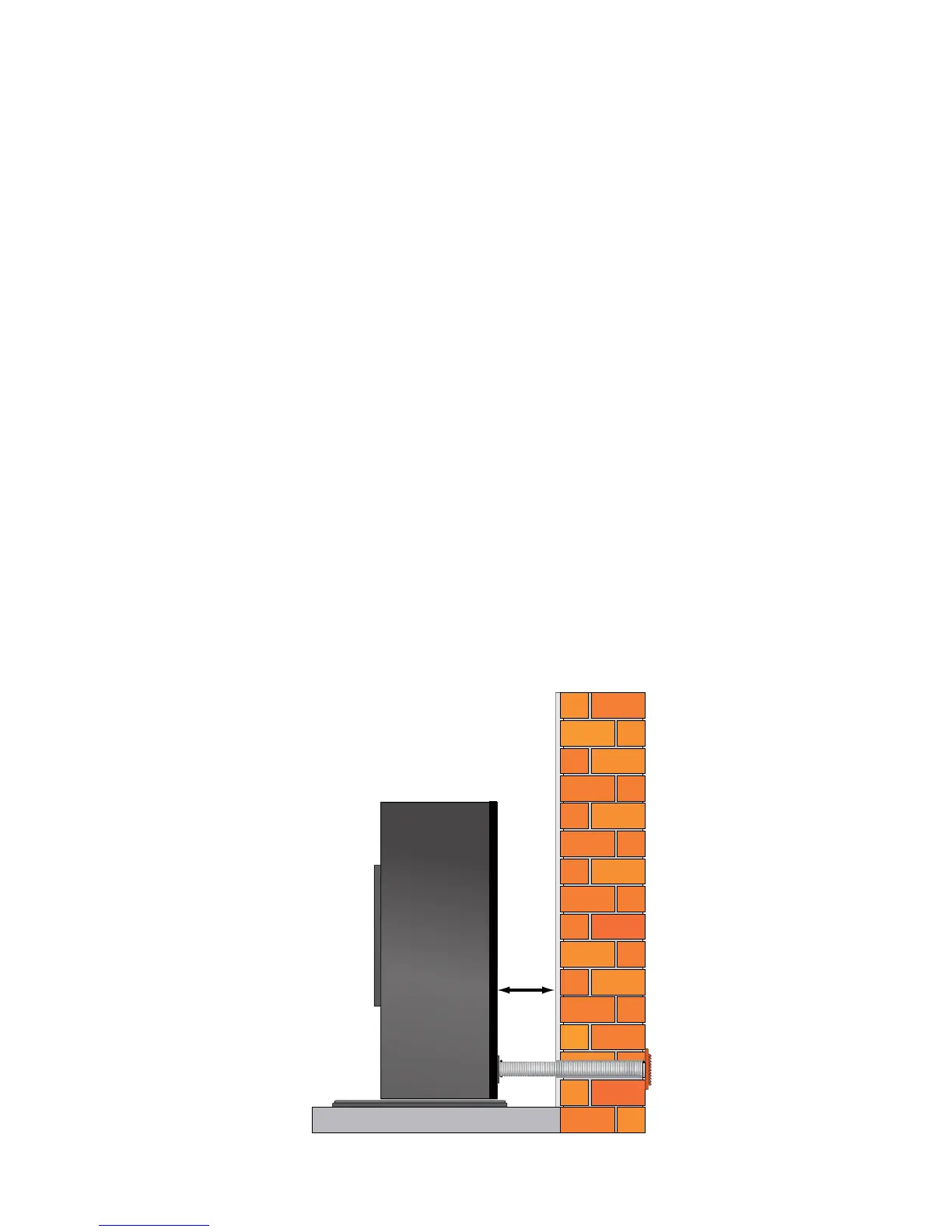
Fresh air vent kit through wall showing minimum access for cleaning “x”
x


 To Next Page