| Page 52 | SEABOB Operation Manual |
5
Keep in mind that the SEABOB switches off automati-
cally (Sleep mode) if inactive for a period of more than
10 minutes (Time-off). After switching the SEABOB back
on, you will need to re-enter your Owner-PIN if you want
to start the motor at a diving depth of more than approx.
2.5 m. After entering your Owner-PIN, you can increase
the depth limit again so that the set maximum diving
depth is greater than the one currently shown. The diving
depth display and the warning symbol will start flashing
as soon as you exceed the depth limit.
5.8.2 Adjusting the buoyancy of the
SEABOB
Note: Before adjusting the buoyancy, be sure to read the
"Information Sheet for Buoyancy Adjustment Weights"
supplied with the optionally available weights.
Be sure to observe the safety information given in
the "Information Sheet for Buoyancy Adjustment
Weights".
The buoyancy of the SEABOB varies depending on the
model (see Chapter 8 "Technical specifications") and
whether the craft is operated in fresh water or salt water
(the buoyancy changes with the salt content of the wa
-
ter). The buoyancy of the SEABOB can be adjusted using
optionally available weights.
The benefit of the SEABOB‘s buoyancy: when the SEABOB
is switched off and not fitted with additional weights, it
will always float on the surface of the water or resurface
if submerged.
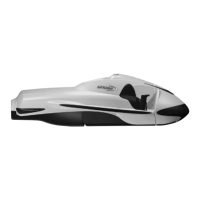
The SEABOB RAVEJET model has a relatively high buoy
-
ancy and is particularly well suited to operation mainly
on the water surface. The craft can be adjusted by the op
-
tionally available weights depending on the designated
use and the salt content of the water.
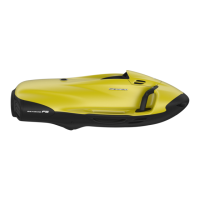
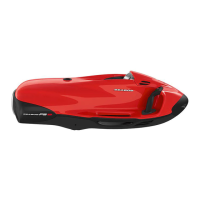
The SEABOB JET 4.12, SEABOB CAYAGO VX2 and SEA
-
BOB CAYAGO F7 models with their lower buoyancy are
particularly well suited to scuba diving. They can be ad
-
justed by a relatively small amount of additional weights
depending on the designated use and the salt content
of the water.



 To Next Page