The EdgeBox-RPI-200 is a rugged, fanless Edge Computing Controller designed for harsh industrial environments, utilizing a Raspberry Pi Computer Module 4 (CM4). It serves as a gateway to connect field networks with cloud or IoT applications, built to withstand demanding conditions at competitive prices, making it suitable for small businesses or multi-level scale demands.
Function Description:
The EdgeBox-RPI-200 acts as an industrial edge controller, facilitating data processing and communication at the edge of the network. Its core is a Raspberry CM4 board, with a specific base board implementing its various features. It supports a wide range of industrial applications such as status monitoring, facility management, digital signage, and remote control of public utilities. The device's design emphasizes ease of setup and quick deployment, offering a user-friendly gateway solution with a 4-core ARM Cortex A72 processor. It aims to reduce total deployment costs, including electrical power cabling, and accelerate product deployment time. Its lightweight and compact design ensures reliable operation in space-constricting and extreme environments, including in-vehicle applications.
Important Technical Specifications:
- Processor: Raspberry Pi Computer Module 4 (CM4) with a Quad Arm Cortex-A72, up to 1500MHz.
- Chassis: State-of-the-art Aluminum chassis with an integrated passive heat sink for harsh environments.
- Power Supply: Wide power supply range from 9 to 36V DC.
- Input voltage: 24V (+/- 10%).
- Output voltage for DI&DO should be under 60V, with a current capacity of 500mA.
- Power Consumption (at 24V, no add-on cards or USB devices):
- Idle: 81mA
- Stress test (stress -c 4 -t 10m -v &): 172mA
- Memory/Storage (Test Module): 4GB LPDDR4, 32GB eMMC with Wi-Fi module.
- Connectivity:
- Ethernet: 10/100/1000-BaseT, available through a shielded modular jack.
- USB: Two USB 2.0 HOST interfaces (total max current 1000mA), one USB type-C Console port (USB-UART converter).
- Serial Ports:
- RS232: Receive (RX) and Transmit (TX) lines, and Ground.
- RS485: Difference lines (A and B) and isolated Ground. Internal 120 Ohm termination resistor for RS485.
- Wireless: Built-in mini PCIe socket for RF modules (e.g., 4G, Wi-Fi, Lora, Zigbee). Two SMA antenna holes (ANT1 for Mini-PCIe, ANT2 for internal Wi-Fi from CM4). NANO SIM card slot for cellular modes.
- Expansion Slots:
- Mini-PCIe: Full-size cards supported.
- M.2: M KEY type, ONLY 2242 size NVME SSD cards supported (NOT mSATA).
- Digital I/O (DI&DO): Isolated DI&DO terminals.
- Input (DIO-, DIO+): High active, connected to GPIO17. Channel 0 and 1 inputs are isolated.
- Input (DI1-, DI1+): High active, connected to GPIO27. Channel 0 and 1 inputs are isolated.
- Output (DO0_0, DO0_1): High active, connected to GPIO23. Channel 0 and 1 outputs are isolated.
- Output (DO1_0, DO1_1): High active, connected to GPIO24. Channel 0 and 1 outputs are isolated.
- Real-Time Clock (RTC):
- New Revision: PCF8563 chip from NXP, I2C address 0x51. Estimated backup time: 15 days.
- Old Revision: MCP79410 chip from Microchip, I2C address 0x6f.
- RTC with Super Capacitor.
- Security: Encryption chip ATECC608A.
- Watchdog: Hardware Watchdog (WDT).
- Display: HDMI port, directly connected to the Raspberry PI CM4 board with TVS array.
- UPS (Optional): UPS with SuperCap for safe shutdown.
- Backup time depends on system load. For a CM4 with 4GB LPDDR4, 32GB eMMC, and Wi-Fi: 55 seconds (idle), 18 seconds (full CPU load).
- GPIO22 is used to alarm the CPU when 5V power supply is down (active LOW).
Usage Features:
- Mounting: Supports two wall mounts and one 35mm DIN-rail mount.
- LED Indicators:
- LED1: Green for power, Red for eMMC activity.
- LED2: Green for 4G indicator, Red for user-programmable LED (GPIO21, low active).
- Two green LEDs for debug (WDT LED, NVME SSD LED).
- Serial Port Usage:
/dev/ttyACM1 for RS232./dev/ttyACM0 for RS485.- Python examples provided for serial communication.
- Cellular Module Integration:
- Steps provided for inserting a Quectel EC20 into the Mini-PCIe socket and micro SIM card.
- Commands to enable power to the Mini-PCIe socket (GPIO6) and release the reset signal (GPIO5).
lsusb and dmesg commands to verify device detection.ifconfig -a to check network interfaces (e.g., wwan0).- Miniterm utility for AT commands (e.g.,
AT, AT+QINISTAT, AT+QCCID).
- Instructions for dialing up using
quectel-pppd.sh.
- Watchdog Timer (WDT) Operation:
- System powers on, delays 200ms.
- Sends a negative pulse (200ms low) on WDO (System RST#) to reset the system.
- Pulls up WDO.
- Delays 120 seconds with indicator flashing (1Hz).
- Turns off indicator.
- Waits for 8 pulses at WDI (GPIO25) to activate WDT and light the LED.
- Enters WDT-FEED mode: at least one pulse must be fed into WDI every 2 seconds; otherwise, the WDT module outputs a negative pulse to reset the system.
- RTC Enablement:
- Modify
/boot/config.txt by adding dtoverlay=i2c-rtc,pcf8563.
- Reboot the system.
- Verify with
sudo hwclock -rv.
- For old revisions (MCP79410), add
echo "mcp7941x 0x6f" > /sys/class/i2c-adapter/i2c-1/new_device and hwclock -S to /etc/rc.local.
- UPS for Safe Shutdown:
- GPIO22 alarms the CPU when 5V power is down.
- CPU should execute a shutdown script before supercapacitor energy depletion.
- Can be configured to initiate shutdown when GPIO pin changes (input key generating KEY_POWER events).
- Configuration via
/boot/config.txt with dtoverlay=gpio-shutdown,gpio_pin=GPIO22,active_low=1.
Maintenance Features:
- Product Change Notice: Details hardware version D changes, including chip replacements (CP2104->CH9102F, USB2514B->CH334U, CP2105->CH342F, MCP79410->PCF8563ARZ) and corresponding Linux device name changes (ttyUSB0->ttyACM0, ttyUSB1->ttyACM1).
- RTC Chip Information: Specifies the RTC chip and its I2C address for both new and old revisions, aiding in driver configuration and troubleshooting.
- Documentation: User manual provides detailed block diagrams, pinouts, and step-by-step instructions for various functionalities, including LED control, serial port usage, cellular module setup, WDT operation, and RTC enablement.
- Support: For UPS function and further information, users are directed to contact Seeed Studio.

 Need help?
 General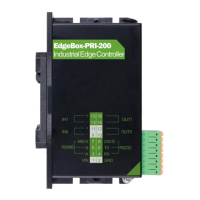

 To Next Page
