-42-
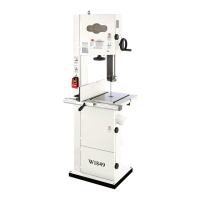
Model W1849 (For Machines Mfd. Since 11/16)
OPERATIONS
OPERATIONS
To reduce your risk of serious injury
or damage to the machine, read this
entire manual BEFORE using machine.
To reduce the risk of eye injury and
long-term respiratory damage, always
wear safety glasses and a respirator
while operating this machine.
General
To complete a typical operation, the operator does the
following:
1. Examines workpiece to make sure it is suitable for
cutting.
2. Adjusts table tilt, if necessary, to correct angle of
desired cut.
3. If using fence, adjusts it for width of cut and then
locks it in place. If using miter gauge, adjusts angle
and locks it in place.
4. Loosens guide post lock knob, adjusts upper blade
guide height to just clear the workpiece (no more
than
1
⁄4"), then retightens guide post lock knob.
5. Checks to make sure workpiece can safely pass all
the way through blade without interference from
other objects.
6. Puts on safety glasses and respirator.
7. Starts dust collector and turns machine ON.
8. Holds workpiece firmly and flat against both table
and fence (or miter gauge), and then pushes
workpiece into blade at a steady and controlled rate
until cut is complete.
This machine will perform many types of operations
that are beyond the scope of this manual. Many of these
operations can be dangerous or deadly if performed
incorrectly.
The instructions in this section are written with the
understanding that the operator has the necessary
knowledge and skills to operate this machine. If at any
time you are experiencing difficulties performing any
operation, stop using the machine!
The overview below provides the novice machine operator
with a basic understanding of how the machine is used
during operation, so the machine controls/components
discussed later in this manual are easier to understand.
Due to its generic nature, this overview is NOT intended
to be an instructional guide.
9. Is very careful to keep fingers away
from blade and uses a push stick to
feed narrow workpieces.
10. Turns machine OFF.
If you are an inexperienced operator, we
strongly recommend that you read books
or trade articles, or seek training from
an experienced operator of this type of
machinery before performing unfamiliar
operations. Above all, safety must come
first!


 To Next Page