EN– 21
STRAIGHT STITCHING
Straight stitch is most frequently used for
every aspect of sewing. Lets learn how to sew
following the steps below
.
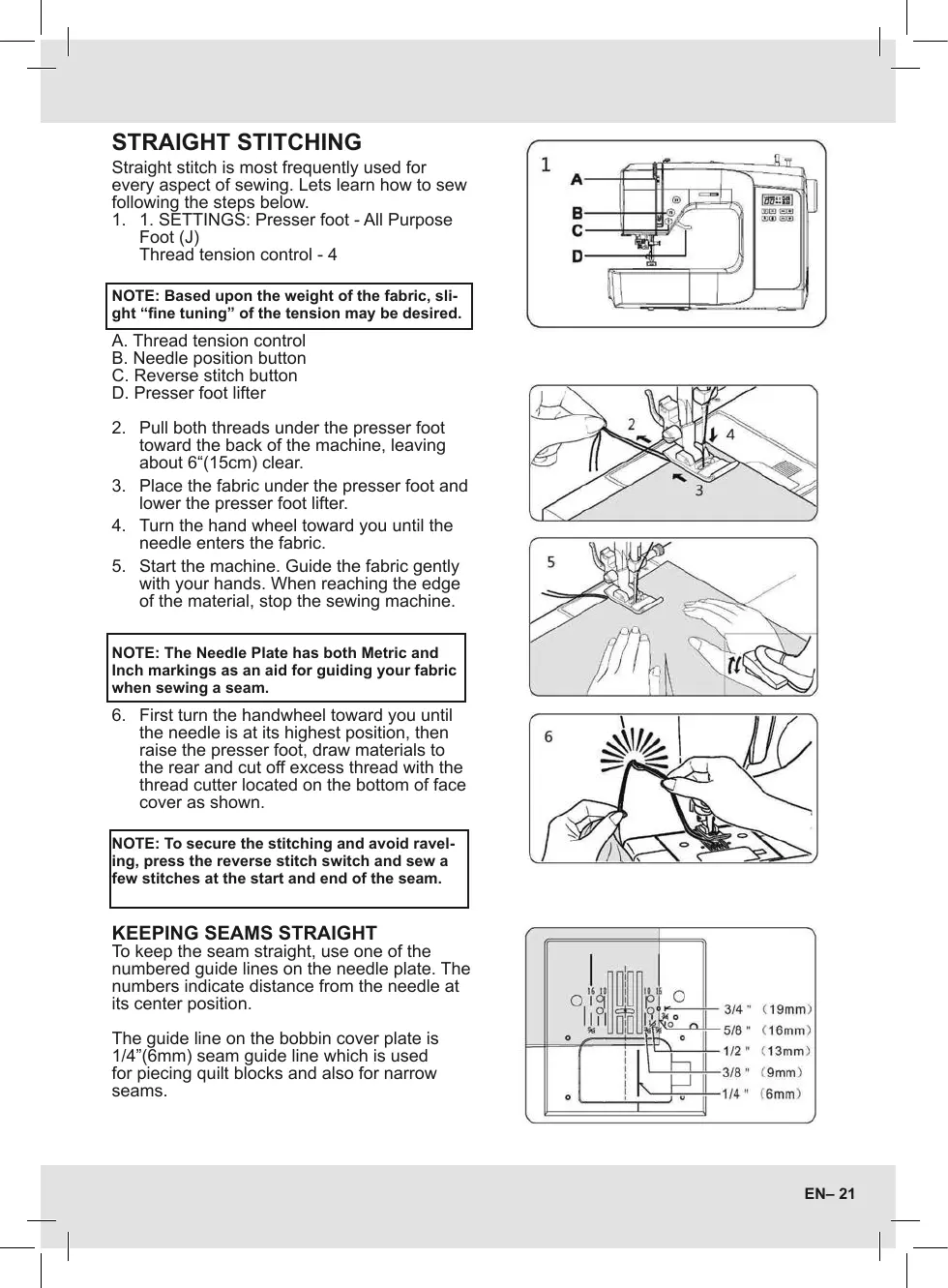
1. 1. SETTINGS: Presser foot - All Purpose
Foot (J)
Thread tension control - 4
NOTE: Based upon the weight of the fabric, sli-
ght “ne tuning” of the tension may be desired.
A. Thread tension control
B. Needle position button
C. Reverse stitch button
D. Presser foot lifter
2.
Pull both threads under the presser foot
toward the back of the machine, leaving
about 6“(15cm) clear.
3. Place the fabric under the presser foot and
lower the presser foot lifter.
4. Turn the hand wheel toward you until the
needle enters the fabric.
5. Start the machine. Guide the fabric gently
with your hands. When reaching the edge
of the material, stop the sewing machine.
NOTE: The Needle Plate has both Metric and
Inch markings as an aid for guiding your fabric
when sewing a seam.
6. First turn the handwheel toward you until
the needle is at its highest position, then
raise the presser foot, draw materials to
the rear and cut o excess thread with the
thread cutter located on the bottom of face
cover as shown.
NOTE: To secure the stitching and avoid ravel-
ing, press the reverse stitch switch and sew a
few stitches at the start and end of the seam.
KEEPING SEAMS STRAIGHT
To keep the seam straight, use one of the
numbered guide lines on the needle plate.
The
numbers indicate distance from the needle at
its center position.
The guide line on the bobbin cover plate is
1/4”(6mm) seam guide line which is used
for piecing quilt blocks and also for narrow
seams.


 To Next Page