© Nov. 2020 7-6 GTTZ10EJ Operation Manual
OPERATING THE MACHINE
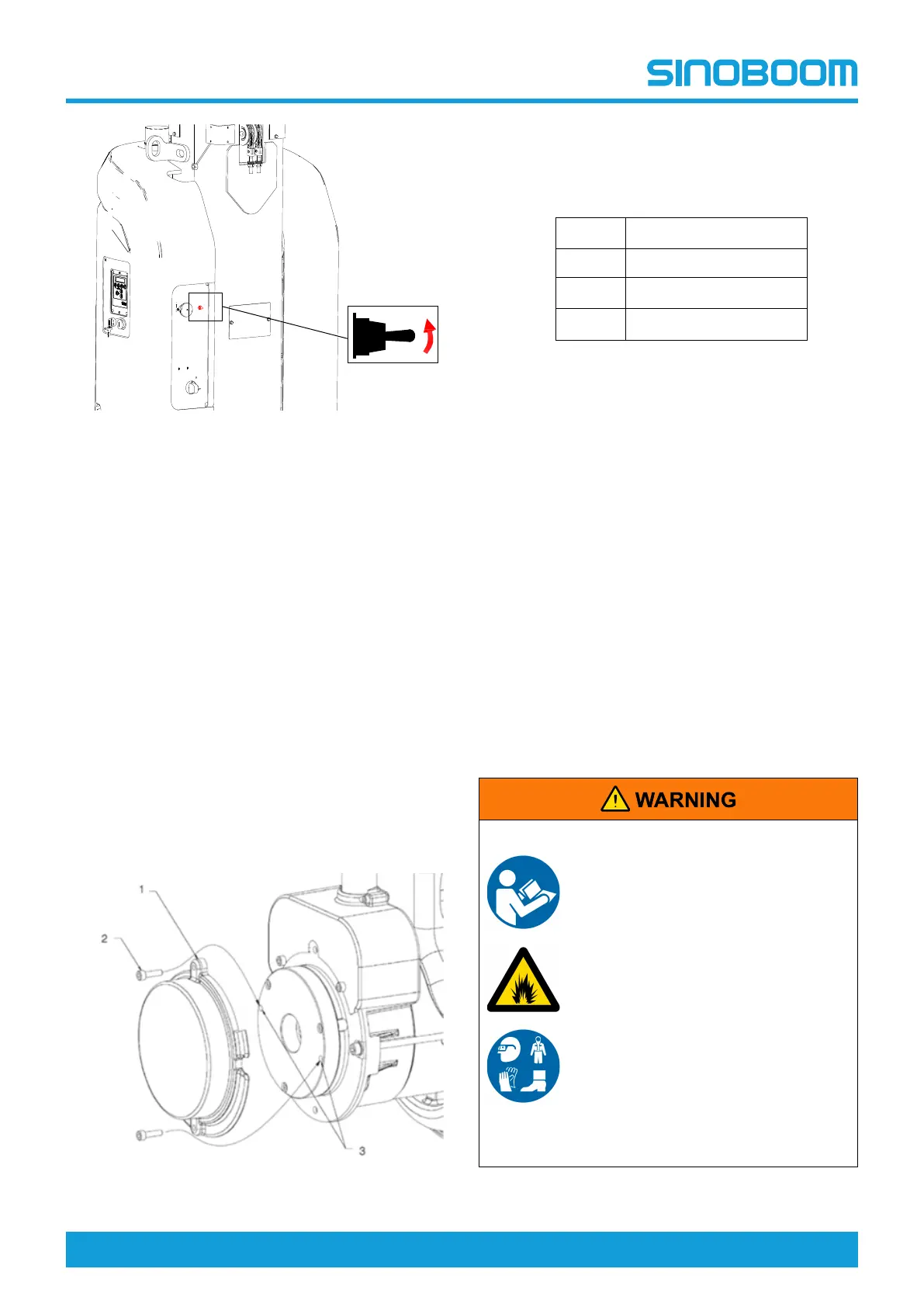
Figure 7-7
4. When a beef sounds, it indicates the brake is
released and the machine is all set for the towing/
dragging.
5. After the towing/dragging is complete, position the
machine on a firm level surface.
6. Choke wheels securely to prevent motion of the
machine.
7. Move again the brake release switch, or push in the
emergency stop button, or turn the key switch to off
position, to engage the brake.
8. Remove the chokes as desired.
Method 2:
1. Choke wheels securely to prevent motion of the
machine.
2. Be sure the path is clear of obstructions, and the
power disconnect switch in off position.
3. Remove the both end cap bolts and brake cover
from the wheel reducer.
Figure 7-8
Table 7-1
No.
Description
1 Brake cover
2
End cap bolt
3
Disengage hole
4. Insert the end cap bolts into the both disengage
holes on the brake housing.
5. Tighten the bolts to disengage the brake from the
drive motor.
6. Repeat the procedure above to the other wheel
reducer. After the both brakes are disengaged from
the drive motors, the machine is all set for the
towing/dragging.
7. After the towing/dragging is complete, position the
machine on a firm level surface.
8. Choke the wheels to prevent the machine from
rolling.
9. Remove the end cap bolts from the disengage
holes, and install the brake cover and end cap
bolts.
10. Remove the chokes as desired.
CHARGING THE BATTERY
BATTERY HAZARDS
Always read and comply with the bat-
tery manufacturer’s recommenda-
tions for procedures concerning
proper battery use and maintenance.
Batteries contain sulfuric acid and
generate explosive mixtures of hy-
drogen and oxygen gases. Keep any
device that may cause sparks or
flames away from the battery to pre-
vent explosion.
Always wear protective glasses or
goggles and protective clothing
when working with batteries. You
must follow the battery manufac-
turer’s instructions on safety, mainte-
nance and installation procedures.
There are three types of batteries:



 To Next Page