8
The principal preoperative planning factor is correct diagnosis. The surgeon must
determine if the bone condition and stability require a constrained prosthesis implant.
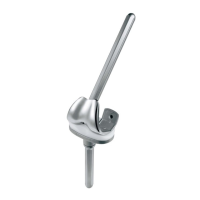
The main indications for an RT-PLUS™ implant are:
• High grade joint destruction, with considerable loss of function and the need for
additional stabilization using stems
• Severe joint instability that predictably cannot be corrected through suitable bone
reconstruction (bone grafts) or soft tissue intervention
• Marked contractures and axial displacements exceeding 15-20°
• Failure after surface replacement (e.g., infection, loosening)
• Revision of a primary prosthesis
• Trauma induced femoral or tibial fractures
Important
Due to the design, it is possible to switch with relatively little effort, even intraoperatively,
from the TC-PLUS knee system to the RT-PLUS Modular knee system, since the resections
and prosthesis sizes match.
Contraindications
Contraindications are:
• Acute or chronic local or systemic infections (or if a corresponding anamnesis occurs)
• Severe muscle, nerve, or vascular diseases that endanger the affected extremity
• A lack of bone substance or inadequate bone quality that endangers stable seating of the
prosthesis
• Severe obesity
• All concomitant diseases that may endanger implant function. These include, in
particular, extreme insufficiency of the knee extensor mechanism, which can lead to
excessive joint distortion, or severe obesity, which can lead to dorsal impingement and
possible uncoupling of the components. Use of a hinged or tumour prosthesis may be
advisable in these cases
• Patient hypersensitivity or allergy to the materials used
• Strenuous physical activity (e.g., competitive sport, hard physical work)
Indications



 To Next Page