Need help?
Do you have a question about the Still ECH 12C and is the answer not in the manual?
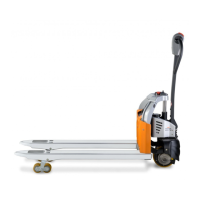
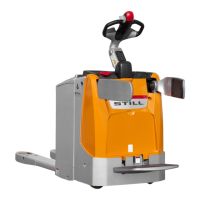
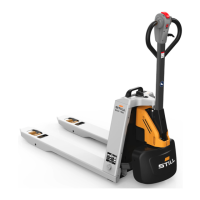
The provided document is an operating manual for an electric pallet truck, specifically the ECH 12C and ECH 15C models, manufactured by STILL GmbH.
This series of electric pallet trucks is designed for handling pallets and transporting goods over level surfaces. The trucks have a maximum load capacity of up to 1200 kg (ECH 12C) and 1500 kg (ECH 15C), depending on the specific model. They are suitable for use with both open pallets and those with horizontal slats, and can accommodate loads that protrude outwards.
The truck features an ergonomic and practical design, making it adaptable for various operators and working conditions. The polyurethane cowling provides superior stability and shock resistance, while the chassis, made of thick steel plate, is built to withstand harsh working conditions.
The steering system is designed for extremely smooth operation, facilitating easy maneuvering in tight spaces. A gas spring ensures that the tiller quickly returns to the vertical position when released. The composite construction tiller head offers excellent impact resistance. Ergonomic push-buttons for the horn, lifting, and lowering functions can be operated with one hand without changing grip. An integrated anti-crush button in the tiller head protects the operator in case the vehicle recoils.
Driving is precise and load-independent, with jolt-free starting and smooth acceleration up to maximum speed. Braking is achieved by simply releasing or turning the drive direction switch. A booster circuit prevents the truck from rolling back when starting on a gradient. The electromagnetic brake, equipped with a dust protection function, serves as both a safety brake and a parking brake. Braking is controlled by the drive controller, which acts on the motor shaft and simultaneously cuts off power. Automatic braking engages when the tiller is in the horizontal or vertical (end stop) position. Regenerative braking occurs when the drive switch is released, slowing the vehicle down until the motor stops at speeds below 1 km/h. Reverse braking is also possible by turning the drive switch to the opposite direction while moving.
The truck is equipped with a key switch to turn the control current on and off, and an emergency off switch that disconnects the electrical system, stopping all electrical functions and forcing an emergency stop. An indicator light displays the battery charge status, with different LED colors and flashing patterns indicating various charge levels and potential malfunctions.
The truck is intended for pedestrian mode driving, requiring the operator to walk alongside it. Safety shoes are mandatory for effective protection. Operators must be at least 18 years old, trained, and instructed in driving and handling loads. The use of drugs, alcohol, or medications that impair reactions is strictly prohibited.
When operating, attention to surroundings is crucial, and distractions should be avoided. Moving parts of the truck should be handled with care to prevent crushing injuries. Carrying passengers on the truck is forbidden. The truck should not be operated in areas with explosion risks, corrosive environments, or excessively dusty conditions. Stacking or unstacking on inclined surfaces or ramps is not permitted.
For optimal performance and safety, the truck should be used on level, dry, clean surfaces. It can climb gentle gradients below 6% with a full load and below 16% without a load. Driving on steep slopes with a load is not recommended due to the risk of the load slipping. When ascending slopes, it is recommended to travel in reverse with the load facing uphill. When descending slopes, travel forwards with the load uphill, at a very low speed, and brake gradually. Parking on ramps or making U-turns on slopes is prohibited.
Load handling requires careful attention to stability. Loads must be positioned and secured according to regulations. Damaged transportation tools should not be used. Operators must never go under raised load-bearing components, and personnel are prohibited from entering load components. The truck should not be used to lift personnel. Forks should be fully inserted under the goods, and the load weight must not exceed the truck's rated capacity. Long loads should not be placed sideways across the forks. Before lifting, ensure the load is correctly stacked and stable. Forks should be raised slightly above the support before moving the truck. When unloading, drive carefully to the desired location, lower the load until the forks are free, back away in a straight line, and then raise the forks to mid-height.
The creep speed switch allows the truck to operate at 20% of its maximum speed when the handle is in the vertical position, useful for precise maneuvering.
The manual emphasizes the importance of thorough and regular maintenance to ensure reliable performance, increase service life, and prevent malfunctions or accidents. Maintenance should only be performed by qualified and authorized personnel.
Daily Inspection: Before each operation, a daily inspection is required. This includes checking for scratches, deformation, cracks, oil leakage from the cylinder, vertical creep, smooth wheel movement, battery condition, correct operation of all tiller buttons, display equipment, alarm system, safety devices, chassis frame, and the position reset function of the operating handle. The emergency brake and tiller arm-switch braking function must also be checked, along with lifting and lowering functions. Bolts, nuts, hoses, and electric wires should be visually inspected for damage.
Regular Inspections: The truck must undergo a technical inspection by a specialist at least once a year or after specific incidents, as per FEM 4.004 guidelines. A test log must be created and retained for at least two subsequent inspections. The inspection date is indicated by an adhesive label on the truck.
Insulation Testing: Insulation testing must be conducted at least once yearly in accordance with DIN EN 1175, DIN 43539, VDE 0117, and VDE 0510 to ensure sufficient insulation resistance.
Maintenance Intervals:
Battery Use and Maintenance: Precautions for working on the battery include parking the truck correctly, avoiding smoking or open flames near the battery, keeping flammable substances away, ensuring good ventilation, and having fire-fighting equipment ready. To prevent electric shock, short-circuiting must be avoided, and tools should be kept away from battery poles. Metal or conductive objects must not be placed on top of the battery. Charging should occur in a well-ventilated room, free of metal parts on the battery surface. Cable connections and plug connectors should be checked for damage before charging. The battery should be charged promptly when its power is low (around 20%) to prevent over-discharge, which shortens battery life. If the battery fails or shows external damage, it should be removed and handled by professional technicians or disposed of according to national regulations. Lithium-ion batteries must not be disassembled, crushed, punctured, or heated above 40°C. They should not be immersed in water or conductive liquids.
Consumables: Only permissible lubricants and consumables specified in the maintenance data table should be used. Safety regulations for handling these substances, including oils and hydraulic fluid, must be followed. Oils are flammable and toxic, requiring precautions such as avoiding contact with hot parts, no smoking, and wearing protective gloves. Spilled oils and hydraulic fluid must be collected immediately with oil-binding agents and disposed of according to regulations, as they are water pollutants. Battery acid spills must be neutralized immediately.
Decommissioning and Storage: For storage longer than 2 months, the truck must be parked in a frost-free and dry location, jacked up to clear all wheels from the ground to prevent damage to wheels and bearings. Before storage, the truck should be thoroughly cleaned, brakes checked, hydraulic oil level topped up, mechanical components lubricated, battery recharged periodically, and exposed contacts sprayed. The battery must be charged monthly to prevent depletion through self-discharge.
Equipment Scrappage and Disposal: When the truck is scrapped, it must be done in accordance with local laws and regulations, with special attention to the disposal of used batteries, fuel, oil, and electronic components.

 To Next Page
 General